
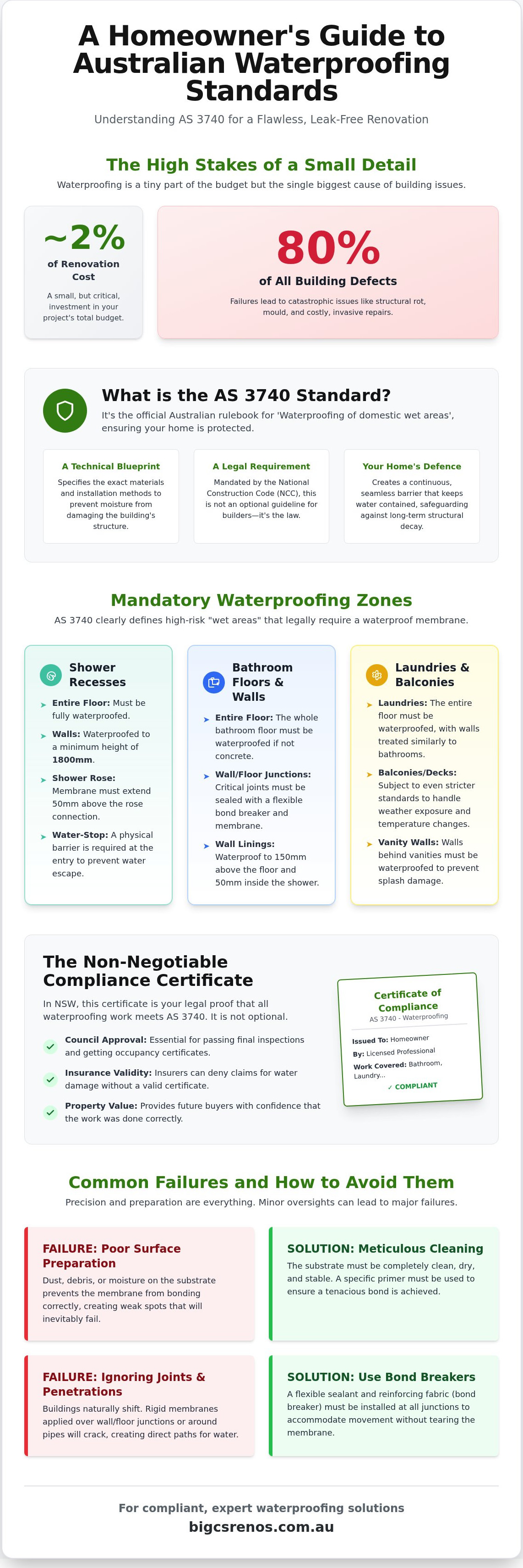
Did you know that while waterproofing typically accounts for just 2% of your bathroom renovation costs, it is responsible for a staggering 80% of all building defects in Australia? It is a confronting statistic that highlights why adhering to the waterproofing Australian standards AS 3740 matters more than picking the perfect vanity. When you are planning a renovation, the fear of future leaks or structural damage can be overwhelming, particularly with shifting regulations like the NCC 2025 updates on the horizon. You deserve to feel certain that your investment is protected by more than just a layer of tiles and grout.
Mastering the essentials of these standards ensures your project is compliant, durable, and entirely leak-free. We understand that navigating technical requirements can feel like a chore, but we are here to act as your expert guide. In this article, we will clarify the critical wet area zones within your home and explain exactly what a valid compliance certificate should look like. You will gain the knowledge needed to choose a licensed professional who values meticulousness as much as you do, giving you the confidence to enjoy your new space without a second thought about what is happening beneath the surface.
Key Takeaways
- Understand how the waterproofing Australian standards AS 3740 safeguard your home's structural integrity through rigorous material and installation requirements.
- Identify the specific 'wet area' zones in your bathroom that require mandatory treatment to prevent hidden, long-term water damage.
- Learn why securing a valid compliance certificate is a non-negotiable step for NSW council approval and insurance peace of mind.
- Uncover the silent killers of waterproof membranes and how meticulous surface preparation can save you from future structural repairs.
- Gain the clarity needed to hire a licensed professional who prioritises precision, ensuring your renovation remains beautiful and bone-dry.
What is the AS 3740 Waterproofing Standard?
AS 3740 is the formal Australian Standard for the 'Waterproofing of domestic wet areas'. It acts as a meticulous technical manual, detailing the exact materials and installation methods required to protect a building's structure from internal moisture. While it might sound like dry industry jargon, it's actually the most critical document in your renovation journey. This standard provides the blueprint for creating a barrier that keeps water where it belongs, ensuring your home remains healthy and structurally sound for decades.
The National Construction Code (NCC) mandates compliance with these rules for every Australian home. This isn't a optional suggestion for builders; it's a legal requirement. Because waterproofing failure is the leading cause of building defects in Australia, accounting for roughly 80% of insurance claims, the standards are designed to be rigorous. They cover everything from the types of membranes used to the specific ways joints and penetrations must be sealed.
The Relationship Between AS 3740 and the NCC
The National Construction Code provides the high level safety and health requirements, while AS 3740 provides the technical 'how-to'. With the NCC 2025 updates, there is an even sharper focus on ensuring water drains efficiently and membranes are applied to stable substrates. Most residential projects follow 'Deemed-to-Satisfy' methods, which means if you follow the AS 3740 instructions exactly, you are automatically compliant. Alternatively, 'performance solutions' allow for innovative designs, provided they are backed by professional engineering and rigorous testing. AS 3740 serves as the technical benchmark for wet area safety in 2026.
Why 'Near Enough' Isn't Good Enough
Cutting corners on waterproofing is a gamble that rarely pays off. The cost of remediating a leaking bathroom often dwarfs the initial investment of a compliant installation. When water escapes the wet area, it silently attacks Australian timber frames, causing rot that can compromise the entire house. It also seeps into brickwork, leading to unsightly efflorescence and rising damp that is notoriously difficult to cure. We have seen firsthand how a small oversight in membrane application can lead to thousands of dollars in structural repairs. To understand the full scope of these requirements, you can explore our Bathroom Waterproofing: The Ultimate Homeowner’s Guide. Investing in precision from day one is the only way to truly protect your home and your family's peace of mind.
Wet Area Zones: Where Waterproofing is Mandatory
Not every room in your house requires a waterproof membrane, but identifying exactly where protection is legally required is vital for a successful renovation. The waterproofing Australian standards AS 3740 categorise spaces into "wet areas" based on their exposure to water and the risk of structural damage. In a modern Australian home, this means focusing on showers, bathrooms, laundries, and even the walls behind your vanity splashbacks.
While internal rooms are the primary focus, external areas like balconies and decks follow even stricter rules. These spaces face the added pressure of weather and temperature fluctuations, making a high-quality membrane even more essential. Getting these zones right from the start prevents the "slow leak" that eventually leads to costly structural repairs or rejected insurance claims.
Shower Areas: The 1800mm Rule
Shower recesses are the highest risk zones in any home. Under the current standards, the entire water-resistant wall lining in a shower area must be waterproofed to a minimum height of 1800mm above the finished floor level. If your shower rose is installed higher than this, the membrane must extend at least 50mm above the rose to catch any overspray.
A critical detail we often see overlooked is the "water-stop" requirement at the shower entry. This involves installing a physical barrier, usually a small aluminium angle, that prevents water from "wicking" through the tile bedding into the dry area of the bathroom through capillary action. If you are dreaming of a sleek, frameless glass shower, these requirements become even more stringent. Without a traditional enclosed base, the floor gradient and membrane coverage must be perfectly executed to ensure water flows directly to the waste rather than pooling near the door.
Walls and Floor Junctions
The junction where the floor meets the wall is the most common point of failure because buildings naturally move over time. To combat this, AS 3740 mandates specific vertical flashing, which typically extends 150mm up the wall from the floor level. This creates a "tub" effect that contains moisture and protects the wall studs from rot.
We also pay meticulous attention to penetrations. Every tapware outlet, shower head, and drainage point that pierces the membrane must be sealed with specialised collars or sealants. This ensures that if a fitting leaks behind the wall, the water cannot reach the structural timber or brickwork. If you are feeling overwhelmed by these technicalities, our team can help you plan a compliant bathroom renovation that protects your home for the long term. By treating these junctions as the foundation of your wet area, you ensure your new bathroom remains beautiful and bone-dry for years to come.
The Waterproofing Compliance Certificate in NSW
A waterproofing compliance certificate is more than just a formal piece of paperwork; it is your technical guarantee that the work meets the rigorous waterproofing Australian standards AS 3740. In New South Wales, this document serves as a signed declaration from your contractor stating that the materials used and the installation methods applied are fully compliant with the law. Without this certificate, you have no verified proof that the invisible barriers behind your tiles are actually doing their job.
Your local council or private certifier will insist on seeing this document before issuing a final occupation certificate. It is a non-negotiable step in the building approval process. Additionally, for residential projects valued at over $20,000, this certificate is intrinsically linked to your Home Building Compensation (HBC) cover. If a tradie refuses to provide a compliance certificate, it is a significant red flag. It often suggests the work was performed by an unlicensed individual or that the mandatory stage inspections were skipped. In such cases, you should pause the project immediately and seek professional advice to avoid inheriting a structural nightmare.
Who Can Legally Waterproof Your Bathroom?
In New South Wales, waterproofing is a specialised trade that requires a specific licence from NSW Fair Trading. While many people assume a general builder can handle every aspect of a renovation, many builders prefer to engage a dedicated specialist for the membrane application. This is because the liability associated with water ingress is exceptionally high. A specialist waterproofer brings a level of precision and product knowledge that ensures the membrane remains flexible and intact for the life of the bathroom.
Before any work begins, you should verify your tradie's credentials. You can easily check a contractor's licence status via the Service NSW portal. This simple step confirms they are insured and authorised to carry out wet area works. Choosing a licensed professional gives you the peace of mind that your home is in the hands of someone who truly understands the complexities of the building code.
Insurance and Resale Value
Missing documentation can cause significant headaches when it comes time to sell your property in Colyton or the surrounding suburbs. Savvy buyers and building inspectors look specifically for waterproofing certification during the due diligence phase. If you cannot produce the paperwork, it can stall the sale or lead to aggressive price negotiations.
From an insurance perspective, non-compliant work is a major liability. Most home and contents policies exclude coverage for damage resulting from faulty workmanship or a failure to meet waterproofing Australian standards AS 3740. If a leak occurs and you don't have a compliance certificate, you may find your claim for structural repairs rejected entirely. A compliance certificate is your legal shield against future structural claims. It ensures that if something does go wrong, the responsibility and the cost of remediation lie with the licensed installer rather than your own pocket.
Common AS 3740 Failures and How to Avoid Them
Even when a project appears perfect on the surface, technical oversights during the installation phase can lead to a breach of the waterproofing Australian standards AS 3740. Inadequate surface preparation is the most frequent culprit. If a substrate is dusty, damp, or contaminated with oil, the membrane cannot form a permanent bond. This creates a "silent killer" scenario where the membrane eventually peels away, allowing water to bypass the barrier and rot the structural floor joists or wall studs.
Choosing the wrong membrane for your specific substrate also invites trouble. While liquid membranes are popular for their ease of application in residential bathrooms, certain situations require high-performance sheet membranes. Rushing the process is another common pitfall. If a tiler begins laying tiles before the membrane has fully cured, the adhesive can emulsify the waterproof layer or the weight of the tiles can cause a rupture. Allowing for natural expansion is equally vital. Sydney homes experience significant thermal movement, and without correctly placed movement joints in the tile layer and the membrane, the system will eventually crack under pressure.
The Danger of DIY Waterproofing
It is a common myth that "tiles are waterproof." In reality, grout is porous and tiles can develop hairline cracks, meaning the membrane underneath does all the heavy lifting. While hardware stores sell "off-the-shelf" kits, these products often fail without professional-grade preparation and the correct use of bond breakers. AS 3740 requires specific internal corner reinforcements and bond breakers at floor-to-wall junctions to allow the membrane to stretch rather than snap when the building moves. Without these specialist components, even the most expensive liquid membrane is likely to fail within a few years.
Substrate Stability in Western Sydney
Colyton and the surrounding Western Sydney suburbs are known for reactive clay soils. These soils expand and contract with moisture changes, causing concrete slabs and timber frames to move more than those in other regions. Because of this, we often recommend flexible polyurethane membranes over more rigid alternatives. These high-elongation products can bridge small cracks that develop as your home settles, ensuring the seal remains intact.
Precision in the early stages of a renovation prevents the need for heart-breaking remediation work later. If you want to ensure your project is handled with this level of technical expertise, you can book a professional waterproofing assessment with our specialist team. For more information on how we integrate these standards into our local projects, explore our guide on Professional Tiling Colyton: Why Precision Matters. By respecting the nuances of our local geography and the building code, you can enjoy a renovation that stands the test of time.
Professional Waterproofing Solutions by Bigcs Renos
At Bigcs Renos, we bring over 15 years of industry experience to every project we undertake in Colyton. Our commitment to waterproofing Australian standards AS 3740 isn't just about passing a council inspection; it's about the pride we take in delivering a flawless, high-end finish that stands the test of time. We believe that a beautiful bathroom is only as good as the invisible work behind the tiles, which is why we've developed a rigorous 3-step waterproofing protocol designed for maximum reliability.
Our 'Prep, Prime, Protect' system ensures that every wet area is treated with meticulous care. We begin with comprehensive surface preparation, grinding substrates to remove contaminants and create a perfectly clean base. We then apply a high-performance primer to enhance bond strength before installing the waterproof membrane with precision. To provide an extra layer of security, we specialise in epoxy grouting. Unlike traditional cement-based grout, epoxy is non-porous and incredibly resistant to stains and moisture, making it the ultimate choice for high-use family bathrooms that need to remain bone-dry and easy to clean.
Remediation Experts for Leaking Wet Areas
If you've noticed bubbling paint, damp smells, or mould growth in your laundry, you likely have a waterproofing failure. Our remediation process goes beyond simple patchwork; we aim for a permanent solution. We use advanced technology, including thermal imaging cameras and moisture meters, to identify hidden leaks without immediately tearing up your tiles. This scientific approach allows us to pinpoint the breach and propose a targeted fix. Once the source is located, we restore your wet area to modern standards, ensuring it is fully compliant with current regulations while maintaining the aesthetic integrity and warmth of your original design.
Start Your Compliant Renovation Today
Choosing a local expert who understands the specific building conditions of Colyton, St Marys, and the Penrith region makes a world of difference. We provide full documentation for every bathroom and laundry renovation we complete. This includes the essential compliance certificates you need for insurance and future property valuations, giving you total peace of mind. We act as your supportive partner throughout the process, keeping your original vision at the forefront while we handle the technical complexities. You can book a consultation with our waterproofing specialists to begin your journey toward a secure, beautiful, and leak-free home today.
Invest in Precision for a Lifetime of Comfort
You now understand that waterproofing is the most critical layer of your renovation. By identifying mandatory wet area zones and insisting on a valid compliance certificate, you are protecting your home from the silent threat of structural decay. It is about more than just meeting a legal requirement; it is about the peace of mind that comes from knowing your sanctuary is built to last. Understanding the nuances of the building code ensures your investment remains secure for decades.
At Bigcs Renos, we combine 15 years of local Colyton experience with a deep respect for waterproofing Australian standards AS 3740 and the latest NCC 2025 regulations. As fully licensed NSW waterproofing specialists, we ensure every detail is meticulously executed to keep your home bone-dry and structurally sound. Secure your home with a certified bathroom renovation from Bigcs Renos. We are ready to help you transform your vision into a durable, beautiful reality that you can enjoy with absolute confidence.
Frequently Asked Questions
Is waterproofing mandatory for all Australian bathrooms?
Waterproofing is absolutely mandatory for all Australian bathrooms under the National Construction Code. The law requires a continuous, impervious barrier to protect the building structure from moisture damage. While the extent of coverage varies based on specific wet area zones, every bathroom must meet the minimum requirements of the waterproofing Australian standards AS 3740 to be considered compliant and safe for long term residential use.
How many coats of waterproofing are required under AS 3740?
Most manufacturers and the Australian standards require a minimum of two coats for liquid-applied membranes. These coats are typically applied in opposite directions to ensure total coverage and to achieve the correct dry film thickness. Applying a single thick layer can lead to cracking or pinholes as the product dries. A meticulous two-stage process is essential for creating a durable, leak-proof barrier that lasts.
Can I tile over old waterproofing during a renovation?
We strongly advise against tiling over old waterproofing. For a renovation to be successful and compliant, the old membrane and adhesive must be completely removed to expose the original substrate. This allows us to inspect for existing water damage and ensures the new membrane has a clean, stable surface to bond with. Tiling over old layers is a high-risk shortcut that often leads to failure.
How long does it take for a waterproof membrane to cure before tiling?
Curing times vary between products, but most liquid membranes require at least 24 to 48 hours before tiling can begin. Factors like temperature and humidity in Colyton can influence this duration. Rushing the tiling process is a common mistake that can emulsify the membrane or cause it to rupture under the weight of the tiles. We always follow the manufacturer's specific guidelines for every project.
Does a laundry need to be fully waterproofed like a bathroom?
Yes, laundries are classified as wet areas and require specific waterproofing under the waterproofing Australian standards AS 3740. While they might not have a shower, they still need protection for floor-to-wall junctions and the areas around floor wastes and laundry tubs. Any area where water is used must have a compliant barrier to prevent moisture from seeping into the subfloor and causing hidden structural rot.
What happens if I don't have a waterproofing certificate when I sell my house?
Selling a home without a waterproofing compliance certificate can lead to significant delays or a reduced sale price. Professional building inspectors will flag the lack of documentation as a high-risk defect. This often results in buyers requesting expensive invasive testing or withdrawing their offers entirely. Additionally, your home insurance may not cover future water damage if you can't prove the work was performed by a licensed professional.
What is the 1800mm rule in shower waterproofing?
The 1800mm rule specifies that the water-resistant wall lining within a shower recess must be waterproofed to a minimum height of 1.8 metres above the floor. If the shower rose is positioned higher than this, the membrane must extend at least 50mm above the rose. This ensures that splashes and steam are contained, protecting the wall studs from moisture ingress and the subsequent growth of mould.
Can I do my own waterproofing if I follow the AS 3740 guide?
While you might find DIY guides, we don't recommend it. In New South Wales, waterproofing must be performed by a licensed professional to be eligible for a compliance certificate. This document is required for council sign-off and insurance purposes. DIY attempts often fail due to poor surface preparation or incorrect application, leading to structural damage that costs far more to fix than the initial professional installation.


