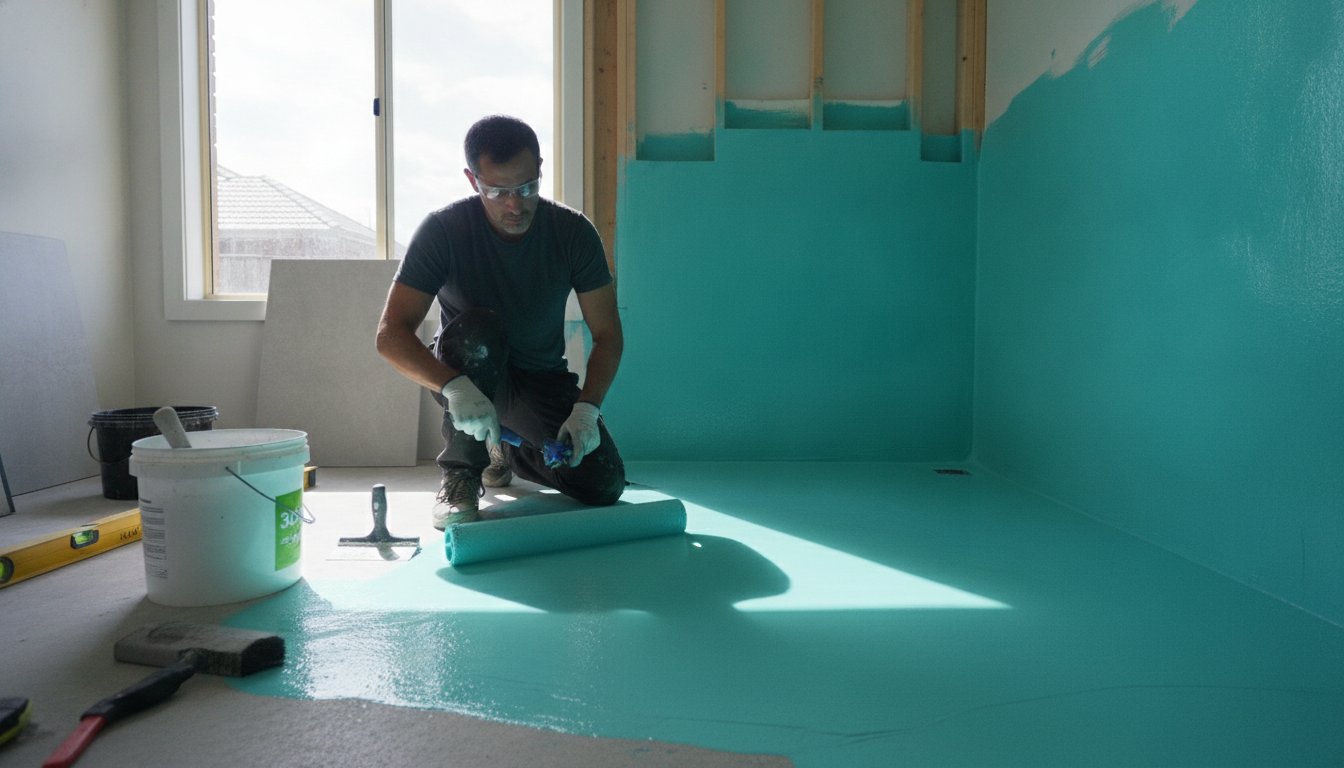
Did you know that improper waterproofing remains the leading cause of building defect claims and structural damage across Sydney? It is a sobering thought for anyone planning a dream renovation, as a single pinhole leak can compromise your entire home's integrity. Obtaining a valid waterproofing certificate NSW isn't just about ticking a box for the council; it's the only tangible insurance you have against the most common cause of Australian building failure.
We understand that the maze of building regulations can feel daunting, especially with the strict enforcement of the National Construction Code 2026. You want the peace of mind that comes with a beautiful, leak-free bathroom that protects your investment and satisfies your insurer. This guide simplifies those complex legal requirements and practical steps, ensuring your project meets every Australian Standard with precision. We'll walk you through the mandatory certification process, licensing thresholds for contractors, and the essential documentation you need to secure your Occupation Certificate with confidence.
Key Takeaways
- Understand that a waterproofing certificate NSW is a formal legal document ensuring your wet area renovation complies with the latest Australian Standards and building regulations.
- Learn how the 2026 updates to AS 3740 affect your project, specifically regarding stricter requirements for membrane thickness and bond breaker installation.
- Identify when certification is mandatory, particularly for renovations involving structural changes or those requiring council approval via a Development Application.
- Master the inspection timeline by engaging a licensed professional early and prioritising the critical pre-tiling inspection to prevent future structural damage.
- Secure the long-term value of your home with documentation that satisfies insurance requirements and provides peace of mind for future property sales.
What is a Waterproofing Certificate in NSW?
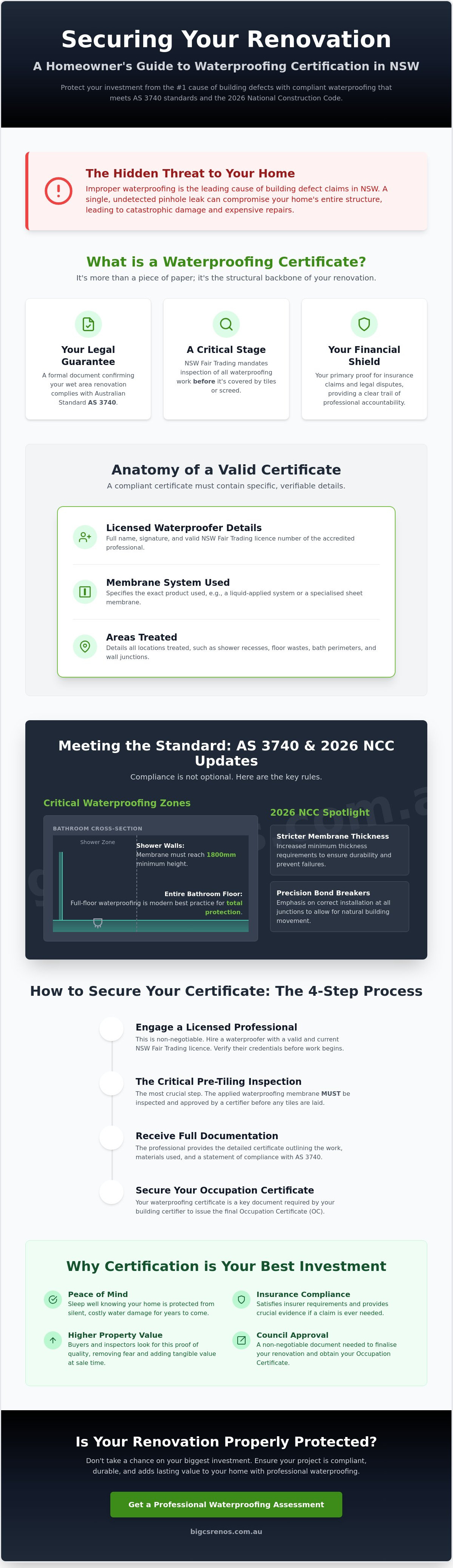
A waterproofing certificate NSW is a formal document that serves as the structural backbone of any wet area renovation. It confirms that the work carried out in your bathroom, laundry, or granny flat complies strictly with the Australian Standard AS 3740:2021. This isn't just a recommendation. It's a non-negotiable requirement for ensuring your home remains dry and structurally sound for years to come. By securing this document, you gain a legal guarantee that a qualified professional has meticulously applied the correct materials to protect your property.
When you grasp the core Waterproofing principles, you begin to see why this certification is so vital. It transforms an invisible layer of protection into a verifiable asset. It's the difference between a project that looks good on the surface and one that is built to last. This document provides the professional confidence you need to move forward with your tiling and finishing touches, knowing the foundation is secure.
The Legal Significance in NSW
NSW Fair Trading classifies waterproofing as a "critical stage" of construction. This means the work must be inspected and verified before it's covered by tiles or screed. Unlike a standard invoice or a simple receipt from a tradie, a compliance certificate carries significant weight under the Home Building Act. It supports your statutory warranties and provides a clear trail of accountability. If a leak occurs down the track, this document is your primary shield during insurance claims or legal disputes. It represents a professional commitment to integrity and provides a reassuring atmosphere for the entire project.
Components of a Valid Certificate
A valid certificate isn't a vague note. It must be specific and detailed to satisfy a building certifier. It will outline the precise waterproofing membrane used, whether it's a high-quality liquid-applied system or a specialised sheet membrane. The document also specifies the exact locations treated, such as shower recesses, floor wastes, and bath perimeters. Crucially, it must feature the name, licence number, and signature of the accredited waterproofer who performed the work. This level of detail ensures that your renovation is "bulletproof" and ready for the final Occupation Certificate (OC).
For homeowners, obtaining a waterproofing certificate NSW is a pivotal moment in the renovation journey. It offers a sense of pride in the work and ensures the emotional reward of a well-executed project. Beyond the immediate legalities, this certificate is a powerful tool during a property sale. Prospective buyers and building inspectors look for this documentation as proof that the renovation was handled with professional care. It removes the fear of hidden structural damage and adds tangible value to your property. Knowing your home extensions or bathroom upgrades meet the highest standards of excellence offers a level of peace of mind that few other documents can provide.
AS 3740 Standards and Compliance Rules for 2026
Building a home that stands the test of time requires more than just beautiful aesthetics; it demands a foundation that defies the elements. AS 3740 serves as the definitive Australian Standard for the Waterproofing of Domestic Wet Areas. AS 3740 is the national benchmark for preventing internal water damage. In 2026, the focus on compliance has sharpened significantly under the latest National Construction Code updates. These changes put a spotlight on membrane thickness and the precision of bond breaker installation, ensuring that the invisible layers beneath your tiles perform flawlessly under daily use. By adhering to these meticulous standards, you protect the very skeleton of your property from the silent threat of moisture rot.
Understanding Waterproof vs. Water-Resistant
It's vital to distinguish between surfaces that must be entirely waterproof and those that only need to be water-resistant. The shower zone is the most critical area where 100% waterproofing is a legal necessity. For walls within this zone, the membrane must reach a height of at least 1800mm from the finished floor level to contain splash and vapour effectively. While older standards were sometimes more lenient, modern NSW designs now favour full-floor waterproofing even in "dry" areas of the bathroom. This comprehensive approach offers a superior level of protection, ensuring that even a minor plumbing leak won't lead to catastrophic structural failure. It's about creating a "bulletproof" environment that gives you total confidence in your home's longevity.
Membrane Selection and Application
Choosing the right membrane is a sophisticated process that depends on your specific substrate and the expected movement of the building. Membranes are categorised into Class I, II, and III based on their extensibility. For most residential projects, a Class III membrane is the preferred choice because it can stretch and flex without rupturing as the house settles. Meticulous preparation is the key to a successful application. Once the membrane is laid, curing times must be strictly respected before any tiling begins. Rushing this stage is a common pitfall that can compromise the entire installation. If you're embarking on a professional bathroom renovation, ensuring these technical steps are followed is the only way to secure a valid waterproofing certificate NSW. This documentation isn't just a piece of paper; it's a testament to the craftsmanship and integrity of your project.
When is a Waterproofing Compliance Certificate Mandatory?
Many homeowners wonder if a small project really needs formal paperwork. The short answer is that any renovation involving structural changes or council approval requires a waterproofing certificate NSW. Whether you are building granny flats or extending your family home, this document is a mandatory milestone. If your project falls under a Complying Development Certificate (CDC) or a traditional Development Application (DA), your private certifier or local council will not sign off on the final inspection without it. This is particularly true in Western Sydney hubs like Penrith and Blacktown, where strict compliance ensures new developments meet the highest safety standards.
Beyond new builds, certain repairs and upgrades also trigger this legal requirement. Balcony and rooftop terrace waterproofing in multi-residential or strata buildings is a prime example. Because these areas often sit above common property or other residents' homes, the risk of structural damage is high. Ensuring you have a professional certificate is the only way to prove the work was handled with the necessary level of care and precision.
Bathroom and Laundry Renovations
Even if you're only planning a "cosmetic" refresh, you might still trigger the need for certification. If your work involves disturbing the floor waste or altering the substrate, you must secure a professional guarantee. Modern open-plan "wet room" designs, which are incredibly popular in 2026, require meticulousness because the entire floor often acts as a catchment area. For those seeking expert bathroom renovations near me, early planning is essential to ensure every layer of your new sanctuary is compliant. This proactive approach avoids the stress of retrospective fixes and protects your investment from day one.
Strata and Multi-Residential Rules
Living in a Sydney apartment block brings an extra layer of responsibility. Strata managers are rightfully protective of common property boundaries, as a leak in your bathroom could easily damage the unit below. You cannot DIY waterproofing in a strata environment. Doing so is a significant risk that could lead to being forced to rip out your beautiful new tiles if you can't provide a valid certificate. Strata by-laws usually mandate that only licensed specialists perform this work. It's about maintaining the collective integrity of the building and ensuring every resident enjoys a leak-free environment. It provides a reassuring atmosphere for all neighbours when they know work is being done to professional standards.
Insurance-related repairs also demand this level of documentation. If you've suffered water damage and are seeking remediation, your insurer will likely insist on proof of professional work to maintain your coverage. Providing a valid compliance certificate demonstrates that the repair was executed to Australian Standards, keeping your policy intact and your home "bulletproof" against future issues. It's a small step that yields massive rewards in long-term reliability and property value.
How to Secure Your Certificate: The Inspection Process
Securing a waterproofing certificate NSW is a journey of meticulous steps, not a final destination. You must engage a licensed specialist before the first drop of primer hits the floor. This early engagement ensures that every critical stage of the installation is documented for your building certifier. A Private Certifier must see the membrane in its raw state before tiles are applied. If you miss this inspection window, you risk having to remove expensive finishes to prove the work was done correctly. It's about building trust through transparency and professional reliability from the very beginning of your project.
The waterproofer begins by assessing the substrate for any imperfections. They verify surface preparation, ensuring the area is clean, dry, and primed to receive the membrane. This foundation is where the project's longevity is decided. Once the application is complete, the specialist allows for the necessary curing time. This patient approach ensures the membrane achieves its full protective potential before any weight or moisture is introduced.
What Happens During the Inspection?
The "Pre-Tiling" inspection serves as the ultimate quality control point. During this phase, the specialist conducts a visual check of the "waterstop" installation at the doorway and shower hobs. These small but vital components prevent water from wicking into hallways or bedrooms. They also scrutinise the bond breakers at every wall-to-floor junction. These silicone or tape barriers allow the building to move naturally without snapping the waterproof seal. Finally, they measure the dry film thickness. This ensures the membrane is thick enough to be durable but not so thick that it becomes brittle. Once the membrane has cured and passed these rigorous checks, the signed compliance form is issued.
The Role of the Licensed Waterproofer
You should always check a contractor's NSW Fair Trading licence to ensure they hold the specific "Waterproofing" class. This qualification is your only guarantee that they understand the complexities of AS 3740. This commitment to excellence is why Bigcs Renos insists on professional bathroom waterproofing for every renovation. A seamless transition between the waterproofer and the tiler is essential for a high-end result. When these trades work in harmony, the finished product is both beautiful and "bulletproof". It provides a reassuring atmosphere for you as a homeowner, knowing that every detail has been handled with precision.
If you want your renovation handled by masters of the craft who value transparency, book your waterproofing inspection with Bigcs Renos today. We take pride in delivering results that meet the highest Australian Standards while keeping your original vision at the forefront of the process.
Why Professional Certification Matters for Colyton Homeowners
Homeowners in Colyton and the wider Penrith region face a specific challenge: reactive clay soils. This natural characteristic means houses in Western Sydney often experience more movement than those in other parts of the state. When your home shifts, your wet area protection must be flexible enough to withstand the strain. A waterproofing certificate NSW provides the assurance that your renovation has been engineered to handle these local conditions. It's not just a legal formality; it's a structural necessity that keeps your home's skeleton dry and rot-free.
The true magic happens when certified waterproofing is paired with high-performance tiling. We believe that the membrane is only the first line of defence. By integrating advanced materials like epoxy grouting, we create a secondary, "unbreakable" seal for your wet areas. Unlike standard cement-based grout, epoxy is non-porous and incredibly durable. It ensures that water never even reaches the membrane, providing a dual-layer system that defies the elements. This synergy between trades creates a "bulletproof" finish that stands up to the demands of a busy family bathroom.
The Bigcs Renos Approach to Durability
We don't believe in quick fixes or surface-level patches. Every project we undertake, from laundry renovations to granny flats, is treated as a 20-year investment. Our process integrates full AS 3740 compliance with meticulous tiling and epoxy grout finishes to ensure maximum longevity. Transparency is at the heart of our service. We provide every client with a comprehensive compliance pack, including your waterproofing certificate NSW, so you have a permanent record of the quality beneath your tiles. This commitment to excellence ensures your renovation remains a source of pride and a sanctuary of comfort for decades.
Securing Your Home’s Future
The financial stakes of getting it wrong are incredibly high. A failed waterproofing system can lead to structural damage that often exceeds $20,000 in repairs, not to mention the emotional stress of a torn-apart home. Beyond avoiding costs, professional certification protects your property value in the competitive Colyton and Penrith markets. Whether you're looking to refinance your home extensions or prepare for a smooth sale, having the correct documentation is vital. Prospective buyers and banks look for the peace of mind that only a certified, leak-free renovation can provide. It's about demonstrating that your home has been maintained with a forward-thinking mindset and a passion for detail.
Your home deserves a foundation built on integrity and meticulous craftsmanship. Contact Bigcs Renos for a certified, leak-free renovation and let us transform your vision into a durable, beautiful reality that stands the test of time.
Build With Confidence and Precision
Mastering the legal requirements of your renovation ensures your home remains a sanctuary rather than a liability. By understanding the rigorous AS 3740 standards and the critical inspection timeline, you've taken the first step toward a "bulletproof" wet area. Remember that a waterproofing certificate NSW is more than just a piece of paper; it's your definitive guarantee of craftsmanship and long-term structural integrity. It protects your property value and ensures your insurance remains valid for decades to come.
At Bigcs Renos, we bring over 15 years of Sydney trade experience to every project we undertake. As a family-owned and locally operated business in Colyton, we specialise in AS 3740 compliance and high-performance epoxy grouting to ensure your investment stands the test of time. We take immense pride in our meticulous approach, transforming your visionary goals into a durable, beautiful reality. Our team remains dedicated to transparency and open dialogue throughout the entire transformation process.
Ready to start your journey toward a leak-free home? Get a Quote for Your Certified Bathroom Renovation and experience the emotional reward of professional excellence. Your dream space is closer than you think, and we're here to guide you every step of the way.
Frequently Asked Questions
Is a waterproofing certificate mandatory for a bathroom renovation in NSW?
Yes, a certificate is mandatory for any renovation that requires council approval through a Development Application (DA) or Complying Development Certificate (CDC). It is also a non-negotiable requirement for insurance purposes and projects within strata-managed buildings. Having a valid waterproofing certificate NSW ensures your project meets the National Construction Code 2026 and protects your home's structural integrity from future moisture damage.
Who is legally allowed to issue a waterproofing certificate in NSW?
Only a contractor who holds a valid waterproofing licence from NSW Fair Trading is legally allowed to issue this certificate. This professional must have completed the necessary Certificate III in Construction Waterproofing and possess a current National Police Check. You should always verify your contractor's licence number before work begins to ensure they are qualified to provide a legitimate compliance document.
How much does a waterproofing certificate cost in Sydney?
The cost of obtaining a certificate is generally bundled into the professional service fee provided by your licensed waterproofer. Prices vary across Sydney based on the size of the wet area, the number of coats required, and the complexity of the "waterstop" and bond breaker installation. While we don't quote fixed industry prices, investing in a licensed professional ensures you avoid the massive financial burden of remediating a failed, uncertified system later.
What happens if I don't have a waterproofing certificate when I sell my house?
Missing documentation can significantly complicate your property sale or even stall the process entirely. Savvy buyers and building inspectors will look for proof of compliant renovations to ensure there are no hidden structural defects. Without this certificate, you may be forced to lower your asking price or pay for an expensive building report to verify the safety and integrity of your wet areas.
Does the tiler or the waterproofer provide the certificate?
The professional who actually applies the waterproofing membrane is responsible for issuing the certificate. In many high-end renovations, a specialised tiler who also holds a waterproofing licence will handle both stages to ensure a seamless finish. However, if the trades are separate, the waterproofer must provide the documentation once the membrane has cured and passed inspection but before the tiler begins their work.
Do I need a waterproofing certificate for a DIY bathroom project?
No, you generally cannot issue your own certificate for DIY work, and many NSW regulations prohibit DIY waterproofing for projects valued over $5,000 in labour and materials. Most local councils and strata managers require a licensed professional to perform the work to guarantee it meets AS 3740 standards. Attempting this as a DIY task often voids your home insurance and leads to costly structural failures that are difficult to fix.
How long is a waterproofing certificate valid for in NSW?
A waterproofing certificate typically aligns with the statutory warranty periods defined under the NSW Home Building Act. This usually covers you for six years for major structural defects and two years for other defects. It serves as a permanent record of compliance for the specific work performed, providing long-term peace of mind that your renovation was executed with meticulous attention to detail and professional integrity.
Can a certificate be issued after the tiles have already been laid?
No, a legitimate compliance certificate cannot be issued retrospectively once the tiles are in place. The certification process requires a "critical stage" inspection of the bare membrane to verify its thickness, coverage, and bond breaker installation. If you fail to secure an inspection before tiling, a certifier may require you to remove the new tiles to prove the underlying waterproofing meets the required Australian Standards.


