
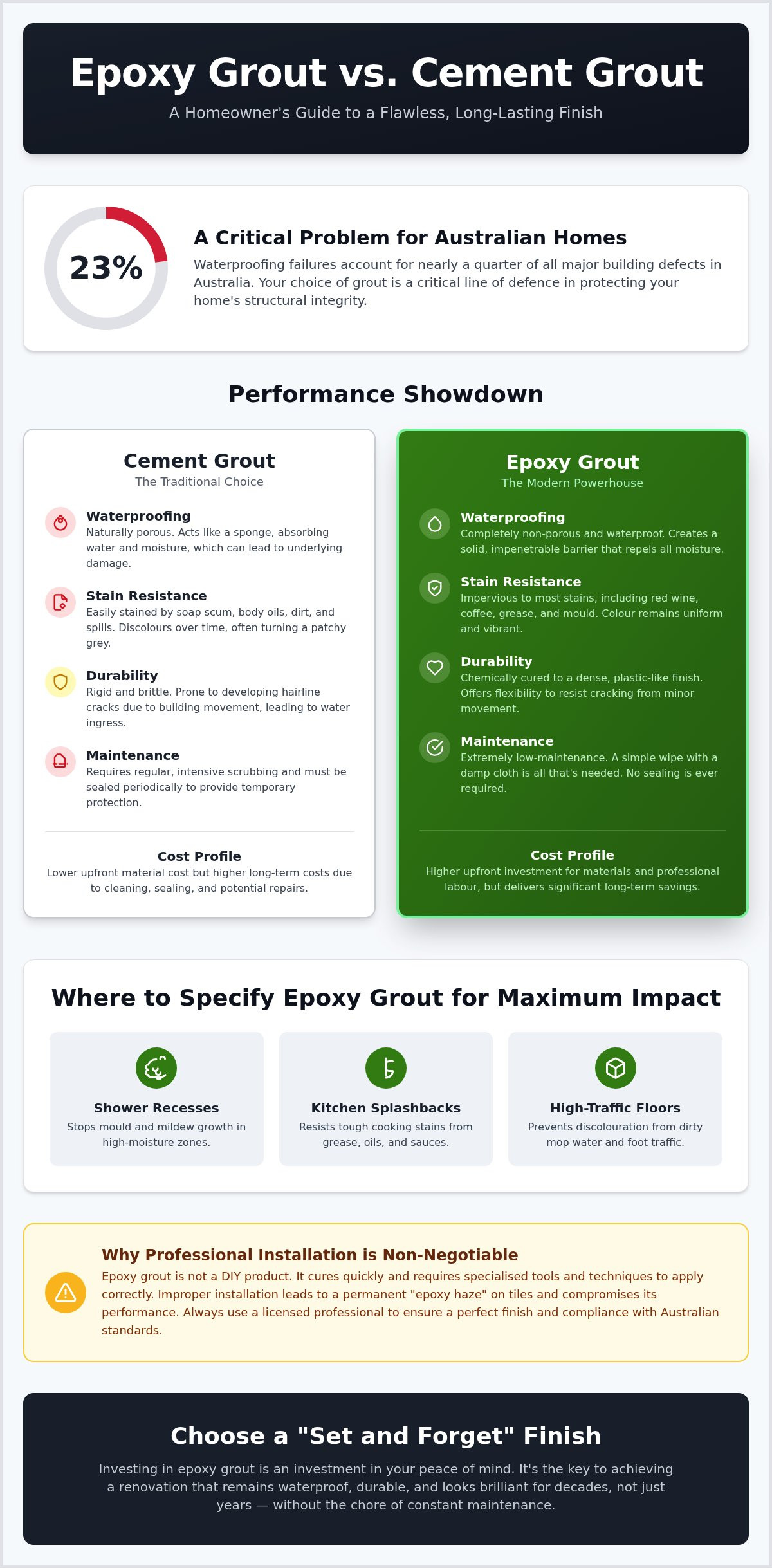
Did you know that waterproofing failures account for 23% of all major building defects in Australia? For many Colyton homeowners, the dream of a pristine bathroom often fades when grout lines start to discolour or, more alarmingly, when damp patches appear on the other side of the wall. It's a common headache that's both unsightly and expensive to fix. We understand the frustration of scrubbing at stubborn stains only to see the grout crumble further. When you're planning a renovation, the choice between epoxy grout vs cement grout is one of the most critical decisions you'll make for the longevity of your wet areas.
In this guide, you'll discover the essential differences between these materials so you can ensure your next project is waterproof, durable, and looks brilliant for years. We'll compare the performance of each option and explain why investing in high-quality finishes is the key to achieving a "set and forget" bathroom. From meeting the updated AS 3740 standards to maintaining stain-resistant white lines, we'll help you navigate the best path for your home's structural integrity and aesthetic appeal.
Key Takeaways
- Understand why cement grout acts like a sponge for moisture and how epoxy’s chemical resin creates a completely non-porous, stain-resistant barrier.
- Evaluate the long-term value of your renovation by comparing the initial cost of epoxy grout vs cement grout against future maintenance savings.
- Pinpoint exactly where to use epoxy in your home, from high-moisture shower recesses to grease-prone kitchen splashbacks.
- Learn why professional installation is the only way to avoid application errors like "epoxy haze" and ensure your project remains fully compliant with Australian standards.
- Gain the confidence to choose a "set and forget" finish that keeps your grout lines looking white and brilliant for decades rather than years.
Understanding Grout: Cement vs Epoxy for Your Sydney Home
Grout is far more than a simple gap-filler between your tiles. It's the structural foundation of a durable wet area. In Sydney's often humid climate, your choice of material directly impacts how well your home stands up to daily use and moisture. Making the right decision is vital for meeting Australian Standard AS 3740. This regulation governs waterproofing in domestic wet areas, and as any seasoned professional will tell you, the grout you choose plays a supporting role in keeping your home's skeleton dry and sound. When we look at epoxy grout vs cement grout, we aren't just talking about different colours; we're talking about two entirely different technologies.
The Traditional Choice: What is Cement Grout?
Cement grout has been the industry standard for decades. It's a water-based mixture of cement and sand that hardens as the water evaporates. Understanding Grout and its physical properties is the first step toward a successful renovation. Because of the way it dries, cement grout is naturally porous. It contains thousands of microscopic holes that can act like a sponge, absorbing water, oils, and soap scum over time. To protect it, you must apply a high-quality sealer and commit to regular maintenance. While it's a budget-friendly option that offers great flexibility for wider tile joints, it remains susceptible to staining and can be damaged by acidic household cleaners.
The Modern Powerhouse: What is Epoxy Grout?
If you're dreaming of a bathroom that stays pristine with minimal effort, epoxy is the answer. This material doesn't just dry; it cures through a specific chemical reaction between epoxy resins and a hardener. The result is a dense, plastic-like finish that's incredibly tough. It's naturally non-porous and waterproof, meaning it doesn't need to be sealed and won't absorb moisture. This makes it an exceptional choice for high-moisture zones like shower recesses or laundry floors. When comparing epoxy grout vs cement grout, the chemical resistance of epoxy stands out. It's impervious to most stains and won't degrade when exposed to the harsh chemicals often found in modern cleaning products. For Colyton homeowners looking for a premium, long-lasting finish, this modern powerhouse provides the ultimate peace of mind.
Choosing the right grout is a commitment to the future of your home. Whether you're building a new granny flat or extending your family home, starting with a clear understanding of these materials ensures your tiling remains a source of pride rather than a maintenance chore. By selecting a material that aligns with your lifestyle, you're investing in a beautiful, healthy living space that will look brilliant for decades.
Performance Showdown: Durability, Staining, and Porosity
When we put epoxy grout vs cement grout to the test in a real-world Colyton home, the differences become visible within months. Cement grout is naturally porous, meaning it possesses a microscopic structure similar to a sponge. This allows it to absorb dirty mop water, soap residue, and body oils, which eventually lead to deep-seated discolouration. Worse still is the phenomenon of efflorescence. This is that stubborn, white salty crust that often appears on cement-based joints as moisture evaporates and leaves mineral deposits behind. Because epoxy is a cured resin, it's entirely immune to these issues, maintaining its structural integrity regardless of the moisture levels in the room.
Sydney's climate can be erratic. Morning humidity often reaches 80%, and temperature shifts can cause subtle expansion in building materials. Cement grout is rigid and can develop hairline cracks under this stress. Epoxy offers a degree of resilience that better accommodates these minor movements, ensuring the seal remains intact and the colour stays uniform. While cement often turns a patchy grey over time, epoxy pigments are locked into the resin, ensuring your white lines stay crisp and your charcoal tones stay deep.
Stain Resistance and Maintenance
The daily reality for busy families involves more than just water. In the kitchen, it's red wine spills and coffee splatters. In the bathroom, it's the constant battle against mould and mildew. Epoxy grout is virtually impenetrable to these common culprits. You won't need to spend your Saturday morning scrubbing grout lines with a toothbrush. A simple wipe with a damp cloth is usually enough to restore the finish. This "low-maintenance" dream is a significant drawcard for homeowners who want a high-end look without the ongoing labour of traditional cement-based products.
Waterproofing and Structural Integrity
Beyond aesthetics, grout serves as a vital line of defence for your home's structure. It supports your waterproofing membrane by directing water toward the drain rather than letting it seep into the substrate. For home extensions or granny flats where the subfloor must be protected from rot, epoxy is the superior choice. Its non-porous nature makes it an essential tool for the remediation of water leaks, providing a permanent seal that cement simply cannot match. By choosing a material that blocks water at the surface, you're adding an extra layer of security to your bathroom's structural integrity.
The Cost of Quality: Upfront Investment vs Long-Term Value
When comparing epoxy grout vs cement grout, the initial price tag is often the first thing homeowners notice. It's true that epoxy resins are more expensive to manufacture than standard cement-based powders. However, looking only at the material cost misses the bigger picture of value and longevity. In a typical bathroom renovation, the grout represents a small fraction of the total budget, yet it's the component that usually fails first. By choosing a premium material, you're essentially buying insurance for your tiles and waterproofing. We view this decision as a lifecycle investment rather than a simple renovation expense.
Why Epoxy Costs More to Install
The application process for epoxy is a sophisticated race against time. Once the resin and hardener are mixed, the "pot life" begins. This is a narrow window of workability before the product hardens into its final, durable state. Unlike cement grout, which is relatively forgiving to apply, epoxy requires specialised cleaning agents and a meticulous technique to prevent a permanent "epoxy haze" from clouding your tiles. You aren't just paying for a product; you're paying for the skill and speed of a professional who understands the chemistry of the cure. This level of precision ensures your finish is flawless and functional from the moment it's completed.
Calculating the Return on Investment
To understand the true value, you have to look at the lifespan of your bathroom. Industry data indicates that the lifespan of cement grout in a shower is typically only 5 to 8 years, whereas epoxy grout can last 15 to 20 years. Over two decades, a cement-grouted bathroom will likely require professional deep cleaning, multiple applications of sealer, and eventually a full "strip and regrout" service. These hidden costs and the labour involved in maintenance add up quickly, often exceeding the initial premium of a better material.
Choosing epoxy means you avoid the need for harsh mould cleaners and the recurring chore of resealing every few years. It's a "set and forget" choice that maintains the pristine look of your Colyton property. When it comes time to sell, a bathroom that still looks brand new because the grout hasn't discoloured adds tangible appeal to prospective buyers. Framing the choice between epoxy grout vs cement grout as a long-term saving reveals that choosing quality is actually the most economical path for your home.
Room-by-Room Guide: Where to Specify Epoxy Grout
Deciding between epoxy grout vs cement grout often depends on the specific environmental demands of each room. While a decorative hallway might perform perfectly well with traditional cement, high-exposure areas require a more robust solution. For Colyton homeowners, the goal is to match the material to the level of moisture, grease, or foot traffic the surface will endure. By being strategic about where you specify premium products, you can maximise your renovation budget while ensuring your home remains protected from the ground up.
The Bathroom and Shower Solution
The shower recess is the primary battleground for moisture control in any home. It's the one area where we always recommend the upgrade. Traditional cement grout acts as a capillary system, drawing water into the substrate. This often leads to a persistent musty smell as dampness lingers behind the tiles. By choosing a non-porous resin, you eliminate this absorption entirely. This approach is a hallmark of Expert Bathroom Renovations Near Me, as it ensures the space stays hygienic and free from deep-seated mould growth. It's the ultimate "set and forget" choice for your most-used wet area.
Balconies and External Tiling
Sydney's climate puts immense pressure on external tiled surfaces. Between the intense Australian sun and heavy seasonal rain, cement grout can quickly fade, crack, or wash away. On outdoor balconies, these failures aren't just an aesthetic issue; they lead to water ingress that can cause structural rot in your home's sub-floor. Epoxy is essential here because it remains flexible enough to handle temperature shifts and provides a total waterproof seal. Following the principles in our Bathroom Waterproofing Guide, applying these same high standards to your balcony prevents the most common causes of multi-storey building defects.
Kitchen splashbacks and high-traffic floors also benefit significantly from the switch. In the kitchen, epoxy repels grease and cooking splatters that would permanently stain cement lines. For laundry floors or hallways in granny flats, where maintenance should be kept to a minimum, the durability of a cured resin ensures the tiles look brilliant for decades. When you weigh up the benefits of epoxy grout vs cement grout in these specific contexts, the long-term protection of your property's integrity becomes the clear priority. If you're ready to upgrade your home with a finish that lasts, reach out to our team for professional epoxy grouting.
Professional Installation: Why the Right Trade Choice Matters
Deciding between epoxy grout vs cement grout is a vital first step, but the final outcome depends entirely on the hands that apply it. Epoxy is a high-performance material that requires a specific set of skills to handle correctly. Unlike traditional cement, which is relatively forgiving during the wash-off phase, epoxy is a chemical resin that begins a permanent curing process the moment it's mixed. If a tiler lacks experience with this material, the result can be a "set-in-stone" disaster that ruins the look of your tiles.
This leads to the infamous "epoxy haze" nightmare. If the residue isn't meticulously removed within the narrow "pot life" window, it leaves a sticky, translucent film across the tile surface. Once this haze hardens, it's incredibly difficult to remove without damaging the tiles themselves. Because of this technical complexity, epoxy is not a DIY-friendly product. It requires specialised cleaning agents, specific sponges, and a fast, disciplined rhythm that only comes with professional training.
What to Look for in an Epoxy Tiler
When interviewing trades for your Colyton project, ask for specific evidence of their epoxy work. A tiler who is comfortable with the product will be happy to show you haze-free finishes and discuss the technical nuances of the brands they use, such as Mapei or Laticrete. They should also have a clear plan for site cleanliness. Because the resin is so durable, any spills or drips on your bathroom fixtures or floor wastes must be cleaned immediately before they bond permanently.
The Bigcs Renos Difference in Colyton
At Bigcs Renos, we bring over 15 years of industry experience to every project. We don't just see ourselves as tilers; we are specialists in the remediation of water leaks and experts in AS 3740 waterproofing standards. This background means we understand exactly how a perfectly executed grout joint supports the entire structural integrity of your home. We recommend epoxy for high-end bathroom renovations because we have the refined internal processes to ensure a flawless finish every time.
We organise our projects to prioritise the curing window, ensuring that every joint is packed densely and cleaned to a mirror finish. Our commitment to meticulousness means your renovation won't just meet NSW building codes; it will exceed them. When you weigh up the technical challenges of epoxy grout vs cement grout, the value of a professional application becomes the deciding factor in your home's long-term success. By choosing a trade partner who takes pride in the fine details, you're ensuring that your investment in quality materials delivers the brilliant results your home deserves.
Secure a Brilliant Future for Your Tiled Surfaces
Choosing between epoxy grout vs cement grout isn't just about the upfront cost; it's about deciding how much time you want to spend maintaining your home. By opting for a non-porous resin, you're securing your bathroom against mould, moisture ingress, and the common structural failures that plague many Sydney properties. You've seen how epoxy acts as the gold standard for high-exposure areas like showers and balconies, offering a level of durability that traditional cement simply can't match.
At Bigcs Renos, we bring over 15 years of Sydney trade experience to every project. As specialists in leak remediation, we ensure every joint is fully compliant with AS 3740 standards, giving you total peace of mind. We take pride in delivering meticulous results that stand the test of time, helping you achieve that "set and forget" finish you've always wanted for your renovation.
Ready to elevate your home with a superior standard of tiling? Get a Professional Quote for Your Epoxy Grouting Project today. Let's work together to create a space that looks brilliant for decades.
Frequently Asked Questions
Is epoxy grout actually 100% waterproof?
Yes, epoxy grout is completely non-porous and waterproof because it's a chemical resin rather than a water-based mixture. While cement grout acts like a sponge, epoxy creates an impenetrable barrier that prevents moisture from reaching the substrate. This makes it an ideal choice for Colyton bathrooms where preventing structural dampness is a priority. It's the most reliable way to ensure your renovation remains fully compliant with Australian waterproofing standards over the long term.
Can I put epoxy grout over my existing cement grout?
We don't recommend applying new grout directly over old material. For a successful bond, you must remove at least 2 to 3 millimetres of the existing cement grout to create a clean channel. If you simply "skim coat" with epoxy, the layer will be too thin to adhere properly and will eventually flake off. A professional regrout involves mechanical removal of the old filler to ensure the new resin bonds deeply into the tile joints.
Does epoxy grout turn yellow over time in Sydney sun?
Modern epoxy resins are highly resistant to UV damage, but prolonged exposure to the intense Sydney sun can cause very slight ambering in some white products. For outdoor balconies in Colyton, we recommend choosing high-quality, UV-stable brands or selecting slightly darker shades that mask any minor colour shifts. When comparing epoxy grout vs cement grout for external use, epoxy's ability to resist cracking and water ingress far outweighs any minor aesthetic changes from the sun.
Why does my tiler want to charge more for epoxy grout?
The higher cost reflects both the premium material price and the increased labour required for a perfect finish. Epoxy is significantly more difficult to apply because it has a limited "pot life" before it hardens. Your tiler must work with extreme precision and speed to avoid leaving a permanent haze on your tiles. You're paying for the technical skill and specialised cleaning equipment needed to handle a product that's far more complex than standard cement.
Is epoxy grout harder to clean than cement grout?
For the homeowner, epoxy is actually much easier to clean than traditional cement-based products. Because it's non-porous, dirt and mould can't penetrate the surface; they simply sit on top. You won't need harsh chemical scrubbers or toothbrushes to maintain your bathroom. A simple wipe with a damp cloth and a neutral cleaner is usually enough to keep the lines looking as white and brilliant as the day they were installed by our professional team.
What happens if epoxy grout is not cleaned off the tiles properly?
If the resin isn't thoroughly cleaned off during installation, it creates a permanent "epoxy haze" on the tile surface. This is a sticky, translucent film that's incredibly difficult to remove once it cures. It attracts dirt and makes your new tiles look dull or greasy. Correcting a haze nightmare often requires specialised chemicals or even tile replacement, which is why professional application is essential for any high-end Colyton renovation or laundry project.
Can I use epoxy grout with natural stone tiles like marble?
You can use it with natural stone, but the tiles must be sealed before the grouting process begins. Materials like marble or travertine are naturally porous and can absorb the epoxy resin, leading to permanent "picture framing" or staining around the edges. We take extra care with stone projects in Colyton, ensuring the surface is protected so the grout only fills the joints and doesn't compromise the aesthetic value of your premium natural stone tiles.
How long does epoxy grout take to dry before I can use my shower?
Most epoxy products are ready for light foot traffic after 24 hours, but you should wait at least 72 hours before using your shower. The chemical curing process takes longer than simple evaporation. If the grout is exposed to water or steam too early, it can compromise the final strength and waterproof seal. We provide clear timelines for every Colyton project to ensure your new bathroom or laundry finish reaches its maximum durability before it's put to work.


