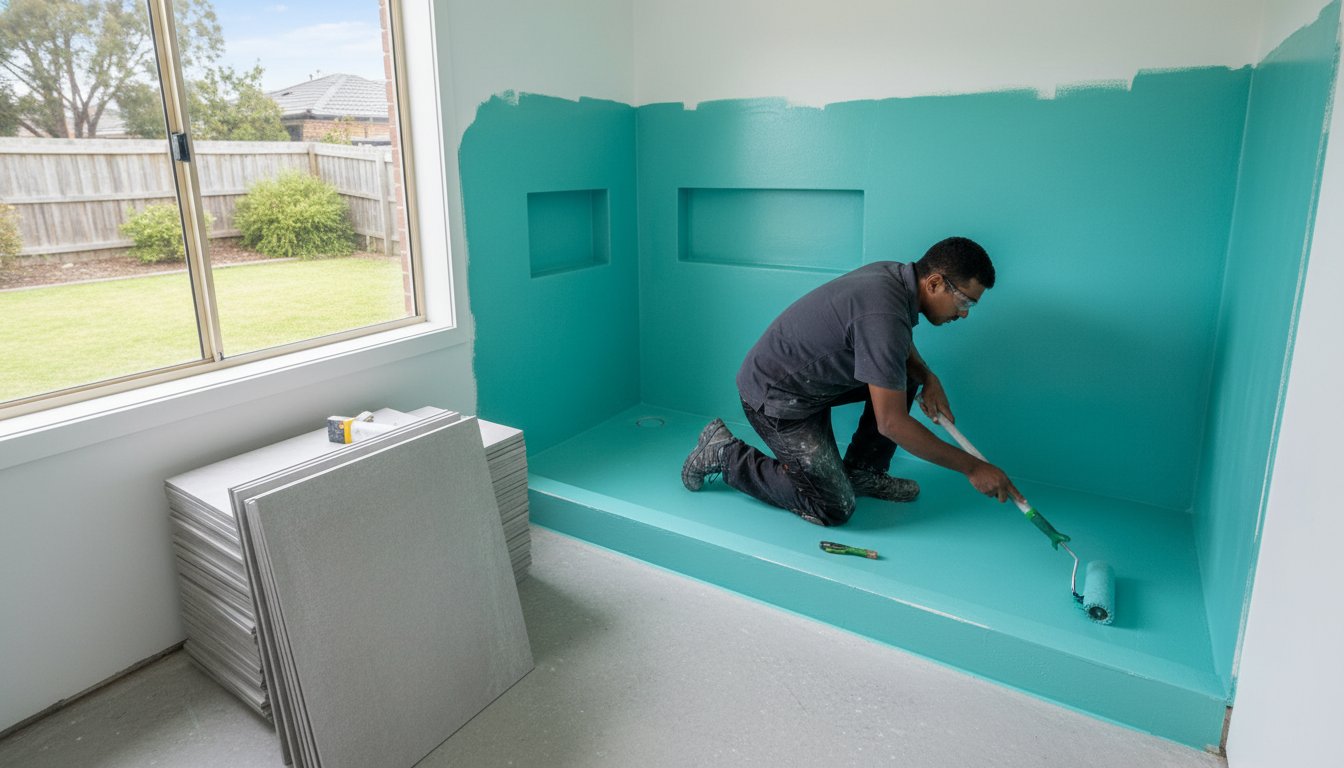
Your brand-new home extension is more than just a lifestyle upgrade; it is a significant investment that deserves to be protected from the ground up. You have likely spent months planning the perfect layout and selecting the right finishes, yet the fear of hidden structural rot or failing a council inspection can quickly dampen that excitement. Getting the internal waterproofing for home extensions Colyton residents expect means looking beyond the tiles to the invisible barriers that keep your home healthy. It's about ensuring that every junction and shower wall meets the latest rigorous standards before the first drop of water ever hits the floor.
We understand the confusion surrounding the 2026 updates to Australian Standard AS 3740 and the worry of hiring a tradesperson who might cut corners. This guide ensures your new space remains bone-dry and fully compliant with local Penrith City Council requirements for years to come. We'll walk you through an expert checklist of mandatory membrane thickness, stricter junction sealing, and the vital compliance certificates you need for total peace of mind. By the end of this article, you'll know exactly how to secure a leak-free result that protects your home for the next decade and beyond.
Key Takeaways
- Understand why new extensions are uniquely vulnerable to leaks due to structural settling and how professional waterproofing protects your long-term investment.
- Navigate the complexities of Australian Standard AS 3740 and learn why a compliance certificate is a non-negotiable requirement for your final council inspection.
- Compare liquid and sheet membranes to determine the most effective internal waterproofing for home extensions Colyton projects require based on your specific floor plan.
- Follow our 10-point inspection guide to spot visual cues of a correctly applied membrane before the final tiles are laid.
- Learn the benefits of a unified approach where construction, waterproofing, and tiling are handled by one professional team to ensure structural integrity and peace of mind.
Why Internal Waterproofing is Critical for Colyton Home Extensions
Internal waterproofing is the invisible shield that protects your home's structural integrity. In a home extension, this process involves applying specialised barriers to wet areas like laundries, bathrooms, and even certain living zones to prevent moisture from seeping into the timber or masonry. While many homeowners focus on the aesthetic of their new tiles, the actual success of the project relies on what sits beneath them. Quality Waterproofing methods are essential because a home extension isn't just a simple addition; it is a new structure that must learn to live in harmony with an existing one. This connection point is where most issues begin if not handled by a meticulous professional.
Extensions are notoriously more prone to leaks than original builds. This happens because the new slab or floor system undergoes a period of "settling" as it adjusts to the weight of the new construction. If your internal waterproofing for home extensions Colyton project isn't handled with this movement in mind, the membrane can tear, leading to structural rot that is incredibly expensive to rectify. Fixing a failed membrane often involves stripping back tiles and screed, which can cost thousands of dollars and weeks of stress. Investing in high-end materials from the start is the only way to avoid these financial pitfalls.
The Junction Challenge: Connecting New and Old Structures
The most vulnerable point of any extension is where the old house meets the new addition. This expansion joint is a high-risk leak zone because the two structures will always move independently of each other. We use specific techniques to join new slabs to existing brickwork, ensuring the seal remains watertight even as the house shifts. Bond breakers are critical here. They allow the membrane to stretch over a joint without snapping, acting like a rubber band that manages structural movement without losing its seal. Without these precision details, water can easily find a path into your foundations.
Western Sydney Soil and Structural Movement
Colyton is known for its reactive clay soil, which expands and contracts significantly based on moisture levels. This causes local homes to "breathe" and shift throughout the seasons. Rigid waterproofing systems simply cannot keep up with this level of movement in Western Sydney. Instead, we prioritise flexible, elastomeric membranes. These high-performance materials are designed to elongate and recover, providing long-term protection that won't crack when the ground beneath your extension inevitably moves. Choosing a system that understands the local landscape is the key to a successful, leak-free result.
Australian Standards and Compliance: Navigating AS 3740
Compliance isn't just about ticking boxes for the local council; it's the foundation of a safe and durable home. In Australia, the primary rulebook for this work is AS 3740, which governs the waterproofing of domestic wet areas. As of the 2026 updates, these standards have become even more rigorous to combat the rising incidence of moisture damage in new builds. For your internal waterproofing for home extensions Colyton project, adhering to these rules is what separates a high-end, professional result from a DIY disaster that could compromise your entire structure.
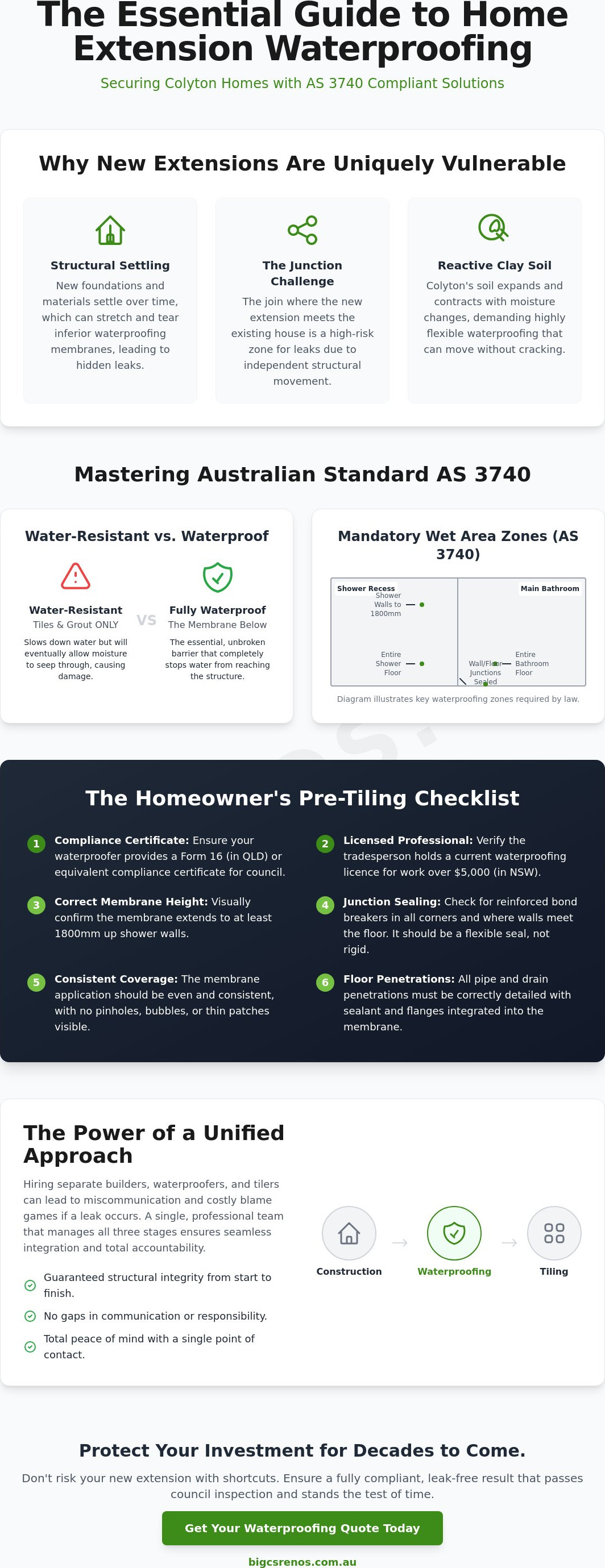
One of the most important distinctions to understand is the difference between "water resistant" and "waterproof" materials. Many homeowners mistakenly believe that tiles and grout are waterproof. In reality, they are only water resistant, meaning they slow down moisture but don't stop it. The actual waterproofing is the specialised membrane applied underneath the tiles. Under NSW Fair Trading regulations, any waterproofing work valued at over $5,000 must be performed by a licensed contractor. This ensures the person handling your extension has the technical expertise to meet the National Construction Code requirements.
Mandatory Waterproofing Zones in Your Extension
Your new extension likely includes a mix of wet and dry zones, each with specific requirements. Shower recesses are the highest priority. Under the 2026 standards, shower walls must now be waterproofed to a minimum height of 1,800 mm. For unenclosed showers, the requirements extend even further across the floor to account for overspray. Laundries and powder rooms are often overlooked, yet they require strict adherence to junction sealing. The "1,500 mm rule" remains critical for splash zones around vessels like bathtubs or vanities, ensuring that any accidental spills don't seep into the wall cavities. If you're feeling overwhelmed by these technicalities, you can organise a professional assessment to ensure every zone is covered.
The Importance of Waterproofing Certification
You cannot secure a Final Occupation Certificate (OC) for your extension without a valid Waterproofing Compliance Certificate. This document is your proof that the work meets AS 3740 and was completed by a licensed professional. It is also a vital piece of paper for home insurance and future property sales. Before work begins, always verify your tradie's licence through the NSW Fair Trading website. A reputable expert will be happy to provide their details and document the membrane thickness during application. For a deeper dive into these requirements, read our Bathroom Waterproofing: The Ultimate Homeowner’s Guide to AS 3740 Standards to stay fully informed.
Choosing the Right Waterproofing System for New Spaces
Selecting the ideal system for internal waterproofing for home extensions Colyton projects requires a bespoke approach rather than a one-size-fits-all solution. Your choice depends heavily on the structural bones of your new addition. For a ground-floor extension on a concrete slab, your needs differ significantly from a second-storey addition built with timber joists. The goal is to select a membrane that can handle the specific stresses of your floor plan while ensuring a seamless bond with your chosen tiles and adhesives.
One of the most critical factors often overlooked is "cure time." Rushing the transition from waterproofing to tiling is a recipe for structural disaster. If a membrane hasn't fully cured, moisture remains trapped beneath the surface. This leads to delamination, where the tiles eventually lift or the membrane itself fails to bond. Patience during this phase is what ensures your extension stays bone-dry for the next 15 years. Additionally, you must verify that your waterproofing product is chemically compatible with your tile adhesive to prevent "adhesion failure" down the track.
Liquid Membranes vs. Sheet Membranes
Liquid-applied membranes are the most frequent choice for Western Sydney renovations due to their seamless finish and ease of application around complex drains. However, they require strict adherence to dry-film thickness (DFT) measurements. If applied too thin, they won't withstand structural shifting; if too thick, they can become brittle. Sheet membranes, while often more expensive, offer superior thickness control and are excellent for second-storey timber extensions where high movement is expected. The success of a sheet system relies entirely on expert "lapping" at the seams to prevent water ingress at the joints.
- Liquid Systems: Best for standard bathrooms and laundries with multiple penetrations.
- Sheet Systems: Ideal for high-movement zones or over timber substrates.
- Durability: Both systems offer long-term protection when installed by a professional who understands Colyton's soil conditions.
Priming and Substrate Preparation
A common mistake is assuming a quick sweep of the floor is sufficient preparation. The science of substrate priming is what actually creates the bond between your extension's floor and the waterproofing layer. New concrete slabs, in particular, hold significant moisture that must be managed before any membrane is applied. We use specialised primers that penetrate the surface to create a stable foundation. This meticulous preparation is what allows for Professional Tiling Colyton results that look stunning and remain structurally sound. Without proper priming, even the most expensive membrane will eventually peel away from the floor.
The Colyton Homeowner’s Internal Waterproofing Checklist
Once your extension reaches the lock-up stage, the pressure to finish can feel intense. However, the pre-tiling phase is your final opportunity to verify the invisible work that keeps your home dry. Taking an active role in the internal waterproofing for home extensions Colyton residents invest in means knowing exactly what to look for before the tradies move to the next stage. Use this checklist as your guide to ensure your new living space is built to last. If you want to ensure your project passes every check with flying colours, you can book a consultation with our specialised team today.
Pre-Application Check
Before the first drop of membrane is applied, the foundation must be perfect. A membrane is only as good as the surface it clings to. Ensure your builder has ticked these boxes:
- Substrate Integrity: The floor must be dry, level, and completely free of dust, oil, or construction debris.
- Water Stops: Aluminium or plastic angles must be installed at all doorways and shower perimeters to create a physical barrier.
- Bond Breakers: Look for specialised tapes or neutral-cure silicone applied to all internal corners. These allow for independent movement between the wall and floor.
Post-Application Check
After the membrane has been applied but before the tiles arrive, conduct a visual inspection. A correctly applied membrane should look like a continuous, rubbery skin without any breaks. Check for these specific cues:
- Pinhole Inspection: Look closely for tiny bubbles or "pinholes" where the coating might be thin. These are common entry points for moisture.
- Vertical Heights: Confirm the membrane reaches the heights we discussed earlier, such as 1800mm in shower recesses and 150mm for general wall-to-floor junctions.
- Cure Verification: Ensure the "curing" period has been fully met. The membrane should not feel tacky or soft before tiling begins.
The gold standard for any new extension is the 24-hour flood test. This involves plugging the floor wastes and filling the area with a few centimetres of water. If the water level remains constant after 24 hours, you have a watertight seal. It's a simple step that provides immense peace of mind. While you are at it, take clear photos of the completed waterproofing, especially around corners and waste pipes. These images serve as vital evidence for future insurance claims or property valuations, proving that your internal waterproofing for home extensions Colyton was handled with professional precision.
Finally, ask your builder two critical questions: "Has the dry film thickness been measured to meet the 2026 standards?" and "When will I receive the compliance certificate?" A transparent professional will have these answers ready. Documenting this process now prevents costly "cowboy" repairs later and ensures your new addition remains a source of joy rather than a structural headache.
Professional Waterproofing and Construction in Colyton
At Bigcs Renos, we view waterproofing as a core structural element rather than a final finishing touch. By integrating the membrane application directly into our build process, we ensure that every internal waterproofing for home extensions Colyton project we manage is built on a foundation of absolute integrity. When construction, waterproofing, and tiling are handled by separate, uncoordinated trades, the risk of miscommunication increases significantly. If a leak occurs, homeowners are often left in the middle of a blame game between the builder and the waterproofer. We eliminate this stress by taking full responsibility for the entire wet area envelope, from the first stud to the final tile.
Our commitment to excellence extends to our strict adherence to AS 3740 and Penrith City Council regulations. We don't just aim for the minimum standard; we strive for a level of craftsmanship that protects your home for decades. This means using advanced membrane technologies that are specifically suited to the Western Sydney climate and soil conditions we discussed earlier. By keeping the entire process in-house, we can verify that every junction is sealed and every cure time is respected without the pressure of outside scheduling conflicts. This holistic approach is why our extensions remain bone-dry and structurally sound long after the final inspection.
The Bigcs Renos Quality Guarantee
We believe that a high-end extension deserves high-end protection. This is why we often recommend premium epoxy grouting for wet areas. Unlike traditional cement-based grout, epoxy is virtually waterproof and highly resistant to stains and mould, providing an extra layer of security for your new space. For more information on why this material is a game-changer for modern homes, check out our guide on Professional Regrouting Shower Tiles in Colyton: The Epoxy Grout Myth-Busting Guide. Every project we undertake comes with full certification, ensuring your investment is council-compliant and fully insured.
Planning Your Extension with Confidence
The secret to a successful home addition lies in the early planning of your wet area layouts. By involving our team at the design stage, we can help you organise plumbing and drainage in a way that minimises complex junctions and remedial waterproofing costs. We coordinate meticulously with every specialist on-site to ensure that the waterproof barrier remains unbroken throughout the build. If you are ready to transform your home with a space that is as durable as it is beautiful, the next step is simple. You can Request a consultation for your Colyton home extension and let our visionary experts guide you through the process with transparency and pride.
Build Your Future on a Watertight Foundation
Your new home extension is a significant investment that adds both value and comfort to your lifestyle. By following our 10-point checklist and understanding the nuances of AS 3740, you've taken the first step toward a space that isn't just beautiful, but structurally sound. Choosing high-performance membranes and ensuring meticulous substrate preparation will protect your addition from the unique movement of Western Sydney's reactive soil. Professional certification isn't just a council requirement; it's your long-term insurance policy against structural rot.
When you're ready to move from planning to execution, our team provides the expert internal waterproofing for home extensions Colyton residents trust. With over 15 years of Sydney renovation experience, our fully licensed and insured NSW tradespeople are specialists in AS 3740 compliance and certification. We take immense pride in delivering a seamless barrier that stands the test of time, ensuring your peace of mind for the next decade and beyond.
Protect your new extension with Colyton’s waterproofing experts—Get a quote from Bigcs Renos today
We look forward to helping you create a dry, healthy, and compliant home you can enjoy with total confidence.
Frequently Asked Questions
Do I really need a waterproofing certificate for a small laundry extension in Colyton?
Yes, you definitely need a waterproofing certificate for any laundry extension. Under Australian Standard AS 3740, laundries are classified as wet areas and must be properly sealed to prevent moisture from escaping the room. Penrith City Council requires this documentation to issue your final Occupation Certificate. Without it, you may face legal issues or complications when you eventually decide to sell your property.
How long does the waterproofing membrane need to dry before I can tile over it?
Most high-quality liquid membranes require between 24 and 48 hours to cure fully before tiling begins. This cure time is heavily affected by the humidity and temperature in Colyton at the time of application. Rushing this process can lead to the membrane failing to bond correctly with the tile adhesive. Always follow the specific manufacturer's instructions to ensure the structural integrity of the barrier remains intact.
Can I do the waterproofing myself to save money on my home extension?
You cannot legally perform your own waterproofing if you want a compliant Occupation Certificate in New South Wales. For work valued at over $5,000, NSW Fair Trading requires a licensed contractor to carry out the task. Even for smaller jobs, only a licensed professional can issue the compliance certificate required by your certifier and insurance provider. Professional application is the only way to guarantee the work meets the 2026 standards.
What happens if the waterproofing fails after my extension is finished?
A waterproofing failure in a new addition can lead to severe structural rot and toxic mould growth within your walls. Because the membrane sits beneath the tiles, fixing a leak usually requires stripping the entire area back to the substrate. This is a disruptive and expensive process that far outweighs the initial cost of professional internal waterproofing for home extensions Colyton services. Precision during the initial build is your best defence.
Is liquid or sheet waterproofing better for a second-storey extension?
Sheet membranes are often the superior choice for second-storey timber extensions because they handle structural movement more effectively. Timber joists naturally flex more than concrete slabs, and sheet systems provide consistent thickness and high elasticity to manage this movement. Liquid membranes remain an excellent, seamless choice for ground-floor slabs where there are many complex penetrations and drains to seal perfectly.
How much does professional internal waterproofing add to the cost of an extension?
Professional waterproofing is a relatively small investment compared to the total cost of a home extension. While costs vary based on the size and complexity of your wet areas, it acts as a vital insurance policy for your new space. Investing in quality application now prevents the catastrophic expenses associated with water damage and structural repairs that occur when a cheap or DIY system fails.
Does the Penrith City Council inspect the waterproofing during the build?
Penrith City Council or your Private Certifier will typically verify the waterproofing by reviewing your compliance certificate rather than inspecting the wet membrane itself. However, they may conduct a site visit during the build to ensure the project aligns with the approved plans and National Construction Code. Having your documentation and photos ready is the key to passing your final inspection without any delays.
How can I tell if my builder is using a compliant waterproofing membrane?
You can verify a membrane's compliance by checking that it meets Australian Standard AS 4858 on the product label. This information should be clearly printed on the packaging or the technical data sheet provided by the manufacturer. Your builder should be happy to provide this documentation along with details on the application method to ensure the internal waterproofing for home extensions Colyton meets the latest regulatory requirements.


