
Did you know that waterproofing defects are the most common serious building issue in NSW, affecting 23% of surveyed strata buildings? It's a sobering statistic that often turns the search for a reliable bathroom renovation checklist into a stressful mission to avoid hidden leaks and sudden budget blowouts. You want a space that feels like a private sanctuary, yet the fear of dodgy workmanship or conflicting advice on material durability can make the planning process feel overwhelming. We understand that your home is your greatest asset, and you deserve a result that matches your high standards for quality and meticulous craftsmanship.
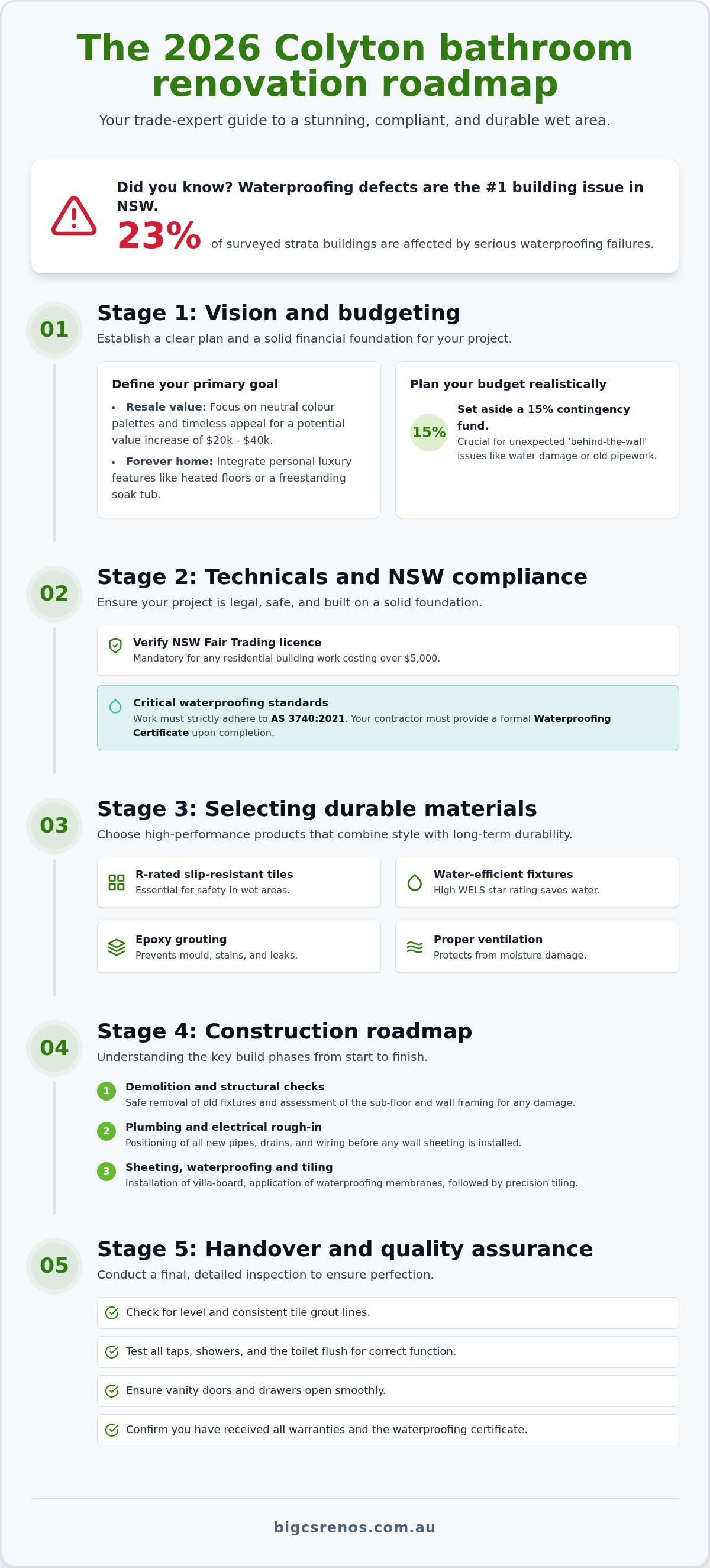
This ultimate 2026 Colyton guide provides a trade-expert roadmap to ensure your project is stunning, fully compliant with AS 3740:2021 standards, and built to last. We've distilled over 15 years of local industry experience into a clear framework that addresses everything from NSW Fair Trading requirements to the precision of epoxy grouting. We will walk you through every essential phase, from setting a realistic contingency fund to the final aesthetic flourishes, giving you the peace of mind that your new wet area is 100% waterproofed and professionally executed.
Key Takeaways
- Learn how to define your project goals and establish a realistic 2026 budget that includes a 15% contingency fund for unforeseen structural repairs.
- Use our comprehensive bathroom renovation checklist to ensure your project complies with mandatory NSW Fair Trading licences and AS 3740:2021 waterproofing standards.
- Discover the secrets to selecting durable, high-performance materials like R-rated slip-resistant tiles and water-efficient fixtures that stand the test of time.
- Understand the essential construction milestones, from the initial demolition and structural checks to the critical plumbing and electrical rough-in phases.
- Master the final handover process by knowing exactly how to conduct a quality assurance walk-through to ensure every tile and tap meets professional standards.
Stage 1: The Vision and Budgeting Checklist
Every successful transformation begins with a clear, inspired vision. It's about more than just selecting a pretty tile; it's about understanding the "why" behind your project. Before you pick up a sledgehammer, you must decide if you're renovating to maximise resale value or creating a bespoke sanctuary for your family's long-term comfort. This distinction dictates every subsequent choice on your bathroom renovation checklist, from the durability of the vanity to the sophistication of the tapware.
If you're planning to sell your Colyton home soon, focus on timeless appeal. A standard mid-range renovation can add an estimated $20,000 to $40,000 in perceived value to a property, provided the finishes are professional and the colour palette remains neutral. For those creating a forever home, this is your chance to integrate luxury features like heated flooring or a freestanding soak tub that reflects your personal style. Once your goal is set, create a digital or physical mood board. This helps you settle on a consistent aesthetic, ensuring that your tiles, cabinetry, and hardware harmonise perfectly rather than clashing once installed.
Defining Your Bathroom Layout and Function
Your first step in any robust bathroom renovation checklist should be a reality check on your existing layout. Moving plumbing points, such as relocating a toilet or a shower waste, significantly increases labour costs and project complexity. Assess the current flow of the room; for instance, does the door swing awkwardly into the vanity? Consider your storage needs meticulously. A recessed shaving cabinet provides a sleek, mirrored look while hiding clutter, while a double vanity can be a total game-changer for busy morning routines. If you're planning for the future, a walk-in, step-free shower is a wise choice for long-term accessibility and a modern, airy feel.
The 2026 Renovation Budget Breakdown
A realistic budget is the backbone of a stress-free renovation. In 2026, it's vital to allocate your funds across three main pillars: labour, fixtures, and high-quality materials. We recommend setting aside a 15% contingency fund specifically for 'behind-the-wall' surprises. When the old tiles come off, it's common to find hidden water damage or outdated pipework that requires immediate attention. Your budget must also account for essential compliance costs, such as structural permits if you're removing walls. Above all, never skimp on the invisible essentials. Allocating a dedicated line item for premium waterproofing and epoxy grouting ensures your beautiful new space is protected against leaks for decades to face. This isn't just a cost; it's an investment in your home's structural integrity and your own peace of mind.
Stage 2: Technical Essentials and NSW Compliance
Once your design is finalised, the real work begins behind the scenes. In New South Wales, any residential building work exceeding $5,000 must be performed by a contractor with a valid NSW Fair Trading licence. Checking this is the first non-negotiable step on your bathroom renovation checklist. Working with a licensed professional ensures your project is covered by home building compensation insurance, providing essential protection for your home and your peace of mind.
Before the first new tile is laid, you must conduct a thorough site assessment for historical issues. Look for telltale signs of trouble like mouldy skirting boards, cracked grout, or a persistent damp scent in adjacent bedrooms. Catching these problems early prevents future structural rot and ensures your 2026 renovation starts on a solid, dry foundation. Effective ventilation is equally vital. A high-extraction fan isn't just a luxury; it's a necessity to protect your premium finishes from mould and condensation damage over the long term.
Waterproofing: The Most Critical Checklist Item
This is the "make or break" stage of any wet area project. In NSW, your contractor must provide a formal Waterproofing Certificate upon completion to certify that the work strictly adheres to AS 3740 standards. This document is your guarantee that the floor-to-wall joints and shower recesses are hermetically sealed using high-quality membranes suited for our local Western Sydney climate. If you're ready to secure your home's future, our team can help you navigate these technical requirements during your bathroom renovation planning.
Plumbing and Electrical Rough-ins
Precision is everything during the rough-in phase. Confirm your tapware heights and spout lengths before the wall linings are installed, as it's far easier to adjust pipework now than to fix a low-hanging spout later. Plan for modern convenience by installing power points (GPOs) inside your vanity for shavers and hair dryers. If you're dreaming of a touch of luxury, consider underfloor heating or heated towel rails early; these require dedicated electrical circuits to be mapped out before the floor is sealed and tiled.
Stage 3: Selecting Durable Materials and Fixtures
With the technical framework of Stage 2 firmly in place, you can now focus on the tactile elements that define your room's character. Selecting materials is a highlight of any bathroom renovation checklist, but it requires a careful balance of aesthetic flair and practical durability. In a high-use environment, your choices must resist constant moisture, prevent slips, and stand up to daily wear without losing their lustre or structural integrity.
Your journey begins with the surfaces that ground the space. It is vital to choose materials designed specifically for the unique demands of a wet area. From the density of your cabinetry to the water efficiency of your showerhead, every selection should be made with a long-term perspective. By prioritising quality over short-term savings, you ensure your Colyton home remains a beautiful, functional sanctuary for years to come.
Tiling and Grouting for Longevity
Tiles are the most visible part of your renovation, yet their performance depends on technical ratings. Always prioritise tiles with an appropriate slip rating (R-rating) for wet areas; an R10 or R11 finish is typically recommended for shower floors to ensure safety underfoot. While large format tiles offer a sleek, modern look with fewer grout lines to clean, mosaics can provide better grip and allow for easier grading toward the floor waste during the bedding process.
The real secret to a maintenance-free finish lies in your choice of grout. While traditional cement-based grout is common, we highly recommend specialised epoxy grouting for its superior stain resistance and waterproof properties. Unlike porous cement grout, epoxy does not absorb water or harbour mould, making it the gold standard for preventing leaks and discolouration. Ensure your tiler is specifically experienced with this material, as it requires a precise and meticulous application technique compared to standard porcelain or natural stone installations.
Fixtures and Fittings Selection
When choosing tapware, look beyond the finish and check the WELS (Water Efficiency Labelling and Scheme) rating. High-rated fixtures can significantly reduce your water bills by restricting flow without sacrificing pressure. For cabinetry, always opt for High Moisture Resistance (HMR) materials. Standard boards can swell and delaminate in humid conditions, whereas HMR vanities are designed to maintain their shape in the steam of a busy family bathroom.
Finally, consider the hygiene and cleaning benefits of your fixtures. Rimless toilets are a top choice for 2026, as they eliminate the hidden crevices where bacteria usually gather. For baths, a freestanding model creates a stunning focal point, but a back-to-wall bath often proves more practical in smaller Colyton ensuites by eliminating hard-to-reach cleaning gaps. When it comes to finishes, brushed nickel or gunmetal are excellent alternatives to matte black, as they are far more forgiving when it comes to visible fingerprints and water spots.
Stage 4: The Construction Roadmap and Timeline
The construction phase is where the meticulous planning from your bathroom renovation checklist meets the physical skill of the trades. For most Colyton homes, a full transformation takes approximately three to four weeks to complete. This period is a carefully choreographed sequence of events; if one trade is delayed, it can ripple through the entire project. Understanding this roadmap helps you stay organised and manages your expectations during the messiest part of the journey.
Work begins with demolition. This isn't just about removing old fixtures; it's a critical investigative stage where we check for structural rot or historical water damage that might have been hidden for decades. Once the space is a blank canvas, the plumbing and electrical rough-ins take place. This is your last chance to confirm the exact placement of your vanity and GPOs before the walls are closed. If you're ready to start this journey with a team that values precision, our professional bathroom renovation team is here to guide you through every milestone.
Managing the Trade Sequence
The transition from rough-in to finishes relies on the "screed" and waterproofing. The screed is a sand and cement mix used to create a perfect "fall" towards the floor waste, ensuring water never pools in the corners of your new shower. Once the screed is set, the waterproofing membrane is applied. It's vital to allow for the correct curing time, often 24 to 48 hours depending on the product, before tiling begins. Rushing this stage is a recipe for future leaks. After tiling and epoxy grouting are complete, the plumber and electrician return for the "fit-off," where your taps, toilets, and lighting are finally installed.
Living Through the Reno
A renovation can be disruptive, so preparation is key to maintaining your sanity. Since your main bathroom will be out of action for up to a month, you'll need to plan for an alternative ensuite or perhaps a temporary portable bathroom. To protect the rest of your home, we use heavy-duty floor protection and dust barriers to minimise the spread of debris. Communication is the best tool for a stress-free build. We recommend setting a brief daily check-in with your project manager to stay updated on the day's progress and any upcoming trade arrivals. This transparency ensures the project remains on track and aligns with your original bathroom renovation checklist goals.
Stage 5: Final Handover and Quality Assurance
The final stage of your journey is where the conceptual vision becomes a functional reality. After weeks of careful construction, the handover is your opportunity to ensure every detail on your bathroom renovation checklist has been executed with the precision you expect. This isn't just about admiring the new aesthetic; it's a rigorous quality assurance phase designed to give you long-term peace of mind. We believe the final 5% of a project defines the overall quality of the work, and this is where our commitment to meticulousness truly shines.
Begin with a functional test of every element in the room. Run the shower and taps simultaneously to check for consistent water pressure and ensure the drainage is swift and efficient across the newly screeded floor. Flush the toilet multiple times to verify there are no leaks at the base or within the cistern. This is also the time to ensure the site has been professionally cleaned. A true trade professional doesn't leave behind grout haze on the tiles or trade waste in the corner of your yard; the space should be immaculate and ready for you to enjoy immediately.
Before the final sign-off, you must collect all essential documentation. This includes manufacturer warranties for your new fixtures, care manuals for premium stone surfaces, and your critical waterproofing compliance certificate. As we highlighted in the technical phase, this certificate is a mandatory requirement in NSW and serves as your guarantee that the wet area meets AS 3740 standards. Keep these documents in a safe place, as they're vital for both your home insurance and the future resale value of your Colyton property.
The Final Inspection Checklist
A thorough inspection requires a keen eye for detail. Examine all silicone seals around the vanity, bath, and shower screen; they should be smooth, continuous, and entirely free from gaps. Verify that the hot and cold water are correctly plumbed, as reversed connections are a common but frustrating post-handover discovery. Finally, confirm that the vanity and mirror are mounted at the exact heights agreed upon during your initial planning, ensuring the room is as ergonomic as it is beautiful.
Why Choose Bigcs Renos for Your Colyton Project?
Choosing a partner for your home transformation is a significant decision that requires trust and transparency. At Bigcs Renos, we combine more than 15 years of industry experience with a genuine passion for high-end results and architectural precision. Our deep roots as a family-owned business in Colyton mean we understand the specific building standards and local supplier networks required to deliver a seamless, compliant experience. We take immense pride in our craftsmanship, particularly in high-stakes areas like waterproofing and epoxy grouting. If you're ready to turn your vision into a reality, start your stress-free bathroom renovation with Bigcs Renos today.
Bring Your Dream Bathroom to Life
Transforming your bathroom is a rewarding journey that balances inspired design with technical precision. By following this comprehensive bathroom renovation checklist, you've taken the first step toward ensuring your home's most vital wet area is both beautiful and built to last. From navigating the complexities of AS 3740 waterproofing standards to selecting the perfect epoxy grout for long-term durability, your focus on quality now will pay dividends in home value and daily comfort for decades to come.
At Bigcs Renos, we bring over 15 years of industry experience to every project we undertake. As a family-owned and locally operated business in Colyton, we take immense pride in being licensed NSW waterproofing specialists who understand the meticulous detail required for a flawless finish. We are here to guide you through every stage of the process with transparency, professional integrity, and a commitment to excellence. Book a Free Consultation with Colyton's Bathroom Experts today. Your ideal sanctuary is closer than you think, and we look forward to helping you create a space that truly shines.
Frequently Asked Questions
How long does a standard bathroom renovation take in Sydney?
A full bathroom renovation typically takes between three and four weeks to complete from the initial demolition to the final fit-off. This timeline accounts for essential technical stages; such as the 24 to 48 hours required for waterproofing membranes to cure properly before tiling can commence. Projects involving significant structural changes or custom-made cabinetry may extend this duration by an additional week or two.
Do I need council approval for a bathroom renovation in Colyton?
You generally don't need council approval for cosmetic updates or "like-for-like" replacements; such as retiling or installing a new vanity in the same position. However, Penrith City Council requires a Complying Development Certificate (CDC) or a Development Application (DA) if your project involves structural changes, moving load-bearing walls, or relocating plumbing fixtures. It is always wise to verify your specific plans against the current exempt development codes before work begins.
What is the most expensive part of a bathroom remodel?
Labour and the high-stakes trades of waterproofing and tiling often represent the largest portion of a renovation budget. These technical phases are the most critical for the room's longevity and structural integrity; making them a vital investment on any bathroom renovation checklist. While high-end fixtures can add up, the precision required to seal a wet area properly is where you should never look to cut corners.
Is epoxy grout really better than standard cement grout?
Epoxy grout is significantly superior to standard cement grout because it is non-porous and almost entirely resistant to stains, chemicals, and moisture. Unlike traditional cement-based grout, which can harbour mould and discolour over time, epoxy remains pristine and provides an additional barrier against leaks. It is the gold standard for Colyton homeowners who prioritise a low-maintenance finish and long-term durability in their wet areas.
How can I tell if my bathroom waterproofing has failed?
Common signs of failed waterproofing include persistent damp smells, mould growth on skirting boards in adjacent rooms, and peeling paint on the reverse side of bathroom walls. You might also notice tiles that sound "hollow" when tapped or grout that remains damp long after the shower has been used. Catching these signs early is crucial; especially since waterproofing defects are the most common serious building defect found in NSW strata communities.
Can I stay in my house during a bathroom renovation?
You can stay in your home during the renovation provided you have access to a second bathroom or ensuite for the duration of the project. If your home only has one bathroom, you will need to arrange for a temporary portable ensuite to be installed on-site for the three to four-week build period. We use heavy-duty dust barriers and floor protection to ensure the rest of your living space remains clean and habitable throughout the construction.
What should I look for in a licensed bathroom renovator?
A reputable renovator must hold a valid NSW Fair Trading licence for any residential work valued at more than $5,000. You should also look for a professional who provides a formal Waterproofing Certificate, holds current home building compensation insurance, and has a proven track record with AS 3740 standards. Local expertise in the Penrith area is a major advantage; as it ensures the team understands local building styles and has established relationships with quality suppliers.
How much should I budget for a mid-range bathroom renovation in 2026?
A mid-range budget should account for a complete refresh including quality tiles, modern fixtures, and professional waterproofing. While the total investment depends on the size of the room and your choice of finishes, it's essential to plan for high-quality materials that offer long-term value. Always include a 15% contingency fund in your bathroom renovation checklist to cover unforeseen "behind-the-wall" issues; such as hidden water damage or outdated pipework discovered during the demolition phase.


