
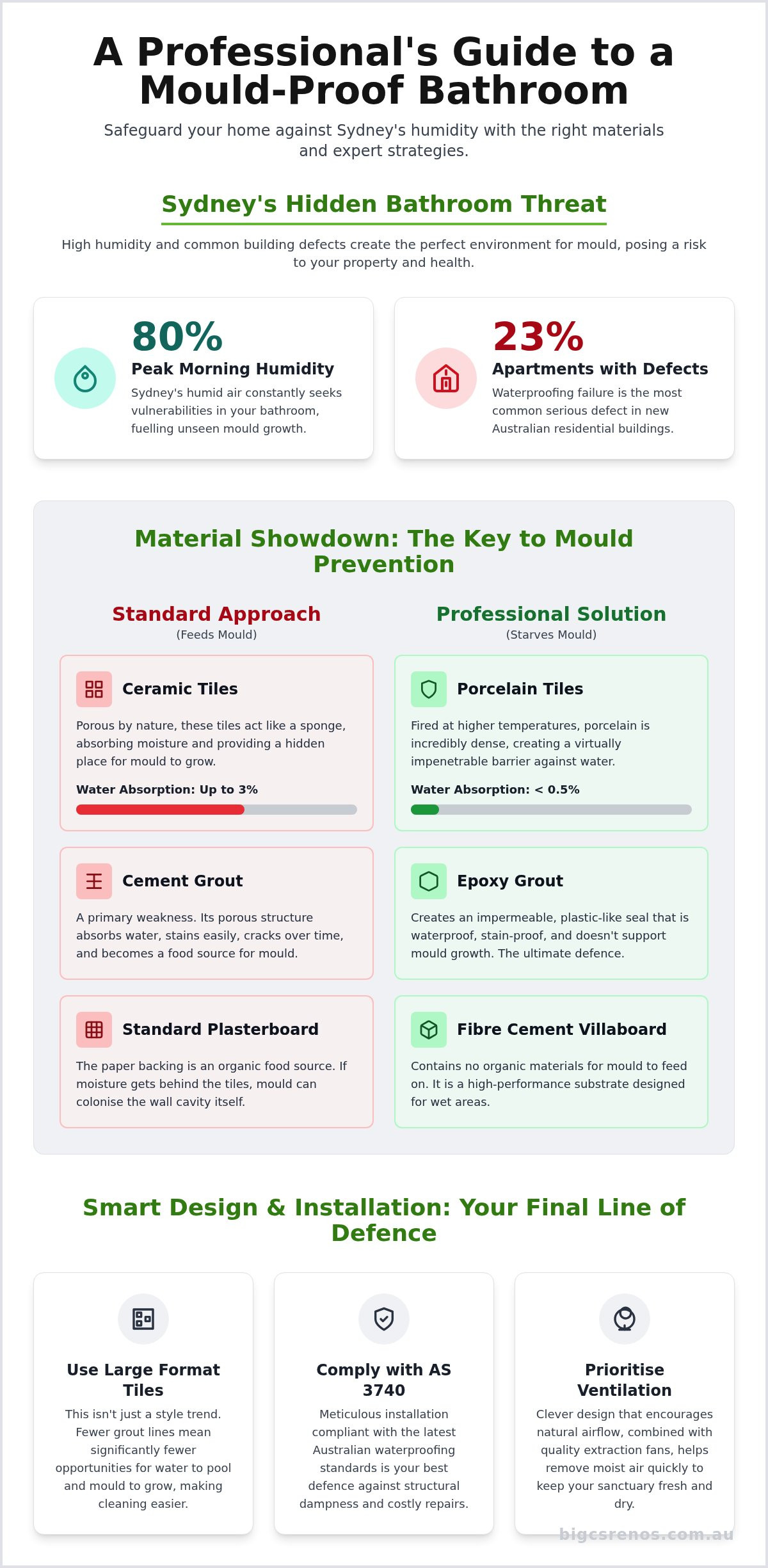
Did you know that waterproofing is the most common serious defect in Australian residential buildings, with 23% of apartment projects reporting significant failures? In Sydney's humid climate, where morning humidity can soar to 80%, your bathroom faces a constant battle against dampness. Selecting high-quality mould resistant bathroom materials isn't just about style; it's a critical step to prevent persistent black mould and protect your family's health.
We understand the frustration of spending your weekends scrubbing grout lines only to see those dark spots return, or worrying about the hidden damage behind your tiles. You deserve a sophisticated space that stays pristine without the constant maintenance. This guide shares professional insights into creating a healthy, waterproof home using the latest 2026 industry standards. We will explore the shift toward non-porous porcelain slabs, the superior moisture resistance of epoxy grout, and how the updated AS 3740 requirements ensure your renovation remains a beautiful, mould-free sanctuary for years to come.
Key Takeaways
- Understand why Sydney’s unique climate requires a strategic selection of mould resistant bathroom materials to safeguard your home’s health and longevity.
- Discover why non-porous porcelain and large-format tiles are the superior choice for minimising moisture absorption and reducing visible grout lines.
- Learn how professional epoxy grouting creates an impermeable barrier against dampness, effectively eliminating the primary breeding ground for bathroom mould.
- Explore the updated 2026 Australian waterproofing standards and why meticulous, compliant installation is your best defence against structural water damage.
- Identify clever design and ventilation strategies that encourage natural airflow, keeping your sanctuary feeling fresh and looking pristine with minimal effort.
Understanding Why Mould Thrives in Sydney Bathrooms
Sydney's climate is a double-edged sword. While we love the warmth, the humidity in areas like Colyton creates a perfect petri dish for fungal growth. Average relative humidity levels in Sydney reach between 65% and 80% during summer mornings. This moisture doesn't just sit on the surface; it actively seeks out vulnerabilities in your bathroom's construction. Without the right defensive strategy, your sanctuary can quickly become a breeding ground for spores.
Many homeowners assume that any tile will do for a renovation. However, standard ceramic tiles and traditional cement-based grout act like sponges. These materials are technically porous, meaning they contain microscopic pathways that allow water and spores to penetrate deep below the surface. This is where the real trouble begins. Once mould takes root inside a wall cavity or behind a tile, it becomes nearly impossible to eradicate with simple surface cleaners.
The Science of Porosity and Spore Growth
Porosity in the context of bathroom tiles refers to the ratio of microscopic pores or void spaces within a material's structure compared to its total volume.
Traditional building materials often marketed as "moisture-resistant" are frequently misunderstood. A standard plasterboard might resist a bit of dampness, but it doesn't prevent spores from colonising the paper backing if moisture gets through. High-performance options like fibre cement Villaboard are far superior because they don't provide the organic food source that mould requires to thrive. Choosing materials that lack these microscopic "hiding spots" is the first step in a professional build.
It's vital to distinguish between a bit of mildew on a shower curtain and structural dampness. Surface mould is an aesthetic and respiratory nuisance that can usually be wiped away. Structural dampness, however, involves water bypassing your Damp proofing layers and soaking into the timber frame or floor joists. This leads to wood rot, compromised structural integrity, and expensive remediation work that goes far beyond a simple retile.
Australian Climate Factors for Colyton Homeowners
Colyton residents face specific challenges with temperature fluctuations. When warm, moist air from a hot shower hits a cold wall, it reaches its dew point and turns into liquid water. Without the right mould resistant bathroom materials, this condensation sits in the grout lines and corners for hours. Selecting materials that can handle these rapid shifts in temperature and moisture is the only way to ensure a healthy home for the long term. Proper waterproofing isn't just a legal requirement; it's your primary shield against the relentless Sydney humidity.
Selecting Non-Porous Surfaces: The Best Tiles and Panels
Choosing the right base for your walls and floors is the most effective way to prevent spores from taking hold. Porcelain and ceramic tiles might look similar on the shelf, but their internal structure tells a different story. Porcelain is the champion of mould resistant bathroom materials because it's denser and fired at much higher temperatures. This process results in a water absorption rate of less than 0.5%. In contrast, traditional ceramic tiles can absorb up to 3% moisture. According to the NSW Health mould fact sheet, persistent dampness is a primary driver for household allergens. By selecting porcelain, you're building a surface that moisture simply can't penetrate.
Porcelain Tiles: The Gold Standard for Mould Resistance
Porcelain's density makes it nearly waterproof from the moment it's manufactured. To get the best results, we recommend choosing tiles with rectified edges. These are machine-cut to be perfectly square, allowing for incredibly thin grout lines. Tighter joins mean less space for water to pool and less surface area for mould to grow. This superior performance is why porcelain is a favourite for modern bathroom renovations. It provides a high-end aesthetic while doing the heavy lifting of keeping your home healthy.
Large Format Tiles and Slabs
The modern trend toward large-format tiles and porcelain slabs isn't just about style. It's a strategic move to eliminate the weakest link in any bathroom: the grout lines. By using larger panels, you reduce the number of joins significantly. Some porcelain slabs are large enough to cover an entire shower wall in a single piece. This creates a seamless, non-porous barrier that's exceptionally easy to clean. In smaller Colyton bathrooms, large tiles can actually make the space feel bigger while simultaneously cutting down your maintenance time.
While natural stone like marble or travertine offers a luxury feel, these materials are naturally porous. If you choose stone, professional sealing is non-negotiable to prevent moisture from soaking into the rock. For those seeking a 100% waterproof alternative, glass splashbacks or acrylic panels are excellent options. They offer zero porosity and no grout lines whatsoever. When you're planning your next project, partnering with a local bathroom renovation expert ensures your materials are selected for both beauty and long-term durability.
The Invisible Heroes: Waterproofing and Epoxy Grout
While high-quality tiles provide the face of your renovation, the materials holding them together determine if your space remains truly healthy. Standard cement-based grout is often the weakest link in any wet area. It's naturally porous, meaning it acts like a hard sponge that invites water to sit and soak. Over time, this moisture feeds fungal spores, leading to those stubborn black lines that no amount of scrubbing seems to fix. Choosing professional mould resistant bathroom materials means looking beyond the surface to the critical sealing layers beneath.
Why Epoxy Grouting is a Game-Changer
Epoxy grout is a revolution for Australian bathrooms. Unlike traditional cement-based options, it's made from a unique blend of epoxy resins and a filler powder. This chemical composition creates a finish that repels 100% of moisture. It's essentially impermeable, meaning water and grime simply cannot penetrate the surface. For Colyton homeowners, this translates to a bathroom that's virtually stain-proof and incredibly easy to maintain.
The durability of epoxy is unmatched; it won't crack or shrink like standard grout. However, it requires a high level of skill to apply correctly before it cures. A meticulous application ensures a smooth, non-porous finish that stays pristine for decades. Bigcs Renos provides specialised epoxy grouting services to ensure your new tiles are protected by the best possible barrier. By opting for epoxy, you're investing in a "mould-killer" that works around the clock to keep your home fresh.
Compliance with AS 3740 Waterproofing Standards
True protection starts with what you can't see. The waterproofing membrane behind your tiles is the most vital component of your build. In 2026, the Australian Building Codes Board has updated the AS 3740 standards to combat common failures. These stricter requirements mandate that shower walls must be waterproofed to a minimum height of 1800 mm. Additionally, licenced installers must now provide documented measurements of membrane thickness at all junctions and penetrations to ensure full compliance.
Poor waterproofing leads to structural dampness, where water bypasses the surface and rots the timber frame of your home. This hidden moisture creates massive colonies of fungi that compromise your indoor air quality. Understanding the health effects of mould is essential, as these spores can trigger respiratory issues and long-term allergies for your family. A compliant, professionally installed membrane is your primary shield against these risks. When combined with other mould resistant bathroom materials, it creates a fortress of hygiene that protects both your investment and your family's wellbeing.
Design and Ventilation Strategies for a Healthy Wet Area
Effective design works in tandem with mould resistant bathroom materials to ensure humidity never lingers. Even the most advanced porcelain tiles can't overcome poor airflow or standing water. By integrating smart ventilation and precision drainage, you create an environment where spores simply can't survive. This holistic approach ensures your renovation remains as healthy as it is beautiful.
Optimising Airflow and Light
Natural light is one of your strongest allies in the fight against dampness. UV rays act as a natural disinfectant, so large windows or skylights are highly beneficial for more than just aesthetics. For mechanical ventilation, calculating the correct fan capacity for your specific room volume is vital. A fan that is too weak will leave condensation on the ceiling for hours, eventually leading to peeling paint and mould colonies.
Position your exhaust vents directly above the primary moisture source, such as the shower or bathtub. You must also ensure there's an entry point for fresh air, like a gap under the door or an open window. This creates a cross-flow that prevents "dead air" zones where steam gets trapped in corners. Combining your fan with infrared heat lamps helps to dry out the air more quickly after a shower, further reducing the window for spore development.
Consider your shower screen design as well. Fully framed screens often have metal tracks that act as moisture traps. Transitioning to a frameless or semi-frameless design encourages better airflow and makes cleaning a breeze. Always finish your joins with high-quality, mould-resistant silicone. These specialised sealants contain active fungicides that provide a crucial barrier in high-moisture junctions.
Drainage and Slope Considerations
Standing water is a major contributor to grout discolouration and structural dampness. A successful bathroom remodel focuses heavily on the floor "fall" and the integration of mould resistant bathroom materials. According to Australian standards, floors in wet areas must have a continuous fall to the waste drain of between 1:80 and 1:50. This precision ensures that every drop of water finds its way to the drain rather than pooling in a corner.
Strip drains are an excellent choice for modern renovations because they allow for a larger drainage surface area. They handle high water volumes more efficiently than traditional centre-waste drains, keeping your floor drier and safer. Meticulous tiling ensures these gradients are subtle to the eye but highly effective in practice. If you're ready to eliminate dampness for good, request a professional consultation with our team to see how we can optimise your layout for a cleaner, healthier home.
The Professional Difference: Building for Longevity in Colyton
Selecting the right mould resistant bathroom materials is a vital first step, but the true success of your renovation rests on the hands that install them. In a climate as demanding as Greater Western Sydney's, you need a partner who understands the local conditions. Bigcs Renos brings over 15 years of industry experience to every Colyton home. We don't just renovate; we build with a forward-thinking mindset that prioritises your family's health and the structural integrity of your property.
Choosing premium, durable materials offers a significant long-term return on investment. While the upfront cost of high-end porcelain or epoxy finishes might be higher, the savings on cleaning supplies and professional remediation are substantial. A bathroom built to last won't require expensive grout repairs or water leak remediation in five years. It remains a stylish, low-maintenance asset that adds genuine value to your home while providing a safe environment for your loved ones.
Our Meticulous Approach to Wet Areas
Our process begins well before the first tile is laid. We prioritise structural integrity by using high-performance substrates like Villaboard, ensuring a solid, rot-resistant foundation. Every tiling project we undertake is executed with meticulous attention to detail, from the initial membrane application to the final epoxy seal. We believe that excellence is found in the layers you never see.
We take immense pride in our craftsmanship and our commitment to the latest AS 3740 waterproofing standards. This dedication ensures your bathroom isn't just beautiful on the surface; it's a fully certified, waterproofed sanctuary. Our expertise in epoxy grouting provides that final, impermeable shield against moisture. You can relax knowing that every corner, junction, and penetration has been handled by a seasoned professional who values transparency and precision.
Start Your Transformation Today
Planning a mould-proof renovation shouldn't be a stressful experience. We believe in a collaborative approach, working closely with you to select the ideal mould resistant bathroom materials for your unique vision. Whether you're looking for a contemporary ensuite or a full family bathroom overhaul, we're here to guide you through every choice with professional confidence and aspirational warmth.
We invite you to book a consultation for your Colyton home to discuss your goals. Our team will help you navigate the complexities of waterproofing and material selection while keeping your original intent at the forefront. Let's create a space that stays pristine and healthy for decades. Contact Bigcs Renos today to begin your journey toward a stunning, low-maintenance bathroom that truly lasts.
Transform Your Home into a Healthy Sanctuary
Creating a bathroom that successfully resists Sydney's relentless humidity requires a strategic shift from absorbent, traditional materials to high-performance systems. We've explored how non-porous porcelain slabs and epoxy grout form an impermeable barrier against spores. Adhering to the latest AS 3740 standards is also vital for long-term structural protection. By prioritising mould resistant bathroom materials, you're investing in a sophisticated space that remains pristine and maintenance-free for decades.
As licensed and insured NSW builders, our team specialises in AS 3740 compliant waterproofing and expert epoxy grout application to ensure every renovation is a masterpiece of hygiene and durability. Ready to say goodbye to scrubbing grout and hello to a fresh, stylish space that stays clean? Book Your Mould-Proof Bathroom Consultation with Bigcs Renos today. You deserve a home that supports your family's health, and a meticulously crafted bathroom is the perfect place to start.
Frequently Asked Questions
What is the most mould-resistant material for bathroom walls?
Large-format porcelain slabs are the most effective choice for bathroom walls. Their extremely high density results in a water absorption rate of less than 0.5%, which leaves no room for spores to penetrate the surface. By using these larger panels, you also significantly reduce the number of grout lines, which are the primary areas where moisture and grime tend to collect.
Is epoxy grout really worth the extra cost for mould prevention?
Epoxy grout is definitely worth the investment for long-term mould prevention. It's a resin-based product that's completely non-porous and waterproof. While traditional cement grout acts like a sponge and invites fungal growth, epoxy repels moisture and stains. This ensures your shower stays pristine for years without the need for harsh chemical cleaners or constant scrubbing.
How often should I reseal my bathroom tiles to prevent mould?
You should generally reseal natural stone tiles every 12 to 24 months to maintain their moisture barrier. If you have standard cement grout, it also requires regular sealing to stay effective against dampness. However, if you choose porcelain tiles paired with epoxy grout, you won't need to worry about resealing at all, making it a much lower-maintenance option for busy homes.
Can I use mould-resistant paint instead of tiling my bathroom?
Mould-resistant paint is an excellent choice for bathroom ceilings and the upper sections of walls. However, it cannot replace tiling in high-splash zones like showers. Australian building standards require durable, waterproof surfaces in wet areas to protect the home's structure from rot. Paint alone doesn't provide the necessary barrier to prevent moisture from soaking into the wall cavity.
Does a bigger exhaust fan solve all mould problems?
A powerful exhaust fan is only one part of a healthy bathroom strategy. While it effectively removes steam, it can't dry out moisture that has already soaked into porous materials like ceramic tiles or traditional grout. You need a combination of high-quality mould resistant bathroom materials and proper ventilation to keep the space truly healthy and dry.
What is the Australian Standard for bathroom waterproofing?
AS 3740 is the primary Australian Standard governing the waterproofing of internal wet areas. By 2026, these regulations have become stricter, requiring documented membrane thickness and increased waterproofing heights of 1800 mm in showers. Professional compliance with these standards ensures your bathroom remains watertight and protects your property's structural integrity from hidden dampness and rot.
How do I know if the mould in my bathroom is structural or just on the surface?
Surface mould typically appears as small spots on grout or silicone that disappear with a simple wipe. If the mould returns almost immediately or you notice damp patches on adjacent walls, it's likely structural. Musty smells and soft spots in the wallboard are also clear signs that moisture is trapped behind your tiles and requires professional attention.
Are large-format tiles harder to install than standard tiles?
Large-format tiles are more challenging to install because they require a perfectly level substrate to prevent "lippage" or cracking. Any slight unevenness in the wall or floor is magnified with larger tiles. Professional tilers use specialised suction tools and precision levelling systems to ensure a flawless finish and correct drainage, which is essential for preventing water pooling.


