
Choosing the cheapest grout for your bathroom renovation might actually be the most expensive mistake you ever make. Most homeowners expect their new shower to stay pristine, yet within a few years, many find themselves back on their hands and knees scrubbing stubborn mould from discoloured, porous lines. It's incredibly frustrating to watch a beautiful investment lose its lustre, especially when the fear of hidden leaks damaging your home's structural timber starts to set in.
We believe your bathroom should be a place of relaxation, not a source of constant maintenance. Discovering the benefits of epoxy grout in bathrooms is the first step toward a "set and forget" finish that offers genuine waterproofing peace of mind. While traditional cement grout often begins to break down within eight years, epoxy is a professional-grade insurance policy designed to last up to twenty years. In this guide, we will explore seven critical reasons why this durable, non-porous solution is the ultimate choice for a modern, colour-fast bathroom that stays looking brand new.
Key Takeaways
- Learn why epoxy grout offers a twenty-year lifespan, outlasting traditional cement alternatives by more than a decade.
- Discover how the non-porous resin bond creates a hygienic, mould-resistant surface that stays clean without harsh scrubbing.
- Understand the critical benefits of epoxy grout in bathrooms as a protective barrier against moisture damage and structural leaks.
- Compare the stain-resistant properties of epoxy against cement to see why it remains colour-fast even in high-traffic wet areas.
- Find out why professional application is essential to ensure a flawless finish and avoid permanent damage to your tiles.
Why Traditional Cement Grout Fails in Modern Australian Bathrooms
Most Australian homeowners opt for cement-based grout because it has been the industry standard for decades, but this choice often leads to a cycle of maintenance frustration. To understand why this happens, it helps to start with the basics of What is Grout? in its most common form. Traditional cementitious grout is essentially a mixture of water, cement, and sand. While it fills the gaps between your tiles effectively, it remains naturally porous. This means it acts like a microscopic sponge, absorbing dirty shower water, body oils, and soap residue every time you step into the shower. In our 15 years of experience across Sydney, we have seen how this porosity eventually undermines the beauty of a new bathroom.
The Science of Porosity and Mould Growth
Those microscopic pores are a hidden trap for your wet areas. They catch soap scum and skin cells, creating a feast for mould and bacteria. Once mould takes root inside those pores, no amount of surface cleaning will fully remove it because the roots are buried deep within the grout itself. Many homeowners try to resolve this by scrubbing harder with stiff brushes, but this physical force actually damages the grout surface. It creates tiny craters and fissures that allow even more grime to settle in. This cycle eventually leads to subsurface moisture issues, where water lingers behind the tile face, putting unnecessary pressure on your waterproofing membrane. One of the primary benefits of epoxy grout in bathrooms is that it eliminates this porosity entirely, stopping the mould cycle before it starts.
The Maintenance Cycle of Cement Grout
Staying on top of cement grout requires a commitment that most busy families simply cannot keep. To maintain any level of water resistance, you need to re-seal the lines every 12 to 18 months. Unfortunately, the harsh cleaning chemicals found on Australian supermarket shelves often strip these sealers away far sooner than expected. When the sealer fails, the grout begins to stain and discolour, often turning a patchy grey or yellowish hue. This uneven appearance can ruin the aesthetic of a high-end tile choice. If you notice your grout is crumbling, falling out in chunks, or staying dark and damp for hours after use, your bathroom is likely suffering from grout fatigue. Moving away from this high-maintenance cycle is why so many people are now choosing professional alternatives to enjoy the long-term benefits of epoxy grout in bathrooms.
What is Epoxy Grout? The Two-Part Resin Revolution
While cement grout relies on a simple evaporation process to dry, epoxy grout is the result of a precise chemical reaction. It is a premium material made from two distinct parts: epoxy resins and a filler powder, usually silica sand. When these components are combined, they undergo a transformation that creates a non-porous, plastic-like bond. Unlike the cement alternative we discussed earlier, this material doesn't just dry; it cures into an incredibly dense and durable surface. One of the standout benefits of epoxy grout in bathrooms is its inherent ability to repel water and stains without ever needing a topical sealer.
The Chemical Advantage: Resin vs. Cement
The magic happens during the mixing stage. By combining the liquid resin with the hardener and filler, we create a substance that is virtually indestructible once set. Epoxy grout is a non-porous resin-based filler that creates a permanent, waterproof seal between tiles. This two-part mixing process ensures a rock-hard finish that doesn't shrink or crack like traditional grout. In fact, the bond strength of epoxy often exceeds the strength of the tile itself. This level of performance is why professionals look to Australian tiling standards when specifying materials for high-stress environments. It is also completely resistant to the acids and harsh bathroom cleaners that typically eat away at cement-based products.
Built-In Waterproofing Properties
While your primary defence against leaks is the membrane under your tiles, epoxy grout acts as a powerful secondary barrier. Because it is 100% waterproof, it prevents water from even reaching the substrate in the first place. This is a critical consideration for bathroom waterproofing and maintaining AS 3740 compliance in modern Australian homes. It serves as a structural insurance policy for your renovation, keeping moisture exactly where it belongs.
Beyond structural protection, epoxy solves the aesthetic nightmare of "efflorescence". This is that unsightly white salt staining that often leaches out of cement grout in damp conditions. Since epoxy contains no cement, these salts cannot form. The result is a clean, consistent finish that protects the integrity of your home's timber frame from moisture ingress. If you are planning a renovation, our team at Bigcs Renos can help you integrate these advanced materials for a truly durable result that looks spectacular for years.
Epoxy vs. Cement Grout: A Comparative Analysis for Homeowners
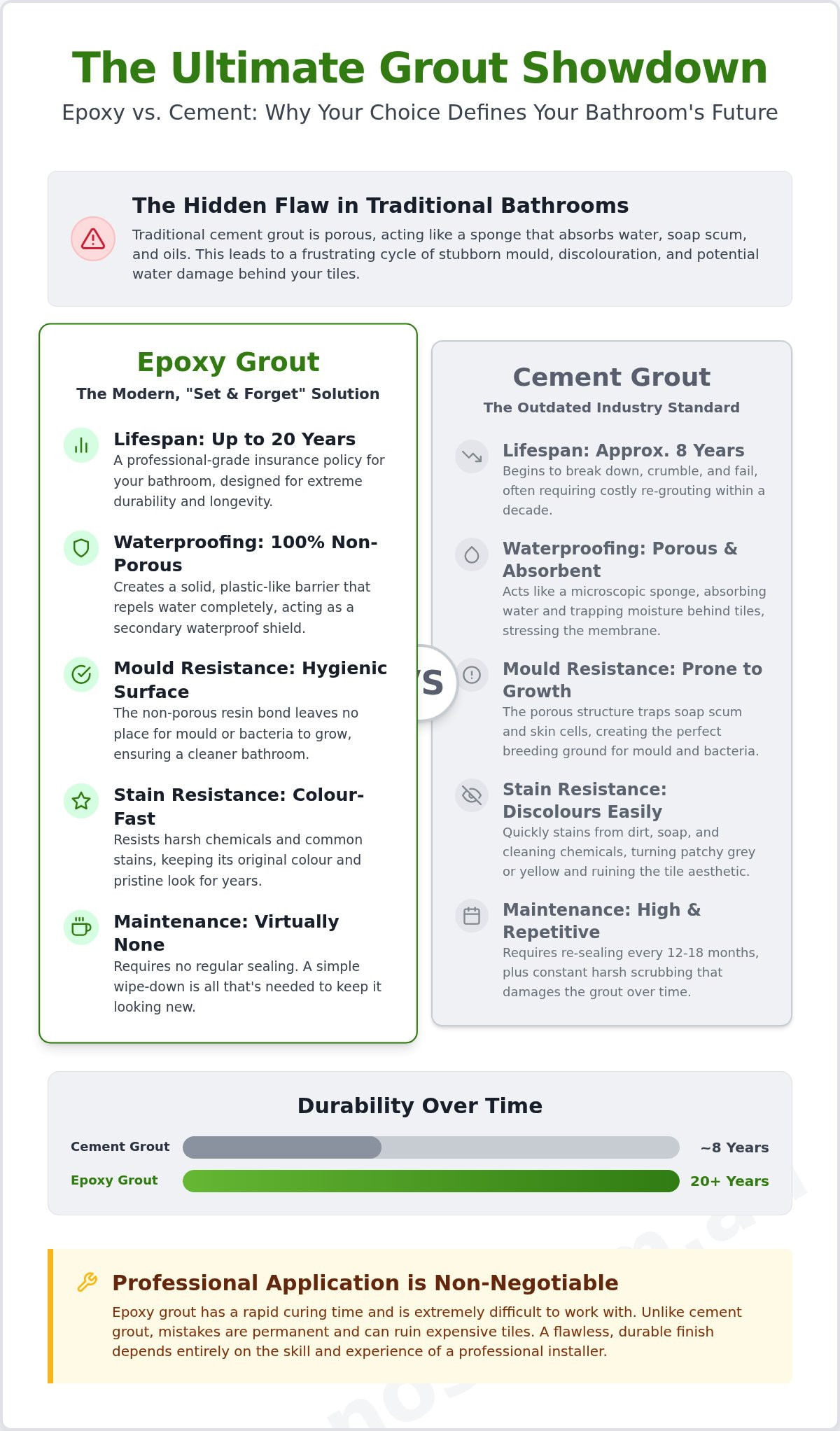
Choosing between these two materials is often a choice between short-term savings and long-term reliability. While cement grout might seem like a cost-effective option during the initial build, the reality of Australian bathroom maintenance often tells a different story over the following decade. Traditional cement-based products are notoriously brittle. This means even minor structural settling in your home can lead to unsightly hairline cracks along the shower base. In contrast, epoxy is far more resilient. One of the standout benefits of epoxy grout in bathrooms is its ability to handle subtle structural movement without cracking or falling out, ensuring your tiles remain securely bonded for the long haul.
Long-Term Durability and Lifespan
When we look at the numbers, the "life-of-the-bathroom" promise of epoxy becomes clear. Research indicates that epoxy grout is expected to last 15 to 20 years in a wet area before needing replacement. Compare this to cement grout, which typically begins to stain and break down within just 5 to 8 years. This incredible longevity is why epoxy has become the gold standard for high-traffic commercial environments. According to the Tile Council of North America, the high bond strength and impact resistance of epoxy make it superior to almost any other grouting material. For a homeowner, this translates to a shower floor that won't crumble under the pressure of daily use, effectively ending the cycle of frequent regrouting and repairs.
Stain Resistance and Aesthetic Longevity
If you have ever dreamed of a bathroom with crisp, white grout lines, you probably know that cement grout makes this dream a maintenance nightmare. Epoxy grout changes the game. Because it is impervious to liquids, it is naturally resistant to the most common bathroom culprits, including hair dye, wine, and everyday grime. The colour is baked into the resin itself, meaning it won't fade or look patchy when wet. We often tell our clients that light-coloured grout is only truly practical if it is epoxy-based.
This aesthetic consistency does more than just make your morning routine more pleasant. It preserves your bathroom's resale value. A bathroom that looks "always new" even after years of use is a significant asset when it comes time to sell. By investing in the benefits of epoxy grout in bathrooms today, you are ensuring that your premium tile choice continues to look exactly as you intended, without the shadow of discoloured or mouldy grout lines darkening the design. It's a simple way to protect the visual integrity of your renovation for decades.
Critical Areas: Where Epoxy Grout is Non-Negotiable
Not every tiled surface requires the heavy-duty protection of resin. However, in zones where water is a constant presence, the benefits of epoxy grout in bathrooms become a non-negotiable requirement for home longevity. Prioritising these high-risk areas ensures your budget is spent where it matters most, protecting the structural integrity of your property while reducing your future cleaning load.
The shower recess is undoubtedly ground zero for potential issues. It experiences the highest volume of moisture exposure in any home, often dealing with hundreds of litres of water every week. Similarly, bathroom floors endure constant foot traffic and frequent contact with water near baths and toilets. While a laundry splashback might get away with traditional grout, these high-impact zones demand a more robust solution that won't degrade over time.
The Shower Recess: Ground Zero for Leaks
The junction between your floor and wall tiles is where most leaks begin. Standard grout can pull away from the tile edge over time, providing a direct path for water to seep behind the tiles and damage your home's structural timber. Epoxy creates a permanent, slightly flexible bond that adheres to the tile edge with incredible strength. It doesn't just sit in the gap; it locks the tiles together. If you're at the planning stage, reading about expert bathroom renovations near me will help you understand how professional layout advice and the right materials work together to create a leak-proof sanctuary.
Outside the bathroom, kitchen splashbacks benefit from epoxy’s resistance to grease and acidic food splashes like tomato sauce or lemon juice. In Sydney, external balconies face a different challenge. They must manage intense UV exposure and heavy torrential rain without cracking or leaching minerals that cause unsightly white stains on the building facade.
Balconies and Wet Area Remediation
Epoxy plays a vital role in fixing existing leaks without the destructive and expensive process of removing perfectly good tiles. At Bigcs Renos, we use epoxy for specialised leak remediation because of its ability to create an impenetrable seal even in older structures. Sydney’s climate is famously unpredictable, and high-performance materials are the only way to ensure outdoor tiling stays intact for the long haul. Whether you're managing a complex balcony repair or a complete shower overhaul, our expert epoxy grouting team ensures a result that stands up to the elements and the test of time.
The Professional Edge: Why Application Matters in Colyton
While the benefits of epoxy grout in bathrooms are undeniable, the application process is a high-stakes task that requires precision and speed. Unlike traditional grout, which gives you plenty of time to work, epoxy has a notoriously "short pot life". This means it begins to set extremely quickly once the resin and hardener are combined. If the tiler isn't fast enough, the material becomes unworkable, leading to wasted product and uneven lines. Achieving a smooth, pinhole-free finish isn't just about the mix; it requires specialised professional tools and a steady hand that only comes with years of trade experience.
Achieving the perfect result in your Colyton home means understanding the temperament of the resin. At Bigcs Renos, our 15 years of industry experience allows us to manage these complexities, ensuring your bathroom looks spectacular without the stress of a botched installation. Hiring a specialist might seem like an extra step, but it genuinely saves you money in the long run by avoiding the costly remediation work required to fix poor application. We take pride in delivering a result that looks flawless and performs even better.
The Risks of DIY Epoxy Grouting
Many homeowners are tempted to try a DIY approach, only to find themselves facing the dreaded "epoxy haze". If the tile surface isn't cleaned perfectly with specific emulsifying pads within a very tight window, the resin leaves a permanent, cloudy film. This haze is incredibly difficult to remove without damaging the tiles, and it can ruin the look of a premium porcelain or natural stone floor forever. Beyond the haze, achieving uniform, level joints is a significant challenge for anyone without trade experience. Even many general tilers avoid epoxy because the risk of a mistake is simply too high. It demands a level of meticulousness and speed that goes far beyond standard tiling techniques.
Investing in Your Colyton Property Value
When you decide to use epoxy, you aren't just fixing a shower; you're making a strategic investment in your home. Smart property buyers in Sydney recognise the value of a "set and forget" bathroom. Framing your renovation as a low-maintenance, high-durability space is a major selling point during any future resale. It provides complete peace of mind, knowing the work was part of a professional, high-standard tiling job. By choosing a specialist, you ensure that every line is colour-fast and every joint is watertight, protecting your home for decades. To ensure your project receives this level of care, contact Bigcs Renos for a specialised epoxy grouting quote and let our team bring 15 years of expertise to your next renovation.
Secure Your Bathroom's Future with a Permanent Solution
Your bathroom renovation deserves a finish that stands the test of time. By choosing a resin-based solution, you're investing in a surface that remains impervious to mould and moisture for decades. We've explored how the benefits of epoxy grout in bathrooms include unmatched stain resistance and structural protection, effectively ending the cycle of constant scrubbing and premature repairs. It's the ultimate insurance policy for your home's wet areas and balconies.
As a local Colyton family-owned business with over 15 years of experience in Sydney wet area remediation, Bigcs Renos understands the precision required for high-risk zones. Our expert tradespeople specialise in professional epoxy application to ensure a flawless, haze-free result that general tilers often struggle to achieve. We're here to guide you through every step of the process with transparency and pride in our craftsmanship.
Ready to upgrade your home with a "set and forget" solution? Get a Professional Epoxy Grouting Quote from Bigcs Renos today. Let's work together to create a beautiful, durable space you can enjoy for years to come.
Frequently Asked Questions
Is epoxy grout worth the extra cost for a standard bathroom?
Yes, epoxy is absolutely worth the investment for a standard bathroom because it eliminates the need for future regrouting and expensive leak repairs. While the initial material and labour costs are higher, the long-term benefits of epoxy grout in bathrooms include a lifespan of up to 20 years. This is a significant improvement over cement grout, which often requires a full strip and replace within five to eight years due to staining or structural breakdown.
How long does epoxy grout take to cure before I can use the shower?
You should typically wait 72 hours before using your shower to ensure the resin has reached its full chemical cure. While epoxy grout feels hard to the touch and can often handle light foot traffic after just 24 hours, premature exposure to water and steam can compromise the bond. Following this timeline ensures the waterproof seal remains intact for the life of your renovation and prevents any surface clouding.
Does epoxy grout ever need to be sealed like cement grout?
No, epoxy grout never requires sealing because its non-porous chemical structure is inherently waterproof. Unlike cement-based products that act like a sponge, epoxy cures into a solid, plastic-like surface that repels liquids and oils. This "set and forget" nature is one of the most celebrated benefits of epoxy grout in bathrooms, saving you the hassle and ongoing cost of re-applying sealers every 12 to 18 months.
Can I use epoxy grout over existing cement grout to stop a leak?
You cannot apply epoxy directly over existing cement grout; the old material must be stripped out first to create a clean, deep channel. Applying a thin layer on top will lead to delamination, where the new grout peels away because it hasn't bonded correctly to the substrate. For a leak to be properly remediated, the joint needs a full-depth application to create a permanent, watertight seal.
Will epoxy grout discolour or turn yellow over time?
High-quality modern epoxy grouts are formulated to be colour-fast and resistant to yellowing even with regular exposure to light. While older epoxy products sometimes developed a slight amber tint over many years, the premium resins used by specialists today maintain their crisp white or grey tones. Choosing a reputable brand ensures your grout lines look as fresh in a decade as they do on day one.
Is epoxy grout harder to clean than traditional grout?
Epoxy is actually much easier to clean than traditional grout because grime and mould cannot penetrate its surface. Since the material is non-porous, soap scum and dirt sit on top rather than soaking in, allowing you to wipe them away with a simple microfibre cloth and mild detergent. You will find you no longer need the harsh chemicals or stiff scrubbing brushes required for porous cement lines.
Can epoxy grout be used with all types of tiles, including natural stone?
Epoxy can be used with natural stone, but it requires a specialised application technique to prevent the resin from staining the porous edges of the stone. We always recommend pre-sealing natural stone tiles before grouting to create a protective barrier. This ensures the epoxy fills the joints perfectly without leaving a permanent "picture frame" effect or a stubborn resin haze on your marble or travertine.
Why do some tilers refuse to work with epoxy grout?
Many tilers avoid epoxy because it is incredibly demanding to work with and leaves no room for error. The material has a very short "pot life," meaning it hardens quickly and can ruin a tile surface forever if the cleaning process isn't perfect. Specialists have invested years into mastering these techniques to provide a flawless finish that general tilers often find too risky or time-consuming to guarantee.


