
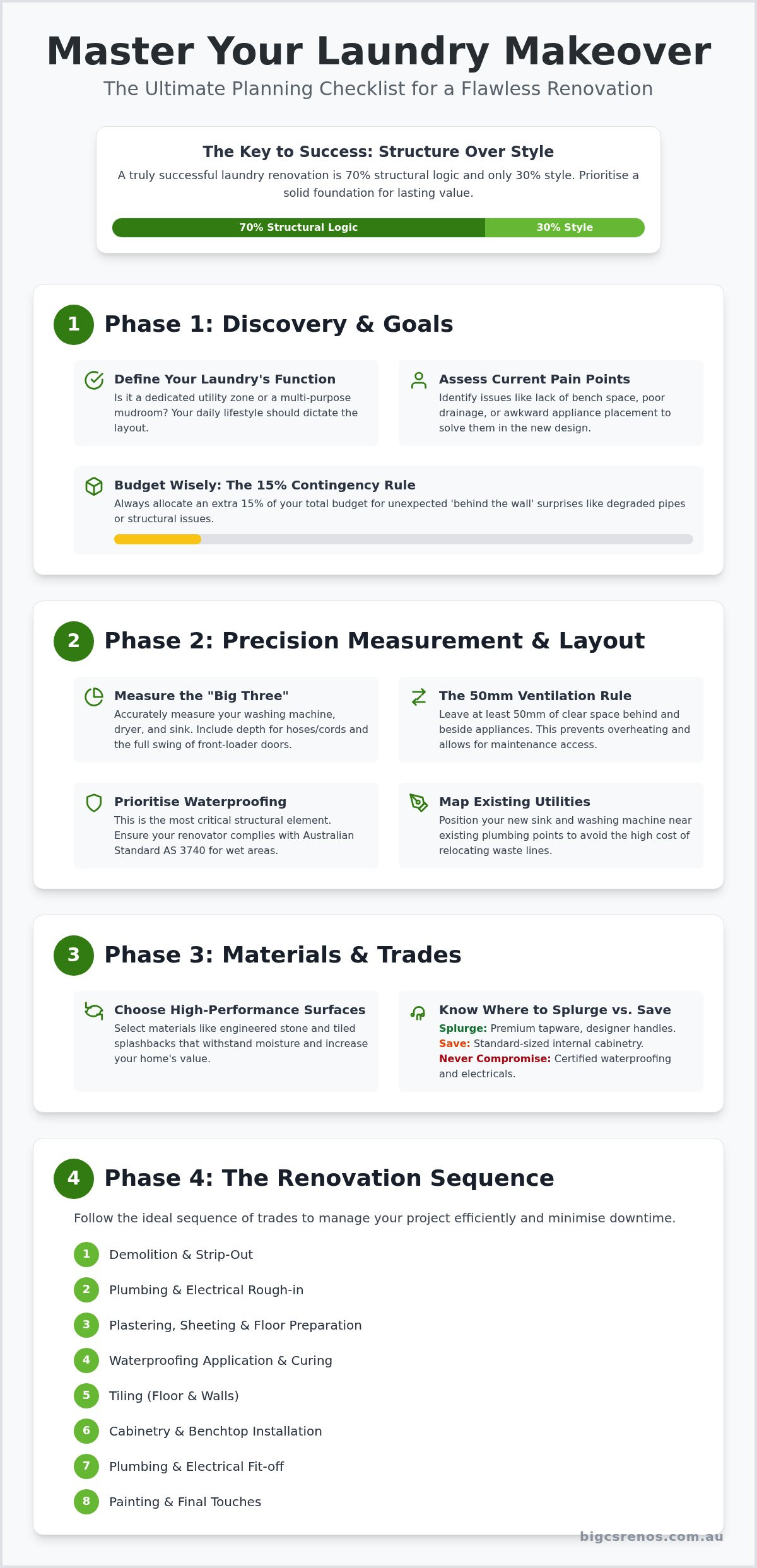
Most homeowners focus on the colour of their splashback tiles, but a truly successful laundry renovation is actually 70% structural logic and only 30% style. If your waterproofing fails or your layout remains awkward, those expensive custom cabinets won't save the space from becoming a long-term headache. You're likely tired of tripping over the clothes airer in a cramped corner or worrying about that suspicious damp patch behind the washing machine. It's frustrating when you want a beautiful, organised home but don't know which tradie to call first to start the process properly.
Our ultimate planning a laundry renovation checklist for 2026 is designed to remove that stress; providing a clear roadmap from the first structural assessment to the final coat of paint. We'll show you how to master your makeover with a focus on high-end results and functional excellence. This guide previews the latest NCC 2025 compliance standards for waterproofing, clever storage layouts that maximise every square centimetre, and how to select durable materials that handle moisture while increasing your property value. Let's transform your utility room into a sanctuary of efficiency and meticulous craftsmanship.
Key Takeaways
- Define your laundry’s primary function, whether it’s a dedicated utility zone or a multi-purpose mudroom, to ensure your layout aligns with your daily lifestyle.
- Navigate the technical complexities of a wet area makeover by following a professional planning a laundry renovation checklist that prioritises AS 3740 waterproofing standards.
- Avoid common design errors by measuring the "Big Three" appliances and allowing for essential user clearance, ensuring the space remains easy to move in.
- Learn the ideal sequence of trades to manage your Colyton project efficiently and minimise the downtime spent without a functioning laundry.
- Select high-performance materials like engineered stone and tiled splashbacks that withstand moisture while significantly increasing your property’s long-term value.
The Discovery Phase: Defining Your Laundry Goals and Budget
Every successful transformation begins with a clear vision and a structured approach. Your planning a laundry renovation checklist should start by identifying the primary 'job' this room needs to perform. For some, it's a purely functional utility space for high-volume washing. For others, it needs to evolve into a multi-purpose hub. Assessing current pain points, such as a lack of bench space for folding or inadequate drainage, will determine if you require a simple cosmetic refresh or a complete structural strip-out. Older homes often benefit from a full strip-out to address underlying issues like hidden water damage or outdated plumbing.
The Modern Australian Mudroom-Laundry Hybrid
Many Sydney families are now moving towards integrated entry-way laundries that act as a transition zone between the garden and the home. This hybrid design requires a careful balance of aspirational style and rugged practicality. If you're designing a high-traffic backdoor laundry, consider these essential features:
- Boot pigeon-holes for organised footwear storage.
- Dedicated coat hooks to keep school bags and jackets off the floor.
- Durable, non-slip tiling that handles wet paws and muddy boots.
- Easy-to-clean surfaces that maintain their aesthetic value under heavy use.
Setting a Realistic Renovation Budget
A successful project relies on professional confidence and a transparent financial plan. When breaking down your costs, remember that while cabinetry and stone benchtops are the most visible elements, the structural core is where quality truly matters. Always establish a budget that includes a 15% contingency for 'behind the wall' surprises, such as degraded pipework or structural rot. This buffer provides peace of mind and ensures the project maintains its momentum.
Regarding your planning a laundry renovation checklist, consider where to splurge for maximum impact. Premium, lead-free tapware and designer handles offer an immediate sense of luxury. Conversely, you can often save by utilising standard carcass sizes for internal joinery. Never compromise on professional fees for certified waterproofing and electrical rough-ins. These services are essential for meeting Australian standards and protecting your property's long-term value. Our team in Colyton focuses on these technical details to ensure your investment is both beautiful and compliant.
The Measurement Checklist: Precision Planning for Your Layout
Precision is the backbone of any successful renovation. When you're building your planning a laundry renovation checklist, accuracy ensures that your vision translates perfectly into reality without costly mid-project adjustments. Start by measuring the 'Big Three': your washing machine, dryer, and sink. Don't simply record the height and width of the units. You must account for the additional depth required for hoses and power cords at the back, plus the full radius of front-loading doors to ensure they can open fully without hitting opposite walls.
User clearance is another frequently overlooked detail that impacts daily comfort. You need enough floor space to bend down comfortably and load the machine or reach into the back of a cupboard. Map out your plumbing stack and existing drainage points early in the process. Keeping your sink and washing machine near these established points avoids the high costs associated with relocating waste lines through the floor or walls. Always account for door swings and window heights; overhead cabinets should never obstruct natural light or clash with entry doors. A well-designed laundry follows a 'working triangle' flow between the sorting area, the wash zone, and the drying station, making chores feel effortless. If you're feeling overwhelmed by the technical layout, our team provides expert laundry renovations that handle these precise calculations for you.
Appliance Clearances and Ventilation
Always follow the 50mm rule. This involves leaving at least 50mm of breathing room behind and beside appliances to prevent overheating and allow for easy maintenance access. Ventilation is critical, especially for dryers. If you don't plan for external venting, you risk moisture build-up and mould growth in your ceiling or wall cavities. Decide early if a stacking kit or a side-by-side layout suits your square meterage. Stacking saves floor space for a tall broom cupboard, while side-by-side allows for a continuous, expansive benchtop for folding clothes.
Vertical Storage and Cabinetry Planning
Vertical space is your best friend in a compact Australian laundry. Utilise full-height cabinets to hide away long items like ironing boards, mops, and brooms that otherwise create clutter. For a seamless look, integrate pull-out hampers directly into your cabinetry rather than relying on freestanding baskets. Finally, consider ergonomics. While 900mm is the standard benchtop height, you might prefer it slightly higher to save your back during long folding sessions. Meticulous planning here ensures your new space is as functional as it is beautiful.
The Structural Core: Plumbing, Electrical, and Waterproofing
While layout and cabinetry catch the eye, the structural core determines the lifespan of your project. Any comprehensive planning a laundry renovation checklist must prioritise the elements hidden behind your tiles. During a full strip-out, it's wise to replace ageing copper pipes with modern PEX or updated copper to prevent future leaks. Adding a floor waste is another high-value move. Even if your local council doesn't strictly mandate one for your specific laundry type, it serves as a critical safety net against washing machine overflows. This simple addition protects your cabinetry and subfloor from catastrophic water damage, providing long-term peace of mind.
Waterproofing Standards (AS 3740) in NSW
Professional waterproofing is the most critical step for Colyton homes, particularly in older properties prone to structural movement. Compliance with AS 3740:2021 isn't just a legal requirement; it's the foundation of a durable wet area. You must ensure the membrane extends correctly across floors, up walls to at least 150mm, and into critical junctions where leaks often begin. We highly recommend using epoxy grout for laundry floors. Unlike standard cementitious grout, epoxy is non-porous and highly resistant to the harsh chemicals and moisture found in laundry environments. It ensures your tiles remain pristine and your structural integrity stays intact for decades.
Smart Electrical and Lighting Layouts
A modern laundry requires a sophisticated electrical plan that goes beyond a single ceiling light. You need a mix of task lighting directly over the sink and ambient lighting to create a warm, inviting atmosphere. When finalising your planning a laundry renovation checklist, include hidden GPOs (power points) inside tall cupboards. This allows you to charge cordless vacuums or handheld steamers out of sight, keeping your benchtops clutter-free. Finally, verify that your home's circuit board can handle modern high-draw appliances like heat-pump dryers and high-performance washers. Ensuring your electrical rough-in is future-proofed prevents the frustration of tripped breakers and inadequate power supply down the track.
Material Selection: Choosing Surfaces for Durability and Style
Transitioning from the structural core to the visible finishes is the most rewarding part of any project. Your planning a laundry renovation checklist must prioritise materials that balance aesthetic appeal with the ability to withstand high humidity and frequent chemical exposure. While DIY-friendly options might seem tempting, they often lack the longevity required for a room that works as hard as an Australian laundry. Selecting high-quality surfaces now prevents the need for costly repairs or replacements in just a few years.
Flooring and Tiling for Longevity
Safety and maintenance should dictate your flooring choices. Non-slip porcelain tiles are the industry standard for a reason; they're incredibly dense, water-resistant, and easy to clean. When selecting your tiles, always check the slip rating. For laundry environments, a rating of P3 or higher is essential to ensure safety when floors are inevitably wet. Large format tiles are popular because they minimise grout lines, which reduces the effort needed for cleaning. However, if you prefer a decorative touch, mosaics can provide excellent grip underfoot. Many homeowners choose to match their laundry finishes to their expert bathroom renovations to create a cohesive design language throughout the home.
Selecting the Right Benchtop Surface
The benchtop is the workhorse of the laundry. In 2026, the rise of low-silica engineered stone has provided a safer, high-performance alternative to traditional stone, offering incredible resistance to stains and scratches. High-pressure laminates remain a budget-friendly choice and have improved significantly in quality, though they're more susceptible to edge-swelling if water sits on the seams. Timber benchtops add undeniable warmth and aspirational style but require regular oiling to prevent rot in wet areas. While a 'waterfall' edge looks stunning in a large kitchen, it's often impractical in a small laundry where every centimetre of floor space is needed for movement or storage.
Your choice of sink and tapware also impacts long-term durability. Stainless steel is the classic, resilient choice, while granite composite sinks offer a modern matte look and superior scratch resistance. Regardless of the material, ensure your tapware is lead-free and compliant with current Australian standards. If you're ready to select premium materials that stand the test of time, contact our team to discuss your laundry renovations in Colyton today.
The Renovation Process: Coordinating Your Colyton Project
Executing a successful makeover requires more than just high-quality materials; it demands a meticulous sequence of skilled trades. Your planning a laundry renovation checklist must account for a logical flow to prevent delays and ensure every element is installed correctly. The process typically begins with a full demolition and strip-out, followed immediately by the plumbing and electrical rough-in. Once the services are in place, our team focuses on the critical waterproofing phase before moving to tiling, cabinetry installation, and finally, the plumbing fit-off. Coordinating these steps effectively is what transforms a stressful project into a rewarding home improvement journey.
Living without a functioning laundry for the typical 2 to 4 week renovation period requires some forward planning. We recommend catching up on all washing before the demolition date or arranging access to a local laundromat in Colyton. Having a clear timeline helps you manage these minor disruptions while we work to create your highly functional, organised space. By hiring a local expert like Bigcs Renos, you gain a partner who understands the specific structural requirements of Western Sydney homes and manages the technical headaches on your behalf.
Managing the Renovation Timeline
While most renovations follow a standard path, certain bottlenecks can impact your schedule. Custom cabinetry and stone benchtop fabrication often have the longest lead times; these should be ordered well in advance. We often find that the 'Final 5%' of a project requires the most patience. This includes the delicate finishing touches like silicone sealing, adjusting cabinet hinges, and the final electrical safety checks. Allowing time for these meticulous details ensures your renovation doesn't just look finished; it feels premium.
Why a Professional Finish Matters
The difference between a DIY 'flat-pack' attempt and a professionally custom-fitted laundry is significant. Custom joinery allows you to maximise every millimetre of space, avoiding awkward gaps that collect dust. Beyond aesthetics, professional execution ensures your home remains compliant with Australian standards. It's vital that your bathroom waterproofing and laundry structural work are both up to code to protect your property's value. High-end tiling and epoxy grouting provide a level of durability that basic DIY supplies simply cannot match, ensuring your investment stands up to the rigours of daily use for decades.
Before the final handover, use this inspection checklist to ensure excellence:
- Test all taps and drainage points for leaks or slow flow.
- Check grout consistency and ensure all junctions are properly siliconed.
- Verify that appliances fit their designated cavities with the required 50mm ventilation.
- Ensure all cabinet doors and drawers operate smoothly and are perfectly aligned.
Start Your Laundry Transformation Today
Your home deserves a space that's as resilient as it is beautiful. By following a comprehensive planning a laundry renovation checklist, you ensure that every detail, from the mandatory waterproofing standards to the final grout line, is executed with precision. A successful renovation isn't just about the aesthetic finish; it's about the technical excellence that protects your property and enhances your daily life. We've explored how the right layout, durable materials, and a clear trade sequence turn a cluttered utility room into a sanctuary of efficiency.
As a local family-owned and operated business with over 15 years of experience in Sydney home extensions and wet area makeovers, we take immense pride in our meticulous craftsmanship. We're certified NSW waterproofing specialists who handle the complex structural work so you can focus on the reward of your new space. Ready to transform your laundry? Contact the Colyton renovation experts at Bigcs Renos today. We look forward to helping you create a functional and stylish room that adds lasting value to your home.
Frequently Asked Questions
How much does a laundry renovation typically cost in Sydney?
A successful renovation budget typically allocates about 30% to 40% of the total cost to cabinetry and benchtops, with labour and tiling making up the remainder. While costs vary based on the project's scope, investing in quality materials ensures long-term value. Your planning a laundry renovation checklist should focus on high-traffic durability rather than just the initial price. This approach protects your investment and ensures the space handles moisture and daily use without degrading.
Do I need council approval for a laundry renovation in Colyton?
Most internal laundry makeovers don't require council approval if you aren't making structural changes. However, if you're extending the room or significantly altering the plumbing and electrical systems, you'll likely need a permit. This can add between $500 and $1,500 to your budget. It's always best to consult with a local professional who understands the specific requirements for Colyton and Western Sydney to ensure your project remains fully compliant.
How long does a laundry renovation take from start to finish?
A full strip-out and rebuild usually takes between two and four weeks to complete. This timeline accounts for demolition, plumbing and electrical rough-ins, waterproofing, tiling, and cabinetry installation. While the 'Final 5%' of finishing touches can feel slow, they're essential for a high-end result. Coordinating your planning a laundry renovation checklist with a professional team helps streamline the trade sequence, minimising the time you'll spend without a functioning washing machine.
Can I move my washing machine to a different wall?
You can certainly move your washing machine to a different wall, but it requires a plumbing rough-in to relocate the water supply and drainage lines. This process involves opening the walls or floor, which is easiest during a full structural renovation. While it increases the initial labour cost, moving the machine often results in a significantly more functional layout that better suits your daily routine and storage needs.
What is the best flooring for an Australian laundry?
Non-slip porcelain tiles are widely considered the best choice for Australian laundries due to their extreme durability and water resistance. You should look for a slip rating of P3 or higher to ensure safety in wet conditions. Large format tiles are excellent for reducing grout lines, making maintenance much simpler. Matching your laundry tiles with your existing bathroom finishes creates a sophisticated, cohesive design throughout your home's wet areas.
Is waterproofing a laundry legally required in NSW?
Yes, waterproofing is a legal requirement in NSW and must comply with Australian Standard AS 3740:2021. The entire laundry floor must be waterproofed, with the membrane extending at least 150mm up the walls. This is a critical step that prevents structural rot and long-term water damage. Always ensure your renovator is a certified specialist who can provide the necessary compliance certificates once the membrane has been correctly applied and tested.
Should I stack my washer and dryer or have them side-by-side?
Choosing between these layouts depends on your available floor space and ergonomic preferences. Stacking your washer and dryer is a brilliant space-saver, leaving room for a full-height broom cupboard or additional shelving. Conversely, a side-by-side configuration allows for a continuous, expansive benchtop, which is perfect for sorting and folding clothes. Consider how much bench space you need versus your requirement for tall storage before making your final decision.
What is the most efficient layout for a small laundry?
A galley-style layout or a European laundry hidden behind bifold doors is often the most efficient for small spaces. These designs focus on vertical storage and integrated hampers to keep the floor clear. Utilising full-height cabinetry and pull-out drying racks ensures every centimetre of the room is functional. By prioritising a streamlined workflow between the sink and appliances, you can create a highly organised space that feels much larger than its footprint.


