
Did you know that a high-quality secondary dwelling can increase your property's market value by as much as 30 per cent? Many homeowners are looking for the best granny flat designs Colyton has to offer to secure their financial future, yet the fear of council rejection or unexpected site costs can be a major hurdle. It's completely understandable to feel overwhelmed by the technical details of Penrith City Council requirements or the worry that poor workmanship might lead to long-term issues like leaks and structural repairs.
This 2026 investment guide provides the professional clarity you need to transform your backyard with confidence. We'll break down the essential roadmap from initial concept to final handover, ensuring your new build meets every local compliance standard while adding genuine aesthetic value. You will discover how to navigate the approval process and identify the design factors that guarantee a durable, high-end result. By the end of this article, you'll have a thorough understanding of how to manage your investment and achieve a seamless construction experience.
Key Takeaways
- Understand why Colyton's 2026 property market makes secondary dwellings a high-yield investment for rental income or multi-generational living.
- Explore the most efficient granny flat designs Colyton homeowners can utilise to balance aesthetic appeal with cost-effective construction layouts.
- Learn how to navigate Penrith City Council approval pathways, including the specific lot size requirements and the benefits of fast-tracked Complying Development Certificates.
- Discover why prioritising high-quality trades and professional waterproofing is the most effective way to prevent future maintenance costs and protect your asset's longevity.
- Gain a clear roadmap for your project, from the initial site feasibility assessment to choosing a design that integrates seamlessly with your main residence.
The 2026 Granny Flat Market in Colyton: An Overview
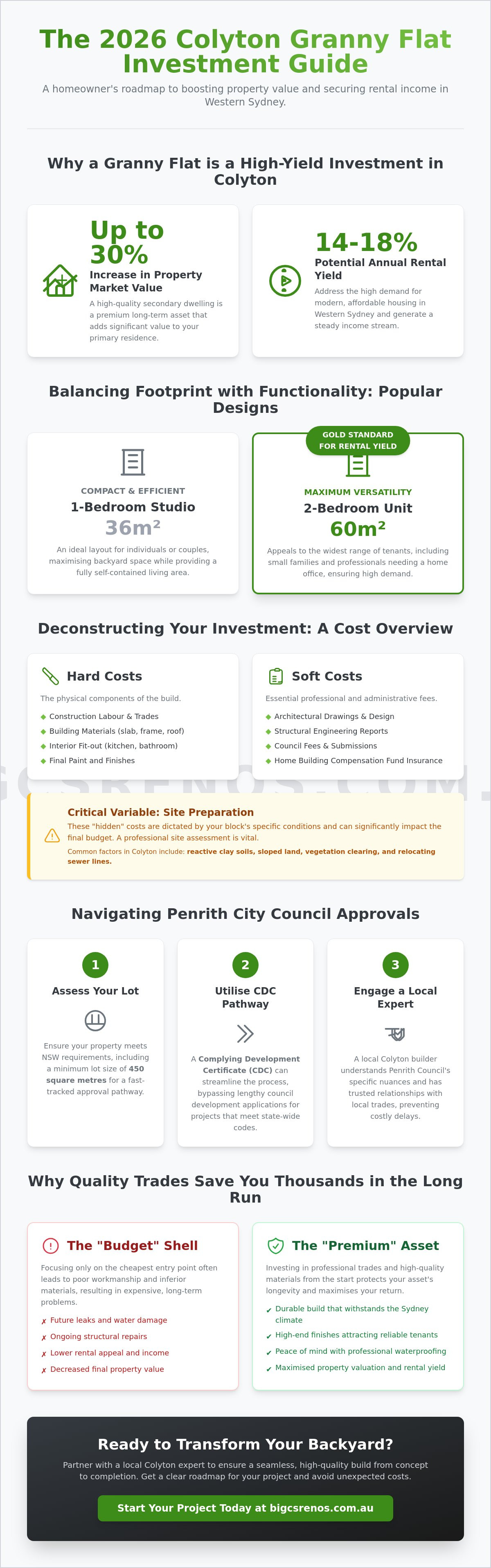
Colyton has emerged as a standout suburb for property investors and families alike. By 2026, the demand for affordable housing in Western Sydney has pushed rental yields for secondary dwellings to impressive levels, often reaching between 14 and 18 per cent. This isn't just about extra cash; it's about smart land use. If you're wondering, What is a Granny Flat?, it's essentially a self-contained home built on the same lot as your primary residence. It serves as a versatile asset that adapts to your family's changing needs.
Choosing the right granny flat designs Colyton residents love involves more than just picking a floor plan. A well-executed build can increase your primary property valuation by up to 30 per cent. While some look for the cheapest entry point, savvy investors distinguish between a "budget" shell and a "premium" long-term asset. A premium build focuses on durability and high-end finishes that attract reliable tenants and withstand the Sydney climate. Investing in quality from the start ensures your property remains a sought-after gem in a competitive market.
Why Colyton Homeowners are Building Outwards
Setting Realistic Expectations for 2026
Building in the Sydney basin in 2026 requires a clear understanding of current labour and material shifts. You'll find that "all-in" turnkey prices often differ from the base rates you see on billboards. Site preparation, utility connections, and council fees are variables that need professional assessment. Partnering with a local Colyton builder is often more efficient than going with a national franchise. Local experts understand the specific nuances of Penrith City Council regulations and have established relationships with reliable local trades. This local knowledge helps you avoid the common pitfalls that can delay a project or inflate your budget unexpectedly.
Breaking Down the Cost: Size, Site, and Granny Flat Designs
Every project begins with a unique set of variables. While the NSW granny flat legislation provides a clear framework for what you can build, the physical reality of your block dictates the final investment. Costs aren't just about the walls and roof. They're heavily influenced by site access, the slope of the land, and the existing infrastructure. Understanding these factors early helps you avoid the "hidden" expenses that often catch homeowners off guard.
When exploring granny flat designs Colyton residents find most effective, you'll typically choose between a 36-square-metre one-bedroom studio or a more spacious 60-square-metre two-bedroom layout. A two-bedroom design is often the gold standard for rental yield in Western Sydney. It appeals to a wider range of tenants, from small families to professional couples needing a quiet home office. The layout should prioritise flow and privacy, ensuring the secondary dwelling feels like a distinct, standalone home rather than an afterthought in the backyard.
Site preparation is often the most variable part of the budget. In Colyton, we frequently encounter reactive clay soils or slopes that require engineered slabs and retaining walls. Clearing vegetation or relocating existing services like sewer lines can also impact the bottom line. We always recommend separate metering for water and electricity. This allows for transparent utility management between the primary house and the secondary dwelling, which is a vital feature for any long-term rental strategy.
Hard Costs vs. Soft Costs
Construction labour and materials make up your "hard costs." These include everything from the concrete slab to the final coat of paint. However, you must also allocate funds for "soft costs." These include architectural drawings, structural engineering reports, and council fees. Don't forget mandatory requirements like the Home Building Compensation Fund insurance. These elements provide the legal and structural foundation for a safe, compliant home that protects your family and your finances.
Interior Selections and Fit-out
The interior fit-out is where your vision truly comes to life. Premium granny flat designs focus on maximising natural light and airflow to create a sense of space. Using high-performance insulation and quality glazing ensures the home remains comfortable year-round, which significantly reduces future energy bills. We find that investing in durable kitchen cabinetry and high-end tiling pays off by attracting reliable tenants. If you're ready to see what's possible on your land, a quick consultation with the team at Bigcs Renos can help clarify your design options.
Local Compliance: Navigating Penrith City Council and Approvals
Securing the right paperwork is the most critical step in your construction journey. Penrith City Council has specific guidelines that dictate exactly where and how you can build on your land. For the majority of granny flat designs Colyton homeowners consider, the approval pathway will determine both your project timeline and the total investment required. You'll generally follow one of two paths: a Complying Development Certificate (CDC) or a formal Development Application (DA). While approximately 80 per cent of projects in Western Sydney qualify for the faster CDC process, certain conditions like flood-prone land or heritage overlays might necessitate a full DA through the council.
Minimum lot size remains a non-negotiable factor for any secondary dwelling. In Penrith's residential zones, your block must be at least 450 square metres to be eligible. You also need to account for setbacks, which are the mandatory distances between your new build and the property boundaries. For a standard CDC, you'll typically need a 3-metre gap from the rear boundary and 0.9 metres from the side boundaries. These rules are designed to protect the privacy of both you and your neighbours, ensuring that Colyton's residential character is preserved as the area develops.
Budgeting for your project also means accounting for Section 7.11 developer contributions. These are local infrastructure levies collected by Penrith City Council to fund essential community services like roads, parks, and libraries. The cost varies based on the specific location and size of your build, but it's a vital part of the planning phase. These contributions ensure that as more residents move into the area, the local infrastructure can support the growing population without compromising on quality of life.
The Fast-Track Approval: CDC Requirements
A CDC is a streamlined, 10-day approval process handled by a Private Certifier rather than the council. To qualify for this fast-track option, your property must meet strict criteria regarding land size and frontage. For a typical residential zone in Colyton, a minimum frontage of 12 metres is usually required. If your project adheres to every requirement in the state's housing policy, you can bypass the traditional council queues and move straight into the construction phase much earlier than expected.
Compliance with AS 3740 Standards
Building a home that stands the test of time requires strict adherence to the Building Code of Australia. This includes meeting the AS 3740 standards for waterproofing, which is a critical factor in preventing long-term structural damage. Finding the right granny flat construction partner involves partnering with builders who prioritise these technical details. Whether you're building a new unit or navigating the specific home extension council approval Colyton nuances, local expertise ensures your project is legally compliant and built with the meticulous care your property deserves.
Why Quality Trades Save You Thousands in the Long Run
It's tempting to opt for the lowest quote when you're reviewing the various granny flat designs Colyton builders offer. However, the "cheap build" trap often leads to significant financial stress just a few years down the track. When builders cut corners to meet a bottom-dollar price, they usually sacrifice the quality of the trades you can't see, such as the structural framing and the internal wet area preparation. In the Sydney market, waterproofing failures remain the leading cause of building disputes and structural decay, often costing tens of thousands of dollars to rectify properly.
Precision in tiling and grouting isn't just about the final aesthetic; it's a vital layer of protection for your investment. While a DIY-style kit might look acceptable on day one, professional trade finishes provide a level of durability that basic kits simply cannot match. High-quality trades ensure that every joint is sealed and every tile is laid with the correct fall, preventing water from pooling and seeping into your subfloor. This meticulous attention to detail is what separates a temporary structure from a permanent property asset.
The Critical Importance of Bathroom Integrity
Bathrooms are the highest-risk zones in any secondary dwelling. For rental properties, we highly recommend epoxy grouting because it's non-porous and resistant to the heavy scrubbing that tenants might use. Poor bathroom waterproofing is a recipe for mould growth and timber rot that can compromise the entire building's safety. AS 3740 is the Australian standard that sets out the mandatory requirements for domestic wet area waterproofing to ensure homes remain dry and structurally sound. By following these standards, you ensure your granny flat remains a healthy, durable environment for its occupants.
Longevity and Maintenance Costs
The difference between cheap cladding and premium finishes becomes obvious after just a few Sydney summers. Premium materials require much less frequent maintenance, saving you money on repainting and repairs over the next decade. While basic vinyl flooring might save money initially, professional tiling adds significantly more to your property's resale value and handles high foot traffic much better. You gain immense peace of mind when your project comes with a certified waterproofing guarantee, knowing that your asset is protected by expert craftsmanship. If you want to ensure your project is built to last, contact Bigcs Renos to discuss our commitment to high-end trade finishes.
Planning Your Project with a Local Colyton Builder
Every successful build starts with a clear, logical roadmap. Transforming your backyard into a high-value asset requires more than just a vision; it demands a structured approach to ensure the finished product meets your high standards. By following a methodical process, you can navigate the complexities of construction while maintaining total control over your investment. This journey begins long before the first shovel hits the ground and concludes with a hand-over that adds genuine pride to your property.
Step 1: Initial site assessment and feasibility check. We begin by examining the physical constraints of your land. This identifies potential hurdles like underground sewer lines, restrictive easements, or soil conditions that might influence the placement of your new home. Step 2: Choosing a design that complements your existing home. Selecting the right granny flat designs Colyton families prefer involves balancing modern aesthetics with the character of your primary residence. A cohesive look ensures the new build feels like a natural extension of your property rather than a detached afterthought.
Step 3: Securing approvals and finalising the fixed-price contract. Once the design is locked in, we manage the approval process through the relevant channels. A fixed-price contract is vital in the 2026 market, providing you with financial certainty and protection against unexpected cost fluctuations. Step 4: The construction phase and what to expect on-site. This is where our meticulousness shines. We coordinate every trade, from the initial slab pour to the final coat of paint, ensuring site safety and minimal disruption to your daily life throughout the build.
Questions to Ask Your Potential Builder
Before signing any agreement, it's essential to verify your builder's credentials. Always ask to see a valid NSW building licence and current insurance certificates. Checking local Western Sydney references and visiting past projects in the Penrith region can give you a clear sense of their craftsmanship and reliability. A builder who specialises in bathroom renovations near me is often an excellent choice for a granny flat. Their deep understanding of structural wet areas and waterproofing standards ensures your secondary dwelling is built to withstand the test of time.
Ready to Expand Your Colyton Property?
Working with a family-owned local team provides a level of personal dedication that large franchises often lack. At Bigcs Renos, we combine structural building expertise with master-trade finishing to deliver results that exceed expectations. We take immense pride in our work, focusing on the fine details that turn a simple building into a sophisticated home. If you're ready to unlock the full potential of your land with a team that values transparency and excellence, we're here to guide you. Contact Bigcs Renos for a detailed granny flat consultation today!
Secure Your Property's Future with a Premium Build
Finding the right granny flat designs Colyton homeowners trust is just the beginning of your journey. As a local, family-owned business with over 15 years of building experience, we understand the specific nuances of the Western Sydney market. We are specialists in high-end waterproofing and tiling, bringing a level of precision that safeguards your property against structural issues. We take immense pride in our craftsmanship and the collaborative relationships we build with our clients.
If you're ready to start your project with a team that values transparency and excellence, Book Your Free Colyton Site Assessment with Bigcs Renos today. Let's work together to create a space that perfectly complements your lifestyle and enhances your property's value.
Frequently Asked Questions
How much does a 2-bedroom granny flat cost in Colyton in 2026?
A complete, move-in ready two-bedroom granny flat in 2026 typically costs between A$170,000 and A$200,000. This turnkey price usually covers the full construction, internal finishes, and essential utility connections. If you're looking at a basic build without site-specific costs or high-end inclusions, industry prices generally range from A$110,000 to A$160,000. These figures reflect current labour and material costs across the Western Sydney region.
Do I need council approval for a granny flat in Colyton?
Yes, every granny flat in Colyton requires formal approval before any construction work begins on your property. You can typically choose between a Complying Development Certificate (CDC), which is a fast-tracked 10 to 20-day process, or a standard Development Application (DA) through Penrith City Council. Approximately 80 per cent of projects in the local area qualify for the CDC pathway, provided the design meets all state and local planning requirements.
What is the minimum land size required to build a granny flat in Penrith?
The minimum lot size required for a granny flat in a residential zone within the Penrith City Council area is 450 square metres. For properties located in rural zones, the requirement is significantly larger, generally requiring a minimum of 2 hectares. In addition to the total land size, your block must typically have a minimum frontage of 12 metres to qualify for the streamlined complying development approval process.
Can I build a granny flat if I have an existing home extension?
You can build a granny flat even if you have an existing home extension, provided your total site coverage remains within legal limits. Penrith City Council regulations specify the maximum allowable floor area for all structures on your residential block. When selecting granny flat designs Colyton homeowners should ensure the new footprint doesn't exceed the 60-square-metre limit for the secondary dwelling itself while maintaining the required backyard open space.
How long does it take to build a granny flat from start to finish?
A typical granny flat project takes between four and six months from the initial design phase to final handover. The approval process via a CDC takes roughly 10 to 20 business days, while a DA can take several months depending on council queues. Once the site is prepared, the actual construction phase usually spans 12 to 16 weeks, though this can vary based on weather conditions and material availability.
Will a granny flat increase my council rates in Colyton?
Yes, adding a secondary dwelling will lead to a modest increase in your annual council rates. Penrith City Council calculates rates based on the land value and the level of services provided to the property. Because a granny flat adds significant market value and places additional demand on local infrastructure, your rates will be adjusted to reflect the new dual-occupancy status of your property once the build is complete.
Can I rent out my granny flat to a non-family member in NSW?
Yes, NSW legislation allows you to rent out your granny flat to anyone, including non-family members, to generate additional income. This policy was designed to help increase the supply of affordable rental housing across the Sydney basin. In Western Sydney, high-quality units often achieve rental yields of 14 to 18 per cent, making them a highly effective investment strategy for local homeowners looking to maximise their land's potential.
What are the most common hidden costs when building a granny flat?
Hidden costs often arise from site-specific requirements like tree removal, rock excavation, or upgrading an outdated electrical board to handle the extra load. You should also budget for separate water and electricity metering, which is essential for managing tenants fairly. Other expenses frequently overlooked include Section 7.11 developer contributions and the cost of connecting the new dwelling to the main sewer line, which can be more complex on sloped blocks.


