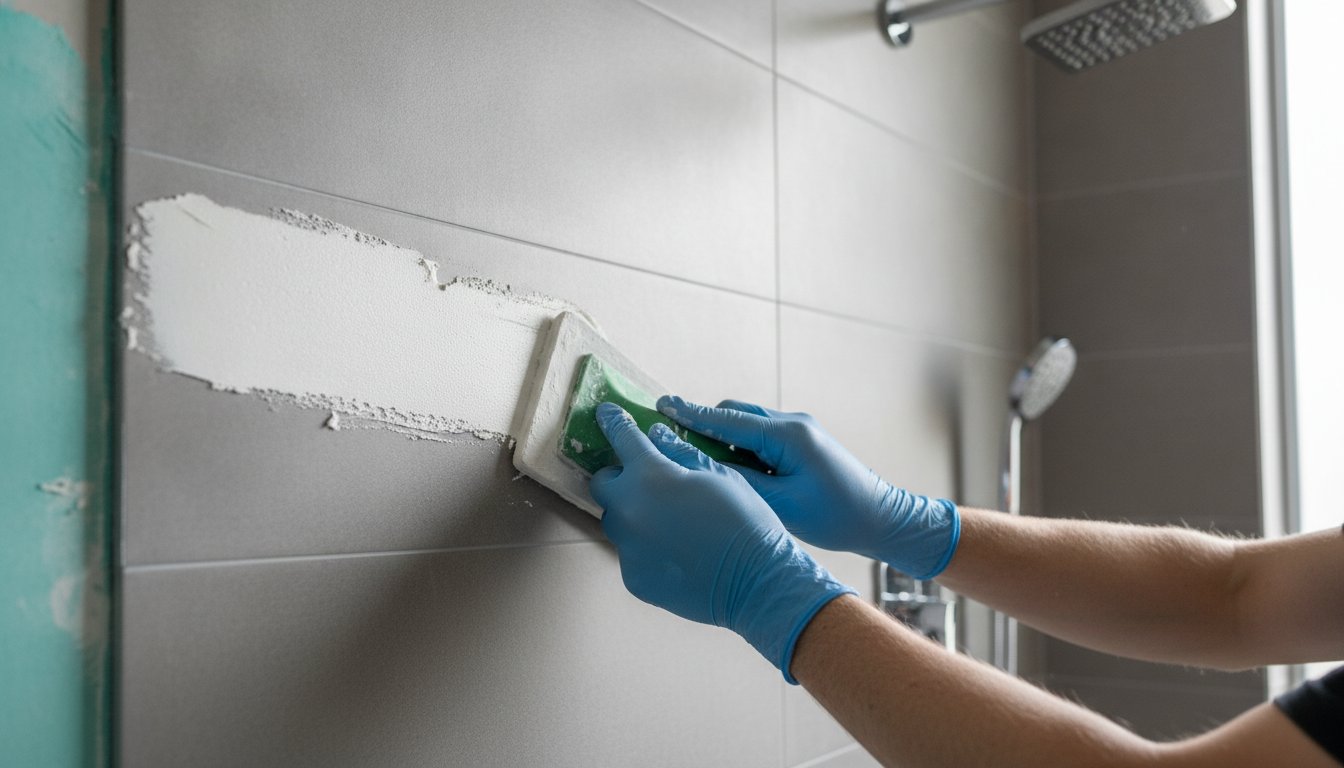
Choosing traditional cement grout for your new bathroom might feel like the standard path, but it's often a hidden maintenance debt that homeowners unknowingly sign up for. Most of us expect a beautiful renovation to stay pristine for a decade, yet many Australians find themselves scrubbing stubborn black mould from grout lines or worrying about damp patches on the subfloor just a few years after the build. It's a frustrating cycle of resealing and repairing that takes the joy out of a fresh space.
When comparing an epoxy grout vs cement grout shower, the choice you make today will define the next fifteen years of your home's structural health. You'll discover how epoxy grout provides a non-porous, 100% waterproof barrier that perfectly aligns with the latest AS 3740:2021 standards for domestic wet areas. We'll break down the long-term value of choosing professional epoxy application over traditional methods, showing you how to achieve a finish that stays immaculate with minimal scrubbing. You'll gain the confidence to invest in a shower that looks brand new for years while protecting your subfloor from the threat of costly water damage.
Key Takeaways
- Understand the chemical differences between porous cement and non-porous epoxy to ensure your bathroom remains structurally sound for years to come.
- Learn why the epoxy grout vs cement grout shower choice is the most effective way to eliminate stubborn mould and simplify your weekly cleaning routine.
- Weigh the initial investment against long-term value by exploring how high-performance materials prevent the need for costly future regrouting.
- Discover why professional installation is the key to meeting Australian wet area standards and achieving a 100% waterproof finish.
- Identify the specific shower environments where epoxy is an essential upgrade to protect your home from subfloor damage and leaks.
Understanding the Basics: What Are Epoxy and Cement Grouts?
Before you can decide on the right finish for your renovation, you need to understand what grout is at its most basic level. It isn't just a filler used to bridge the gaps between your tiles; it is a vital structural component that protects your walls and floors. In the ongoing debate of epoxy grout vs cement grout shower installations, the fundamental difference lies in how these materials react to the harsh, wet environment of an Australian bathroom. One is a traditional, porous material that requires constant care, while the other is a modern, engineered solution designed for maximum durability.
Cement Grout: The Traditional Choice
Cement grout has been the standard in Australian homes for decades. It's a relatively simple mixture of water, cement, and pigments. Depending on the width of your tile joints, a tiler will choose between sanded or unsanded varieties. Sanded grout is typically used for joints wider than 3mm because the sand prevents the mixture from shrinking as it cures. Unsanded grout is reserved for thinner lines or delicate surfaces like polished marble that might scratch easily.
The inherent weakness of cement is its porosity. Even when mixed perfectly, cement grout acts like a hard sponge. It features microscopic holes that readily soak up moisture, soap scum, and body oils. This leads to common frustrations like efflorescence, which are those powdery white salt stains that often appear on the surface. Because it absorbs water, cement grout is also prone to deep-set staining that is almost impossible to remove once it takes hold. It's a material that demands regular sealing to perform its best, yet many homeowners find the maintenance cycle difficult to maintain.
Epoxy Grout: The Modern Performance Standard
Epoxy grout represents a sophisticated leap in tiling technology. Unlike cement, it doesn't rely on a water-based cure. Instead, it's a two-part system consisting of epoxy resins and a filler powder. When these components are combined, they create a chemical bond that is incredibly strong and, most importantly, completely non-porous. This means the grout is technically "non-absorbent," making it a 100% waterproof barrier right out of the gate.
While early versions of epoxy were often criticised for looking like shiny plastic, modern formulations have evolved. Today's epoxy grouts offer a refined, matte finish that mimics the look of traditional grout while providing superior protection. For a bathroom renovation in Colyton, this choice is about more than just aesthetics. It's about choosing a material that won't harbour bacteria or mould. Because water cannot penetrate the surface, the structural integrity of your shower remains protected for the long term. It is a meticulous solution for those who value precision and a pristine finish that lasts well beyond the first few years of use.
Performance Comparison: Waterproofing, Mould, and Durability
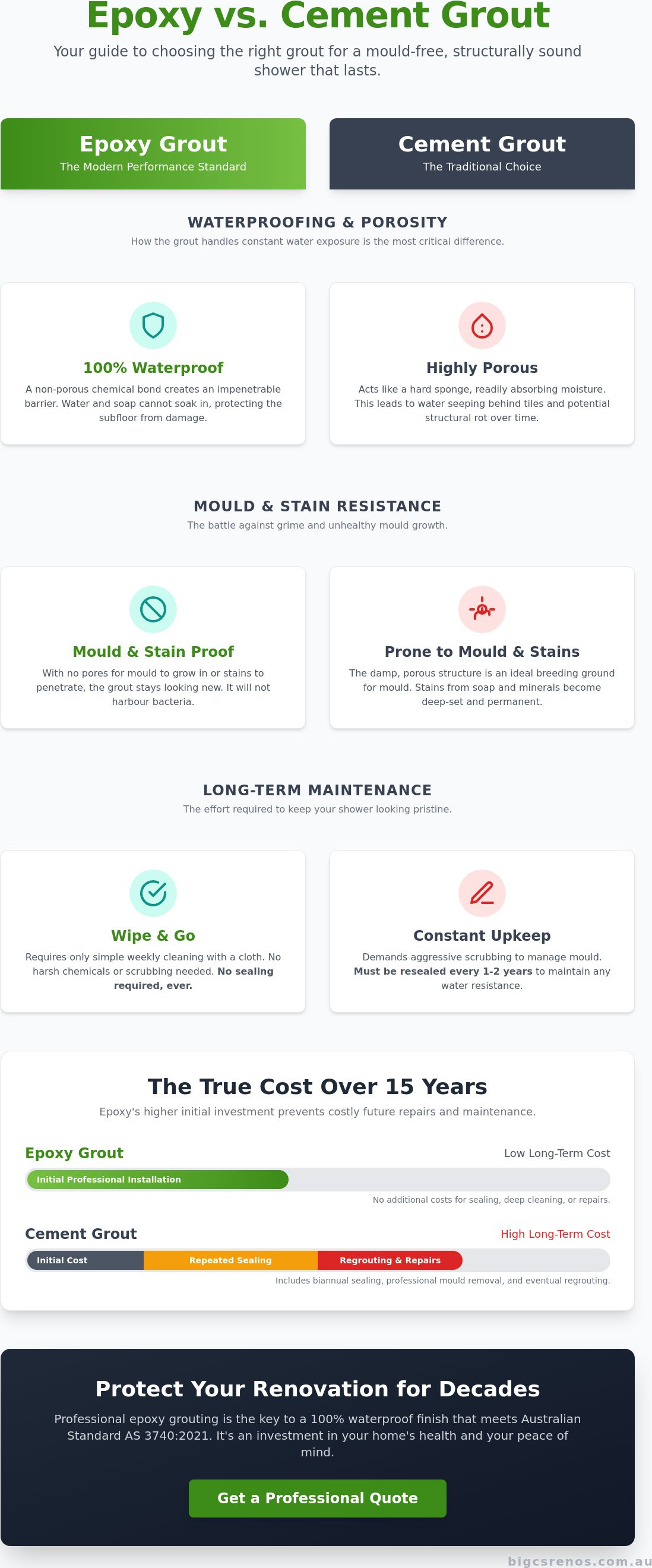
The real value of an epoxy grout vs cement grout shower becomes clear the moment you step under the water. Performance in a high-moisture environment is the ultimate test of any building material. While cement grout might look pristine on day one, its performance over time is often its Achilles' heel. Cement has a high water absorption rate, whereas epoxy has virtually zero. This fundamental difference affects everything from the cleanliness of your bathroom to the structural safety of your home in the long run.
Because cement is porous, it acts like a magnet for soap scum, body oils, and hard water minerals. These substances penetrate the surface, leaving permanent marks that no amount of scrubbing can fully erase. When deciding between epoxy grout or cement-based grout, consider that epoxy is essentially stain-proof. Its chemical bond creates a surface that repels liquids. This means a quick wipe is usually all that's needed to restore that showroom shine, even after years of heavy family use.
The Fight Against Mould in Wet Areas
Sydney's humid climate is a notorious breeding ground for bacteria. Porous cement grout provides the perfect damp environment for fungi to take root and flourish. Once mould gets into the microscopic pores of cement, it's nearly impossible to scrub out completely. Epoxy grout eliminates this headache entirely. Its non-porous nature means mould has nowhere to hide, turning your weekly cleaning into a "wipe-and-go" task rather than a Saturday morning chore. It is a meticulous solution for maintaining a healthy, hygienic home environment.
Waterproofing and AS 3740 Compliance
The integrity of your bathroom waterproofing system is paramount for protecting your home's subfloor. Under the current AS 3740:2021 standards, every element must work together to prevent leaks. While the membrane behind the tiles does the heavy lifting, grout serves as your first line of defence. Epoxy grout adds a secondary layer of protection to the waterproof membrane by creating a completely impermeable surface that stops water from ever reaching the structural layers. This is precisely why we often recommend epoxy for remedial waterproofing in leaking showers.
Beyond moisture resistance, there is the issue of structural integrity. Cement grout is rigid and prone to cracking or crumbling as a house naturally settles over time. Epoxy is far more resilient and flexible. It maintains its bond for 15 years or more, ensuring your tiling remains solid and your bathroom stays leak-free. If you're planning a project that prioritises longevity, our team can help you select the best epoxy grouting solutions to ensure a finish that looks new for a decade.
The True Cost of Grout: Initial Price vs. Long-Term Value
When you first review the quotes for a bathroom renovation, the price gap between materials can be striking. However, the true cost of an epoxy grout vs cement grout shower isn't found on the initial invoice. It's found in the years of maintenance, repairs, and potential structural issues that follow. While cement is a more affordable entry point, it often carries a hidden "maintenance debt" that homeowners end up paying for in both time and money. Choosing the right material is a strategic investment in your home's longevity.
The National Construction Code sets the benchmark for wet area safety, but meeting the minimum standard is different from achieving long-term excellence. For many Australians, the decision comes down to whether they want a shower that simply works today or one that remains pristine for the next decade. A high-quality finish adds genuine value to your property, as immaculate grout lines are a primary indicator of a well-maintained bathroom during a resale.
Initial Investment Breakdown
Epoxy grout carries a premium price tag for two main reasons: the cost of the resins and the level of craftsmanship required for the install. Unlike cement, which stays workable for a significant period, epoxy involves a chemical reaction. It sets quickly and requires a meticulous hand to ensure it is smoothed and cleaned before it hardens. This technical complexity makes professional installation non-negotiable. While you might save on the initial material cost with cement, you must also factor in the price of high-quality penetrating sealers, which require re-application every 12 to 24 months to remain effective.
Long-Term Savings and Durability
The real financial benefit of epoxy emerges over the life of your bathroom. Industry data suggests that cement grout in wet areas typically shows signs of degradation within five to eight years, with hairline cracks often appearing as early as year three. This leads to the inevitable cost of a full regrout. In contrast, epoxy grout has a proven lifespan of 15 years or more in high-use showers.
Beyond the grout itself, the "hidden" savings are found in leak prevention. A porous cement surface that has lost its seal can allow moisture to seep into the subfloor, leading to structural rot that is incredibly expensive to rectify. Epoxy provides a permanent, non-fading barrier that maintains its original colour without yellowing. By choosing a material that resists the cycle of cracking and crumbling, you protect your home from the most common causes of bathroom failure.
Making the Right Choice for Your Shower
Deciding on an epoxy grout vs cement grout shower usually comes down to how you intend to use the space and your long-term goals for the home. For a guest bathroom or a powder room that only sees occasional use, traditional cement grout can be a perfectly acceptable choice. It's a cost-effective solution for areas where the moisture load is low and the maintenance burden is manageable. However, for the primary family bathroom in a busy Colyton household, the demands are far higher. Daily use means constant exposure to water, steam, and soaps, making the resilience of epoxy a far more practical selection for a stress-free lifestyle.
Your choice of tile also heavily influences which material will perform best. If you've selected intricate mosaic patterns, you're essentially creating a vast network of grout lines that will be in direct contact with water. In this scenario, epoxy is the only way to ensure those hundreds of tiny lines remain bright and mould-free. Similarly, large-format tiles rely on thin, precise joints to achieve a seamless, modern look. Epoxy provides the structural strength needed for these narrow gaps, ensuring they don't crumble or pull away from the tile edge over time.
The "Must-Use" Scenarios for Epoxy
If you're investing in premium materials like marble, travertine, or other natural stones, epoxy is no longer just an option; it's a necessity. Natural stone is inherently porous and can absorb moisture from the edges if traditional cement grout is used, leading to permanent discolouration known as "picture framing." Epoxy creates a water-tight seal that protects the integrity of the stone. We also recommend epoxy for any renovation aimed at maximum longevity, especially for homeowners who want to eliminate the chore of annual resealing and heavy scrubbing.
Questions to Ask Your Tiler
Before your project begins, it's vital to have an open dialogue with your tradesperson. Not every tiler is comfortable working with the fast-setting nature of epoxy, so transparency is key to a successful finish. Consider asking these specific questions during your consultation:
- "Are you experienced with two-part epoxy systems, and do you have examples of recent local projects?"
- "What is the specific curing time for this product before the shower is ready for use?"
- "If we decide on cement grout for certain areas, does your quote include the application of a high-grade penetrating sealer?"
Our team is dedicated to helping you navigate these choices to ensure your new space is both beautiful and functional. If you're ready to upgrade your home with a finish that lasts, contact us today to discuss your next bathroom renovation and discover the difference that professional craftsmanship makes.
Professional Tiling and Epoxy Grouting in Colyton
At Bigcs Renos, we believe a renovation is only as strong as its smallest detail. While the technical debate of epoxy grout vs cement grout shower installations involves chemical compositions and material costs, the real-world result depends entirely on the hand that applies it. We bring meticulous attention to every joint, ensuring that your grout lines aren't just functional, but a seamless part of your bathroom's aesthetic. Our team understands that a high-end finish is the result of precision, patience, and a deep respect for the craft.
The Sydney climate, with its fluctuating humidity and heavy moisture loads, puts immense pressure on wet areas. We've seen far too many local bathrooms suffer from premature grout failure and water ingress due to inferior material choices or rushed applications. This is why we recommend epoxy for most modern bathroom renovations. It's the most reliable way to future-proof your home against the "maintenance debt" that often follows traditional tiling methods. By choosing a non-porous solution, you're investing in a space that remains hygienic and structurally sound for the long term.
The Bigcs Renos Quality Standard
Our approach combines seasoned trade expertise with high-performance materials. We don't just follow the minimum AS 3740 standards; we aim to exceed them in every project we undertake. Whether it's a compact ensuite or a large-scale family bathroom, our process for remedial waterproofing and leak prevention is designed to give you total peace of mind. We take immense pride in navigating complex tiling layouts and natural stone installations in Colyton and the surrounding suburbs. Every project is an opportunity to demonstrate our commitment to excellence and long-lasting finishes.
Next Steps for Your Renovation
Every bathroom has its own unique set of challenges, from the age of the subfloor to the specific tiles you've selected for your vision. Consulting with a professional is the best way to assess your specific shower needs and determine which grouting system will serve your lifestyle best. We provide detailed, transparent quotes that account for both the immediate style you desire and the long-term durability your home requires. We're here to guide you through the process with professional confidence and a supportive approach.
Ready to transform your space into a low-maintenance sanctuary? Organise a consultation with Bigcs Renos today and take the first step toward a bathroom that stays pristine for years to come.
Invest in a Bathroom That Stands the Test of Time
Choosing the right materials today ensures your bathroom remains a sanctuary rather than a source of stress. While cement grout has its place in low-traffic areas, the long-term benefits of a non-porous, mould-resistant finish are undeniable for the modern Australian home. When you evaluate the epoxy grout vs cement grout shower debate, it's clear that epoxy offers the ultimate protection for your subfloor and a pristine look that lasts for 15 years or more. It's about moving away from constant maintenance toward a space that stays immaculate with ease.
As a family-owned and operated business in Colyton, Bigcs Renos brings 15+ years of industry experience to every project. We're specialists in epoxy grouting and waterproofing remediation, ensuring your renovation meets the highest standards of excellence and reliability. We take immense pride in our meticulous craftsmanship and our commitment to helping you achieve a high-end result that adds genuine value to your home.
Take the first step toward a beautiful, leak-free bathroom. Get a Professional Tiling Quote from Bigcs Renos and let us help you bring your vision to life with precision and care. We look forward to creating a space you'll love for years to come.
Frequently Asked Questions
Is epoxy grout actually waterproof?
Yes, epoxy grout is completely waterproof because its chemical composition creates a non-porous surface. When evaluating an epoxy grout vs cement grout shower, this is the most significant performance advantage. It ensures that moisture never penetrates the grout line, protecting your home's structural integrity. This impermeability makes it the gold standard for high-moisture environments across Australia.
Can I put epoxy grout over my existing cement grout?
No, you should never simply layer epoxy over existing cement grout. For a successful bond, the old, porous material must be removed to a depth of at least 2-3mm. Applying a new layer over the top leads to "ghosting" and premature peeling because the epoxy cannot grip the shallow surface correctly. A clean, deep joint is essential for a long-lasting result.
Does epoxy grout look different from cement grout?
Modern epoxy grouts have a refined, matte finish that is almost indistinguishable from traditional cement once it has cured. While older versions sometimes had a shiny, plastic appearance, today's premium products offer a sophisticated texture that complements high-end tiles beautifully. You can achieve a seamless look that matches your design vision while enjoying far superior protection against the elements.
How long does epoxy grout take to cure in a shower?
Most epoxy grouts require 24 hours to become touch-dry and a full 72 hours to cure before the shower can be used. These times can vary slightly depending on Sydney's local humidity levels and the specific brand of resin used. It is vital to allow the chemical bond to reach full strength to ensure the surface is 100% waterproof and ready for daily use.
Why is epoxy grout so much harder to install than cement?
The difficulty lies in the chemical reaction and the short "pot life" of the mixture once the two parts are combined. The resin begins to harden quickly, leaving a narrow window for application and cleaning. It requires a meticulous cleaning process to prevent a hazy residue from sticking to the tile faces, which is why professional installation is highly recommended for a flawless finish.
Does epoxy grout turn yellow over time?
High-quality modern epoxy grouts are specifically formulated with UV inhibitors to prevent yellowing or discolouration. While older resins were prone to changing colour when exposed to light, today's premium products maintain their original shade for 15 years or more. This makes them an excellent choice for bright, airy Australian bathrooms that receive plenty of natural sunlight throughout the day.
What is the best way to clean epoxy grout in a shower?
A simple solution of pH-neutral cleaner and a soft cloth is all you need to keep the surface looking pristine. Because the material is non-absorbent, soap scum and hard water minerals sit on the surface rather than soaking in. You don't need harsh chemicals or heavy scrubbing, which makes your weekly cleaning routine significantly faster and more rewarding.
Is epoxy grout worth the extra cost for a small bathroom?
Yes, it is a smart investment because the total volume of materials needed for a small space is minimal while the durability benefits are massive. In the epoxy grout vs cement grout shower comparison, the long-term protection against leaks and mould far outweighs the initial premium. It is a meticulous way to future-proof your renovation and ensure your ensuite stays in showroom condition.


