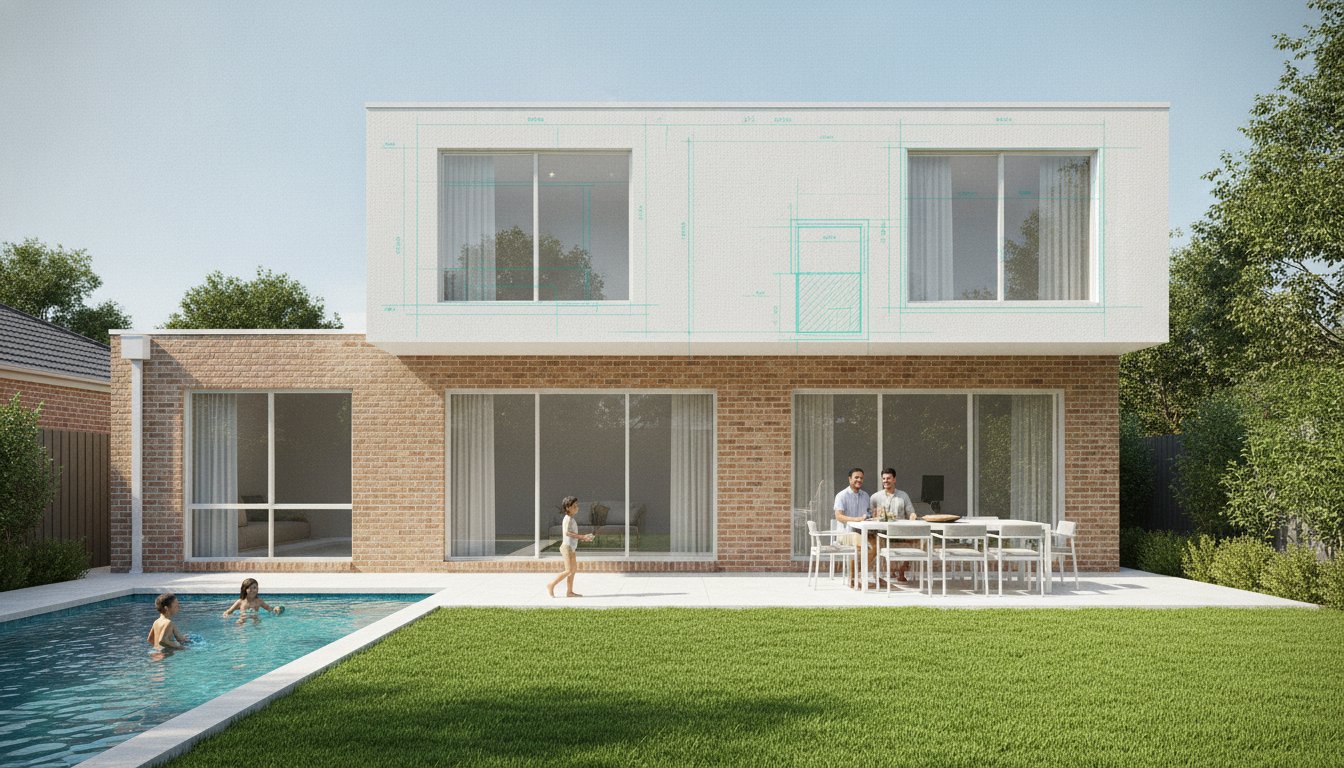
Why should you have to choose between a spacious four-bedroom home and the backyard pool your kids adore? Many Sydney homeowners feel trapped between a growing family and a shrinking block, often fearing that a ground-floor extension will swallow their precious garden or outdoor entertaining area. It's completely natural to feel a sense of hesitation when considering a second story extension, especially with concerns about structural integrity or the perceived complexity of NSW planning approvals.
We understand that your home is your most significant investment, and you want to ensure any addition enhances both your lifestyle and your property's value. This guide will help you discover whether building up is the right move for your specific property through a comprehensive comparison of costs, structural requirements, and long-term benefits. We'll preview the latest 2026 planning reforms, explain the difference between DA and CDC pathways, and show you how to unlock those sought-after district views without losing your sanctuary downstairs. Whether you're looking to add extra bedrooms or simply want to maximise your land's potential, we'll provide the clarity you need to move forward with confidence.
Key Takeaways
- Learn how to protect your garden sanctuary and pool by choosing a vertical expansion that avoids the long-term "backyard tax" on your property’s value.
- Gain professional insight into how structural engineers evaluate your existing footings to ensure a safe and meticulous transition to a dual-level home.
- Discover how the 2026 NSW planning reforms could allow your second story extension to be approved in as little as 20 days via the CDC pathway.
- Explore sophisticated design techniques that capture breathtaking views and natural light while respecting the privacy of your local neighbourhood.
- Understand why specialised building experience and fixed-price contracts are essential for navigating a vertical build with absolute confidence.
Building Up vs. Building Out: Which Extension Suits Your Colyton Lifestyle?
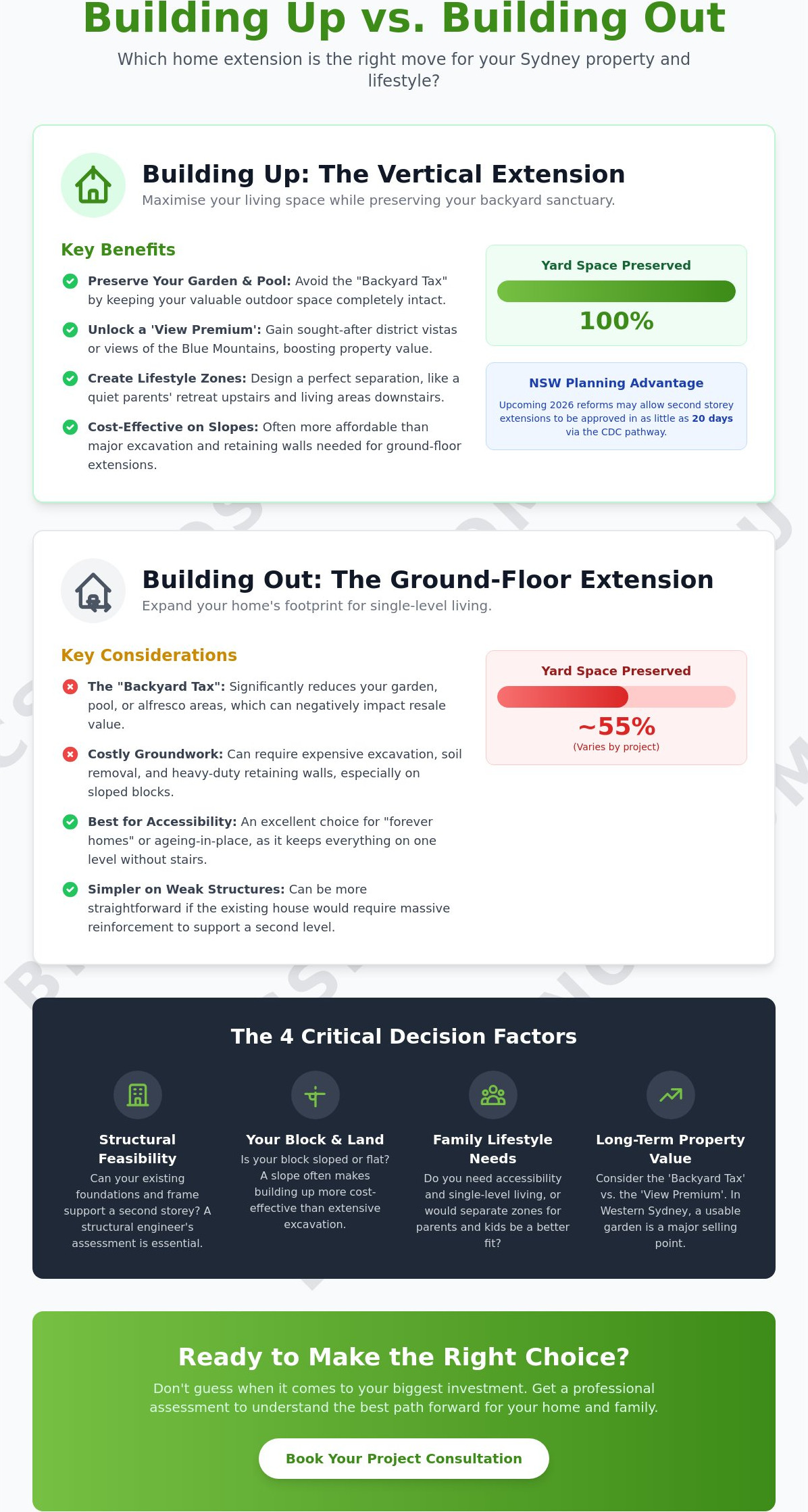
Deciding whether to expand your footprint or reach for the sky is a pivotal moment in any home renovation journey. In suburbs like Colyton, where family life often revolves around the backyard, this decision carries significant weight. While some might assume building out is always the budget-friendly path, they often overlook the "Backyard Tax." This hidden cost refers to the potential loss in resale value when a ground-floor addition swallows your lawn, pool, or alfresco area. In a competitive Sydney market, a home without a usable garden can be a harder sell.
A second story extension allows you to double your living space while keeping your outdoor sanctuary intact. It’s about preserving the lifestyle you’ve worked hard to create. If your block has a slope, building up can actually be more cost-effective than the extensive excavation and heavy-duty retaining walls required for a traditional slab extension. By choosing to go vertical, you maintain the footprint of your home while gaining the rooms you need for a growing family.
This approach is similar to the way specialist firms maximise potential in existing structures; for instance, you can visit Rooster Construction to explore how they specialise in residential home improvements like loft and garage conversions.
The ROI of Building Up in Western Sydney
In the Penrith and Colyton region, adding a second level often provides a substantial boost to property valuations. Beyond just adding square metres, you’re frequently unlocking a "view premium." In 2026, market trends show that buyers are increasingly willing to pay more for homes that offer glimpses of the Blue Mountains or elevated district vistas. As residential blocks in Western Sydney become more compact, vertical expansion has become the gold standard for maintaining a premium outdoor lifestyle while increasing total floor area.
Ground Floor Extensions: When to Choose the Backyard
There are certainly times when staying on the ground makes the most sense for a family. If your existing house requires massive structural reinforcement to hold a new level, a simple slab extension might be the more straightforward path. Accessibility is also a major factor to consider. For those planning a "forever home" or looking at ageing-in-place, keeping everything on one level removes the obstacle of stairs. You can explore a full range of Home Additions Sydney to see which footprint suits your long-term goals and physical requirements.
Ultimately, the choice depends on your daily rhythm. Many families find that a vertical build creates a perfect lifestyle split. You can dedicate the new upper level to a quiet parents' retreat or teenager's wing, leaving the ground floor dedicated to vibrant living and entertaining. It's a strategic way to organise your home that ground-floor additions often struggle to replicate.
Structural Feasibility: Can Your Existing Home Support a Second Storey?
Achieving a seamless second story extension requires more than just aesthetic vision; it demands a deep understanding of what lies beneath your floorboards. Every new room adds significant weight, known as point loads, which must be safely transferred through your existing walls down to the footings. A structural engineer is your most vital partner during this phase. They'll assess whether your current slab or strip footings can handle the extra pressure or if they need a helping hand to stay rock-solid.
The roof cavity is often the unsung hero of a vertical build. It provides the necessary working room to install new floor joists and services before the old roof is even removed. Adhering to the Complying Development Codes ensures these structural changes meet rigorous NSW standards. This gives you absolute peace of mind that your home is safe, stable, and built to last for decades to come.
Foundation Reinforcement and Underpinning
In many Sydney homes, especially those in the Western suburbs, we often encounter reactive clay. This type of soil expands and contracts with moisture levels, which can be tricky when adding a new level. We might use techniques like underpinning to strengthen your foundations or install steel goalposts to create a new internal skeleton. These methods allow us to support the upper floor without requiring a total gutting of your ground level. It's also the perfect time to ensure your waterproofing is meticulously applied for any new upstairs ensuites. Even minor leaks can compromise structural integrity over time, so precision at this stage is non-negotiable.
Staircase Placement: The Great Space Stealer
Where do the stairs go? This is often the biggest design hurdle. A poorly placed staircase can ruin the flow of your kitchen or living room. We look for dead space, such as an old linen cupboard or a corner of a large hallway, to tuck in a straight or U-shaped flight. While spiral stairs are space-efficient, they aren't always the most practical for carrying furniture. Don't forget the void above the stairs. While it technically takes up floor space, the sense of light and volume it creates can make your home feel twice as large. If you're feeling overwhelmed by the technicalities, a quick chat with a specialist in home extensions can help clarify the best path for your specific floor plan.
Designing for Privacy, Light, and Views in a First-Floor Addition
Designing a vertical addition requires a delicate balance between capturing new vistas and respecting the existing streetscape. It's not just about adding square metres; it's about solving architectural puzzles that ground-floor extensions rarely face. Privacy is often the primary concern for homeowners and neighbours alike. We use clever design solutions like highlight windows, which are set high on the wall to pull in the morning sun while keeping eyes out of your private spaces. For lower windows, frosted glass or fixed louvres can provide a sophisticated aesthetic that maintains your sanctuary without sacrificing natural light.
Overshadowing is another critical factor that requires a meticulous approach. By tapering rooflines or strategically adjusting the building’s setback, we can protect the natural light in your neighbour’s backyard while maximising the solar gain in your own. This thoughtful planning is a hallmark of a high-quality second story extension. When you're Adding a Second Story to a House, you also need to consider thermoregulation. Sydney's summers can be intense, so we prioritise superior insulation and cross-ventilation to ensure the upper level remains a comfortable retreat rather than a heat trap.
Mastering the Parents’ Retreat
The most rewarding part of building up is often the creation of a dedicated parents' retreat. This isn't just a bedroom; it's a private master suite complete with an ensuite, a walk-in robe, and perhaps a small balcony to enjoy the district views. To ensure this space remains peaceful, we focus heavily on acoustic insulation. Installing high-density soundproofing batts in the floor joists prevents noise from the lounge below from disturbing your quiet time. You can find more layout inspiration for these secluded sanctuaries in our guide to First Floor Additions Sydney.
Natural Light and BASIX Compliance
In NSW, every second story extension must meet strict BASIX requirements for energy and water efficiency. These standards influence your window size, orientation, and even the type of glass used. We often use skylights and clerestory windows to brighten internal hallways that might otherwise feel enclosed. By selecting high-performance glazing, we can manage the harsh Western Sydney afternoon sun, keeping your home energy-efficient and beautifully lit throughout the year. It's about blending meticulous craftsmanship with the latest building technology to create a space that feels as good as it looks.
Navigating Costs, Council Approvals, and the DA Process in NSW
Planning is where your vision for a second story extension meets the reality of NSW regulation. The most critical choice you'll make early on is between a Development Application (DA) and a Complying Development Certificate (CDC). If your project meets specific criteria, the CDC pathway can be a game-changer. Issued by a private certifier, these approvals are often finalised in just 10 to 20 business days. This is significantly faster than the 8 to 16 weeks typically required for a DA through a local council. The Planning System Reforms Act 2025, which took effect on 21 March 2026, has further streamlined this process for minor variations, making it easier than ever to get your project off the ground.
All applications in 2026 are managed through the NSW Planning Portal. While this digital transition has made tracking easier, you must still account for "hidden" costs that sit outside your builder's quote. These include Section 7.11 developer contributions, long service levies, and essential consultant fees for surveyors or engineers. To navigate these local nuances, it’s wise to consult our Home Extension Council Approval Colyton guide, which breaks down the specific requirements for our region.
Breaking Down the House Extension Costs
Budgeting for a vertical build in Sydney requires a realistic look at current market rates. In 2026, a standard quality second story extension typically ranges between $3,800 and $5,500 per square metre. If you’re aiming for premium finishes or complex architectural features, those figures can reach $8,000 per square metre. You might notice that the first 50sqm of any build feel disproportionately expensive. This is because those initial metres must cover the heavy lifting: the new staircase, structural reinforcement of the ground floor, and the expensive plumbing required for new upstairs wet areas. For a more detailed breakdown, explore our House Extension Costs 2026 guide.
The Approval Timeline: What to Expect
Timeline expectations vary depending on your chosen approval path. While Penrith City Council provides a thorough merit-based assessment for DAs, private certifiers offer speed for CDC-compliant designs. Regardless of the path, managing neighbour notifications is a vital step. Being transparent about your plans can prevent potential objections and ensure a smoother construction phase. You'll need a "must-have" set of documents, including architectural plans, a BASIX certificate, and structural engineering drawings, to ensure a stress-free submission. If you're ready to see how these numbers apply to your specific block, get in touch with our team for a professional assessment of your home extension project.
Choosing the Right Builder for Your Second-Storey Transformation
Selecting a builder for your vertical addition is perhaps the most critical decision you'll make. A second story extension is a complex structural feat that differs significantly from a standard ground-floor renovation. It requires a master of structural transitions who understands how to manage the delicate "roof-off" phase without compromising the integrity of your existing home. You need a team that prioritises site safety and meticulous weatherproofing, ensuring your downstairs remains protected while the new level takes shape. Moving out for a period of four to eight weeks is common during this stage, and a seasoned builder will provide a clear, realistic timeline to help you organise your temporary living arrangements with ease.
Transparency is the foundation of a successful build. We advocate for fixed-price contracts that leave no room for the "structural surprises" or hidden variations that often plague less experienced operators. With over 15 years of dedicated Sydney trade experience, Bigcs Renos brings a level of professional confidence that only comes from navigating hundreds of complex structural projects. We take pride in our visionary approach, ensuring your original intent remains the focus from the first structural check to the final coat of paint.
The Bigcs Renos Difference: Trades Under One Roof
We believe that high-end results come from total control over the craftsmanship. Unlike builders who rely solely on a rotating door of subcontractors, we keep our core expertise in-house. This "trades under one roof" philosophy is particularly vital for your new upstairs wet areas. Our specialised skills in tiling, waterproofing, and epoxy grouting ensure that your new bathrooms are not only beautiful but also meticulously sealed against leaks. Being a family-owned Colyton local means we aren't just building a house; we're improving our own neighbourhood. We value integrity and open dialogue, providing you with a reliable partner who is as committed to your home’s renewal as you are.
Your Next Steps: From Vision to Construction
Start your second-storey journey with Bigcs Renos today and experience the reward of a home designed for your future.
Elevate Your Lifestyle with Confidence
Transforming your home shouldn't mean sacrificing the backyard your family loves. By choosing a second story extension, you're making a strategic investment that doubles your floor plan while unlocking those stunning district views that define Sydney living. We've explored how modern structural assessments and the 2026 planning reforms have simplified the path from initial vision to final handover. It's about more than just adding square metres; it's about creating a sanctuary that evolves with your needs.
At Bigcs Renos, we bring over 15 years of local Sydney trade experience to every project. As a family-owned business, we specialise in the complex structural waterproofing and remedial work that ensures your new level is built to last. Our team is dedicated to providing the transparent, meticulous service you deserve throughout your home’s renewal. Ready to take the next step toward your dream home? Get a Professional Quote for Your Colyton Home Extension today. We look forward to helping you reach new heights with absolute peace of mind.
Frequently Asked Questions
Can I stay in my house while a second story extension is being built?
You will likely need to vacate your home for a period of 4 to 8 weeks during the critical roof-off phase. While some internal work can be managed around your daily routine, the structural risks and exposure to the elements make staying on-site difficult during the main build. A vacant site allows our team to work with greater efficiency and ensures your family remains safe from the noise and dust of a major construction project.
How long does a typical second storey addition take from start to finish in Sydney?
A typical project takes between 4 and 8 months to complete, depending on the complexity of your design and the chosen approval pathway. If your project qualifies for a Complying Development Certificate, the approval phase can be as short as 20 business days. Factors such as weather conditions and the intricacy of the structural reinforcement will ultimately determine the final handover date for your second story extension.
Will a second storey extension make my house too hot in summer?
No, provided your design prioritises superior insulation and smart ventilation. We use high-performance glazing and high-density insulation batts to manage the intense Sydney heat effectively. By meeting the latest BASIX requirements, your new upper level will remain a comfortable sanctuary throughout the year. Proper orientation and the inclusion of cross-ventilation are essential meticulous details that prevent the upper floor from becoming a heat trap during the summer months.
What is the most expensive part of adding a second storey?
The initial structural setup is usually the most significant investment. This includes the installation of the new staircase and the reinforcement required to transfer the weight of the new level safely to your foundations. These "hidden" costs cover the engineering and heavy-duty materials needed to ensure your home remains rock-solid. Additionally, adding new upstairs wet areas like a master ensuite will contribute to the plumbing and waterproofing budget.
Do I need to reinforce my foundations for a second story?
Most Sydney homes require some level of structural reinforcement to support the additional weight of a new floor. A structural engineer will assess your existing slab or strip footings to determine if they can handle the new point loads. If your property is built on reactive clay, we may need to use underpinning or steel "goalposts" to create a stable internal skeleton. This ensures your home’s integrity is never compromised by the vertical expansion.
Is it cheaper to build a granny flat or a second story extension?
Building a granny flat often has a lower initial price tag because it avoids complex structural work on your existing dwelling. However, a second story extension frequently offers a better long-term return on investment by preserving your backyard and increasing the value of the primary residence. Choosing to build up prevents the "backyard tax" and keeps your garden and pool intact, which are highly valued features in the Sydney real estate market.
What are the height limits for residential extensions in Colyton?
Residential height limits in Colyton and the wider Penrith region are generally set at 8.5 to 9 metres under the Local Environmental Plan. This typically allows for a standard two-storey home with a pitched roof that matches the local streetscape. It is always wise to check your specific zoning on the NSW Planning Portal, as heritage conservation areas or specific site constraints may influence the maximum allowable height for your addition.
How much value does a second story add to a Sydney home?
Adding a second level can significantly increase your property’s market value, often exceeding the total cost of the construction. In a competitive market, doubling your floor plan while unlocking district or mountain views creates a powerful point of difference. Beyond the extra bedrooms, you are gaining a lifestyle premium by maintaining your outdoor entertaining areas. This combination of increased square footage and a preserved backyard is a major drawcard for future buyers.


